Advertisement
Why High Court upheld NTSA matatu graffiti and PSV rules
Friday 22nd May, 2026 05:38 PM|

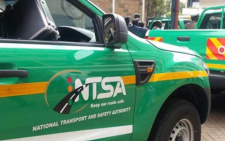
The High Court has upheld the National Transport and Safety Authority (NTSA) regulations governing public service vehicles, including restrictions on graffiti, decorative artwork, tinted windows, and other modifications.
Justice Bahati Mwamuye dismissed a constitutional petition filed by Michael Makubo challenging the regulations.
The petition had contested NTSA’s enforcement notice issued in May 2025 directing matatu operators to remove decorations that obscure safety features such as windows, lights, and chevrons. The notice targeted modifications commonly used in matatu culture, including graffiti artwork, neon lighting, sound systems, and customised interiors.
Makubo argued that the directive violated Articles 11 and 33 of the Constitution on cultural rights and freedom of artistic expression. He also claimed that the regulations were enacted without meaningful public participation and lacked proper parliamentary scrutiny.
You Might Also Like


“The Regulations prohibit decorations that obscure safety features like windows, lights and chevrons, which were deemed rationally connected to the objective of protecting life enshrined in Article 26 of the Constitution,” Parliament of Kenya FB post dated May 22, 2026.
Court findings
Justice Mwamuye ruled that the National Assembly complied with constitutional and procedural requirements in the enactment of the regulations. Evidence presented showed that the NTSA Regulations were transmitted to the Clerk of the National Assembly on March 14, 2014, tabled on March 18, 2014, and referred to the Committee on Delegated Legislation.
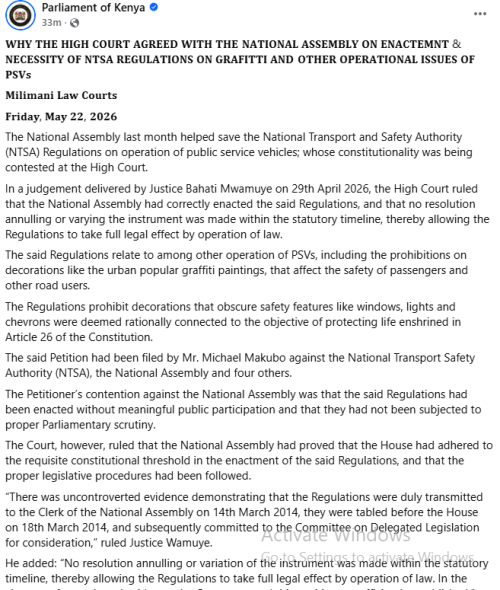
The court held that no resolution annulling or varying the regulations was passed within the statutory timeline, allowing them to take effect by operation of law. It further found that the legislative process met the required threshold for public participation and parliamentary oversight.
Claims of discrimination and infringement of rights were dismissed for lack of sufficient evidence, with the court noting that administrative enforcement of existing regulations did not amount to the creation of new law.
Safety considerations
The court also addressed the argument that the regulations restricted cultural expression within matatu operations. It acknowledged that matatu culture constitutes a form of artistic expression but held that such rights may be limited under Article 24 of the Constitution where necessary.
The judgment stated that restrictions on decorations that obscure windows, lights, and reflective markings are rationally connected to the constitutional objective of protecting life under Article 26.
NTSA maintained that the regulations are intended to improve passenger safety, visibility, and compliance within the public transport sector.
Following the ruling, the court granted limited interim orders to allow time for appeal and orderly compliance, with the temporary relief lapsing on May 17, 2026. The main judgment upholding the NTSA regulations remains in force, requiring operators to comply with the safety standards.
Author
Latest News








Advertisement
More on News