Advertisement
WHO sounds alarm over rabies deaths
Saturday 16th August, 2025 09:06 AM|

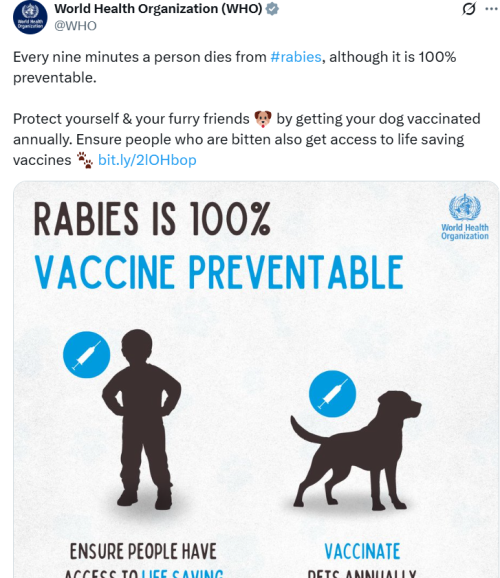
The World Health Organisation (WHO) has raised the alarm over rabies, noting that every nine minutes a person dies from rabies, although it is 100% preventable.
In a statement on X on August 16, 2025, the agency urged immediate action to safeguard both humans and animals.
“Protect yourself and your furry friends by getting your dog vaccinated annually. Ensure people who are bitten also get access to life-saving vaccines,” it stated.
Rabies, a viral disease primarily transmitted through animal bites, remains a persistent public health challenge in Kenya and other endemic regions.
Rabies burden in Kenya
You Might Also Like

Kenya’s Rabies Elimination Strategy aims to end human deaths from the disease by 2030, placing strong surveillance at the centre of its efforts.
A study published in Frontiers in Public Health (June 2025) by researchers from the International Livestock Research Institute (ILRI) and the University of Nairobi analysed national rabies data from 2017 to 2023.
The study found an average of 162 dog cases and 84 dog deaths annually, alongside 53 human cases and six human deaths. While dog bites were strongly correlated with dog infections, their link to human rabies cases was weak, suggesting significant under-reporting, possibly due to misdiagnosis, limited healthcare access, or timely post-exposure treatment.
Also, it identified a negative correlation between rabies cases in dogs and humans, indicating that human cases may be undercounted despite ongoing transmission from animals. The researchers stressed that understanding these patterns is essential to improving surveillance systems and strengthening the national elimination programme.
Strengthening prevention and surveillance
To curb rabies, ILRI recommends vaccinating at least 70% of domestic dogs, enhancing laboratory-based surveillance, and introducing cost-effective diagnostic tools. Public education on wound care after bites, integrated electronic case management, and training healthcare workers on post-exposure prophylaxis are also key.
WHO’s warning underscores the need for coordinated global and local action. With tens of thousands of lives lost to rabies annually—40% of them children under 15—the push for vaccines, robust reporting, and cross-sectoral collaboration is urgent.
Kenya’s focus on the One Health approach, linking human, animal, and environmental health, remains central to meeting its 2030 target and protecting vulnerable populations from this preventable yet deadly disease.
Author
Latest News








Advertisement
More on News