Teachers threaten shutdown as SHA protests spread across counties nationwide
By Aloys Michael, April 27, 2026Teachers across Kenya have warned of a possible nationwide shutdown as protests over the Social Health Insurance (SHA) scheme, job security, and working conditions intensify ahead of the reopening of schools for the second term on Monday, April 27, 2026.
The Kenya Union of Post-Primary Education Teachers (KUPPET) has led the growing unrest, cautioning that continued delays in addressing their grievances could disrupt the school calendar.
The union, which had previously signalled strike action, now says frustration is spreading across multiple counties.
In Machakos, Junior Secondary School (JSS) teachers under KUPPET have already downed their tools, demanding permanent and pensionable terms for 44,000 intern teachers nationwide.
“We are asking the government to allocate funds to the TSC to confirm the 44000 intern teachers. The government has been talking about confirmation for a long time, but this can only become reality after funds are allocated by Parliament,” emphasised Yvonne Musyoka, Secretary of KUPPET in Machakos.
In Homa Bay, teachers have joined the push, citing a Court of Appeal ruling they say supports their demand for confirmation of interns and condemns prolonged internship-based employment.
“In March 2026, the Court of Appeal affirmed the decision of the Labour Relations Court, confirming that employment on an internship basis is illegal. We do not understand why our colleagues have not been confirmed,” said Thomas Odhiambo, Secretary-General of KUPPET in Homa Bay.
Teachers in the county are also demanding greater autonomy for Junior Secondary Schools in matters of structure, leadership, and operations. At the same time, concerns over healthcare access under SHA have intensified, with teachers noting that only one hospital per subcounty is currently accredited to provide services in Homa Bay.
Similar dissatisfaction is being reported in Kajiado, where teachers are threatening industrial action over SHA, saying they prefer the previous medical cover provider, Minet.
In Vihiga, teachers have already issued a 14-day strike notice, demanding the removal of the SHA capping model that limits medical cover.
They also raised concerns over the lack of coverage for key services such as fertility treatment and unavailable prescribed medication, despite earlier agreements involving the SHA, the Teachers Service Commission (TSC), KUPPET, and the Kenya National Union of Teachers (KNUT) that had eliminated co-payments at accredited facilities.
In Samburu, the protests have taken a different turn, with teachers threatening demonstrations over the removal of hardship allowances after the region was downgraded from a hardship to a moderate classification.
“Whoever conducted that particular research has no information about Samburu. Teachers are undergoing hardship, especially when it comes to security. We all know we have even lost teachers to banditry,” a teacher said.
With unrest spreading across multiple regions and unions escalating their demands, pressure is mounting on the TSC and the government to intervene, as schools prepare to begin the new term amid uncertainty.
Ruto defends SHA
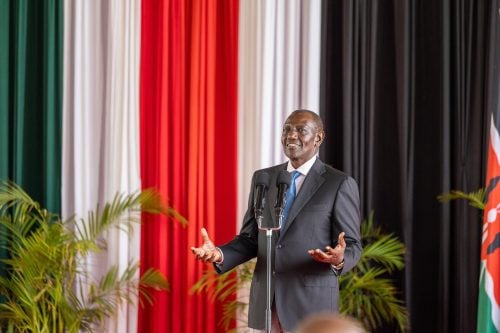
Meanwhile, President William Ruto has defended the SHA, urging Kenyans and public servants to view the scheme as a long-term investment despite mounting criticism and threats of withdrawal from civil servants.
Speaking on Monday, April 27, 2026, during the World Health Summit Regional Meeting in Nairobi, the President acknowledged concerns about the rollout of the health scheme but insisted that the country must stay the course to achieve sustainable healthcare financing.
“Our services have not changed much, but we just realised this is not a cost but an investment, and it is important for us to invest. The difference is like day and night today,” Ruto said.
He emphasised that difficult policy choices are necessary to secure the future of Kenya’s healthcare system, particularly through domestic resource mobilisation.
“Some decisions have to be made, and the sooner we realise that it is our responsibility to raise especially domestic resources to fund our health, the better for all of us,” he added.
Ruto’s remarks come at a time when the SHA, launched in 2024 as a cornerstone of Kenya’s push toward Universal Health Coverage (UHC), is facing increasing resistance. What was once presented as a transformative reform is now under pressure from unions threatening strikes, legal action, and even mass withdrawal from the scheme.
Civil servants, especially teachers, have voiced growing frustration, arguing that the previous medical cover system, though imperfect, was more predictable and reliable. KNUT has emerged as one of the most vocal critics, warning of industrial action if urgent reforms are not implemented.
Teachers say the SHA scheme has failed to deliver quality healthcare services, citing persistent system failures, delays in accessing treatment, and inefficiencies that have left many stranded when they need care most.
KNUT Kiambu West Secretary General Michael Muna said teachers feel deeply shortchanged by the current arrangement.
“We are getting a raw deal. The anticipation that we had, we are getting a raw deal and the challenges that we have highlighted need to be addressed for these teachers to be contented,” Muna said.
He added that many educators are struggling to justify continued contributions to a system they say does not meet their needs.