Advertisement
Senate plans new ‘power sharing’ bill
Friday 25th July, 2025 05:00 AM|

Senate has initiated a constitutional amendment process that, if passed, will enhance its legislative powers, expand its role in budget-making and provide for special procedures for passage of financial legislation.
The Constitution of Kenya (Amendment) Bill, 2025, seeks to amend 25 Articles in the current Constitution, to enhance the devolved system of government by changing key constitutional provisions, and entrench a more balanced, accountable and functional system.
The amendment Bill co-sponsored by Senate Majority Leader Aaron Cheruiyot (Kericho) and his Minority counterpart Stewart Madzayo (Kilifi), also proposes to amend several Articles to assign the responsibility of approving or vetting of various State officers to both Houses of Parliament.
The Bill further proposes to amend Article 251 to assign the process of removing from office a member of a commission or of a holder of an independent office to both Houses.
You Might Also Like
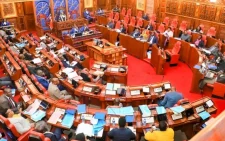

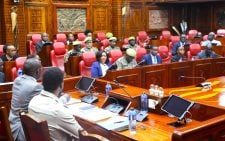
Currently, the removal from office in the constitutional commissions and Independent Officers is done at the National Assembly, excluding the Senate.
In addition, the Bill proposes to provide a system of accountability at the national and county levels of government with regard to the allocation and utilisation of resources allocated by, and to, the respective levels of government.
Equal powers
This even as the Bill proposes the establishment of a County Assembly Fund in each county assembly to enhance the operational independence and effectiveness of county assemblies.
The Fund will be used to cover administrative expenses and other functions necessary for the discharge of county assembly functions, ensure financial autonomy at the county assembly and reinforce the principles of devolution by enabling county assemblies to function without undue interference from the executive arm of county governments.
The Bill, which has been introduced and is due for first reading, proposes to grant both Houses- the Senate and the National Assembly equal power to initiate legislation, either through individual members or committees.
The co-sponsors argue that this move would enable the Senate to play a more proactive legislative role. In the proposed amendment, both Houses must pass every Bill that solidifies bicameral consent, promoting collaboration, enhancing checks and balances within the legislature and enhancing the national legitimacy of laws passed by Parliament.
“A Bill will only be referred for assent after both Houses have passed it. Further, a Bill shall be referred for assent by the Speaker of the originating House. The Bill referred for assent shall be accompanied by a certificate signed by both Speakers certifying that the Bill has been passed,” part of the proposed law reads.
The proponents of the bill argue that the amendments will enhance transparency and prevent unilateral passage of Bills, as has been the case even on Bills where the Senate should have been involved.
For instance, the Bill proposes to amend Article 96 to expand the Senate’s representation role to include special interest groups in addition to county governments.
The lawmakers argue that, the proposed amendment recognises the Senate as a protector of marginalised persons, including women, persons with disabilities, youth and minority groups, ensures inclusivity and equity in line with the national values in Article 10.
The amendment, the proponents argue, will enhance bicameral accountability and strengthen checks and balances by involving both Houses of Parliament in approving the appointment of such a critical state officer.
The Bill proposes to amend Article 250 of the Constitution to change the approving authority of the chairpersons and members of commissions and holders of independent offices from the National Assembly to Parliament.
The proposed amendment strengthens the role of the Senate in oversight and appointments to public offices. The amendment also reflects the principle that matters of national importance, especially appointments to independent bodies tasked with oversight and governance, should be the domain of both Houses.
The Bill proposes to amend Article 251 of the Constitution to replace references to “the National Assembly” with “Parliament” in the process of initiating and determining petitions for the removal of members of constitutional commissions and holders of independent offices.
The operationalisation of the Constitution, particularly devolved governance and bicameralism, has seen many successes but has also brought to the fore a number of challenges of constitutional design and architecture that require reform so as to strengthen and secure the devolved system of government and for greater unity and harmony of the constitutional dispensation.
Since the promulgation of the 2010 constitution, both Houses have been having a push-and-pull on Article 114 of the Constitution.
The Bill proposes to repeal Article 114 of the Constitution, whose definition of the term “money Bill” has led to multiple interpretations and ultimately hindered legislative processes in the Senate.
Author
Rawlings Otieno
View all posts by Rawlings OtienoLatest News








Advertisement
More on Inside Politics