Advertisement
Sakaja revives waste recycling plant project
Thursday 02nd February, 2023 01:30 AM|
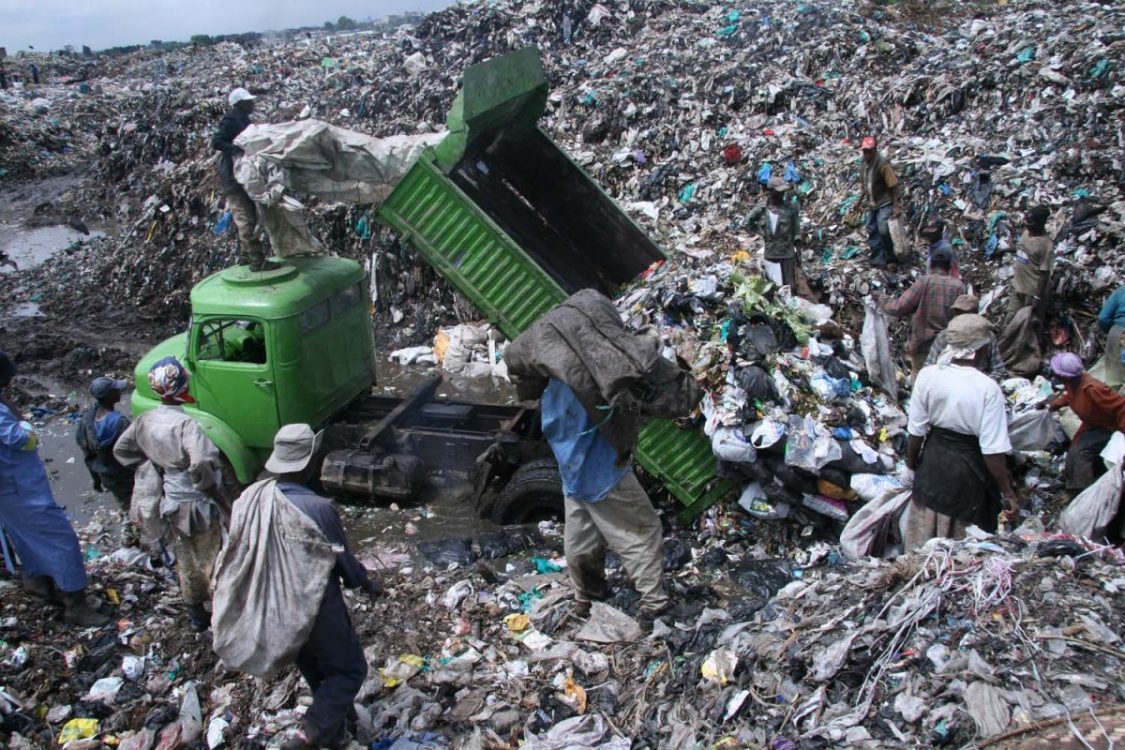
After years of haggling, a solution has finally been found for the infamous Dandora dumpsite in Nairobi county that has not only remained a health hazard and an eyesore to the surrounding communities but also a major environmental problem.
Governor Johnson Sakaja’s government has already advertised tenders for an energy plant to recycle waste at the sprawling dumpsite to harness energy using the waste.The winner of the tender would be charged with designing, building, financing, operating and transferring a waste to energy plant in Dandora.
County Chief Officer Ibrahim Otieno says the project is expected to provide a platform that will handle the mixed waste as collected from the households or holding areas where segregation is still minimal. “We have started by streamlining waste value chain actors, with a first meeting between the private service providers and community based organisations taking place about two weeks and giving notice for all to register and operate in compliance with waste management laws and regulations,” said Otieno, who has specifically been assigned to supervise the project.
Renewable energy pool
Upon completion, the 45 megawatts (MW) garbage-powered electricity plant is expected to solve the county’s garbage problem as well as contribute to renewable energy pool.
However, the project will now be located in Ruai sewerage treatment plant following a court order last July to move Dandora dumpsite within six months.
Located just 2.5 miles away from the city center, the Dandora dumpsite has for the last 30 years been the final resting place for the garbage of Nairobi’s millions of residents despite it reaching maximum capacity in 2001.
Closure, relocation and setting up an energy plant at Dandora dumpsite has appeared to be impossible, three county governments down the line.
Over the years, there have been plans and reported deals but nothing has materialised as garbage piles up and fires emit toxic fumes.
However, the Nairobi Governor has pledged to actualise the project during his tenure. He says the project is close to his heart since it is in line with his mantra of having a city of order and dignity. “We cannot be talking about the same thing now and then, I have tasked my team to ensure that this project is actualised. My CEC will work with the relevant agencies to ensure this project sails through,” he said.
Beyond capacity
Speaking to People Daily Nairobi CEC In-charge of Green Nairobi Maureen Njeri said Dandora dumpsite was already operating beyond its capacity, and there is an urgent need to provide alternative waste disposal mechanisms. “The dumpsite is full beyond its capacity and we cannot continue to fill it with more garbage while it is already full. We must have the recycling plant now,” she said.
According to Njeri, Nairobi currently generates over 3000 tons of waste which can’t continue being dumped in Dandora.
Njeri says that the county government has already engaged stakeholders like Ken-Gen where unlike in the past, they have agreed to hit the road running. “The Energy project is expected to provide a platform that will be able to handle the mixed waste as collected from the households or holding areas where segregation is still minimal. We also expect it to provide part solution to the legacy waste already existing at the dumpsite,” she said.
Njeri said the project is set to be carried out in different phases.
The first phase is the feasibility study which had already been commenced by the defunct Nairobi Metropolitan Service (NMS).
Njeri says that NMS and Ken-Gen had already approved a feasibility study finding that gave a nod to the project.
The 45 megawatts (MW) garbage-powered electricity plant is expected to sustainably solve Nairobi’s garbage problem while also opening a new income stream for City Hall.
According to Njeri, the contractor who will win is expected to finance, develop, and operate the power plant while the county government will avail land for that purpose. “We want also to save waste pickers from contracting diseases. Most of them have no Personal Protective Equipment (PPE), which exposes them to toxins such as lead, dioxin and mercury,” she says.
However, the relocation of the dumping site has been a messy and protracted issue just like its presence in Dandora.
In 2013, the County Government of Nairobi through the then Governor Evans Kidero indicated that it wanted to transfer the site to Ruai but the plans were however opposed by the Kenya Airports Authority on grounds that the proposed site is on the flight path from the Jomo Kenyatta International airport.
Waste management
The Authority maintained that having the site there would compromise air traffic safety.
At the same time, National Environment Management Authority (NEMA) Director-General Mamo Boru Mamo hailed the project saying that the agency is more than ready to quicken the setting up of an energy plant.
Mamo said the plant will help the country transition from a linear waste management model to a circular approach. “We need to transform Dandora from waste to energy,” Mamo said.
The already filled up Dandora dumpsite holds about 1.8 million tons of solid waste against a 500,000-tonne capacity.
The dumpsite was officially opened in 1975 through funding by World Bank and 26 years later in 2001 it was considered full.
At that time, it held more than 1.8 million tons of solid waste against a 500,000-tonnes capacity but still serves as Nairobi’s main dumpsite today.
The dumpsite is also said to be a multi-million-shilling cash cow manned by cartels.
In January 2016, thugs had closed roads and blocked garbage collectors’ trucks from accessing the dumpsite until they paid levies.
Gangs charged City Hall and private garbage collectors’ trucks levies to deposit garbage at Dandora.
A report by the National Environmental Complaints Committee (NECC), says Kenya generates 22,000 tons of waste per day, including 2,400 tons in Nairobi County.
Organic waste constitutes 70 percent of the waste in Nairobi while 20 percent is plastic, 10 percent is paper, two percent metal and one percent medical waste.
The report further indicates that all the waste ends up at the dumpsite without segregating the recyclable from the non-recyclable waste.
Author
Alvin.Mwangi
View all posts by Alvin.MwangiLatest News






Advertisement
More on News