Ruto signs 3 bills into law
By Kenneth Mwenda, May 11, 2026President William Ruto has signed three National Assembly bills into law after giving his assent at State House in Nairobi on May 11, 2026.
The Income Tax (Amendment) Bill, the Special Economic Zones (Amendment) Bill, and the Technopolis Bill now take effect as part of Kenya’s wider plan to boost investment and economic growth.
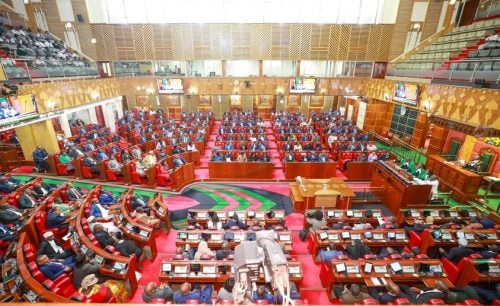
The signing ceremony marked the final stage of a long parliamentary process that saw the bills move through both the National Assembly and the Senate before reaching the president.
The Technopolis Bill (National Assembly Bill No. 6 of 2024) took the longest route. Lawmakers introduced it in April 2024 and passed it in the National Assembly on November 19, 2024. Because it deals with land and county matters, the Senate reviewed it and passed amendments on November 12, 2025. The National Assembly later approved those changes on April 14, 2026.
The law sets up a framework for developing technology zones across the country. It also creates a Technopolis Development Authority to manage planning, investment, and operations. Konza Technopolis will serve as the leading example.
During the debate, Dagoretti South MP John Kiarie emphasised the transformative nature of the bill, highlighting the potential for multiple technopolises beyond Konza, the current flagship project.
“As we speak today, Konza remains the only technopolis in Kenya, but with this bill, we can pave the way for similar hubs across the country. From Wajir to Mandera, Kisii to Tharaka. We can establish these innovation hubs to drive technological growth and economic development,” stated Kiarie.
SEZ and tax reforms passed
The Special Economic Zones (Amendment) Bill, 2026, moved through Parliament more quickly. Lawmakers debated it in March and April 2026. The law expands tax and investment incentives to cover upstream and midstream oil and gas activities, including projects in Turkana.
It introduces longer licence periods of at least 10 years, VAT relief, adjusted withholding tax rules and one-stop approval systems for investors. These changes aim to attract large-scale energy investments. During the debate, members of the Trade Committee said the changes would improve financing for capital-heavy projects.
The Income Tax (Amendment) Bill, 2026, focuses on company restructuring. Parliament published the bill in April 2026 and passed it soon after. It removes capital gains tax on internal transfers of assets or shares between companies and their shareholders, as long as ownership proportions remain unchanged and conditions are met.
All three bills passed through the required stages of readings, committee review, and public participation as set out in the Constitution. Where necessary, the Senate and National Assembly agreed on final versions before sending them to the president for assent.
The new laws will take effect on different dates stated in each bill, with many of the tax and investment measures expected to align with the new financial year starting July 1, 2026.