Advertisement
Ruto seeks Sierra Leone support for Njoki Ndung’u’s ICC judge bid
Sunday 10th May, 2026 02:35 PM|

President William Ruto has stepped up Kenya’s diplomatic efforts to secure support for Supreme Court Judge Njoki Ndung’u’s candidature for the International Criminal Court (ICC) bench, using bilateral engagements ahead of the Africa Forward Summit in Nairobi.
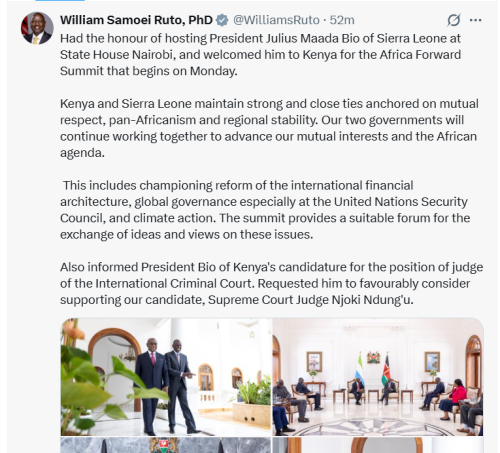
Earlier on Saturday, May 9, 2026, President Ruto hosted Sierra Leone President Julius Maada Bio at State House, Nairobi, ahead of the Africa Forward Summit scheduled for May 11–12. During the meeting, Ruto sought Sierra Leone’s backing for Kenya’s candidate for the ICC judgeship.
“Also informed President Bio of Kenya’s candidature for the position of judge of the International Criminal Court. Requested him to favourably consider supporting our candidate, Supreme Court Judge Njoki Ndung’u,” Ruto posted on X dated May 10, 2026.
The two leaders reaffirmed cooperation between Kenya and Sierra Leone, citing shared commitments to pan-Africanism, regional stability and reforms in global governance systems. They also discussed collaboration on climate action and reforms at the United Nations Security Council.
You Might Also Like


State House strategy meeting
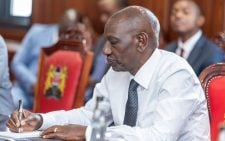
The diplomatic outreach comes days after a strategy meeting convened by President Ruto at State House on the sidelines of the swearing-in of newly appointed High Court and Environment and Land Court judges.
The meeting was attended by Chief Justice Martha Koome, Prime Cabinet Secretary Musalia Mudavadi, Head of Public Service Felix Koskei and Justice Njoki Ndung’u.
Officials described the meeting as part of efforts to rally national support for the candidature ahead of the ICC elections. Mudavadi said preparations for the Africa Forward Summit had been completed and noted that the event would focus on partnerships in green industrialisation, digital technologies, investment and innovation.
The summit is also expected to culminate in the Nairobi Declaration.
Ndung’u’s judicial record
Justice Njoki Ndung’u has served at Kenya’s Supreme Court since 2011 and is recognised for her role in constitutional and criminal jurisprudence.
She was instrumental in the drafting of the Sexual Offences Act and contributed to the African Union’s Maputo Protocol on women’s rights.
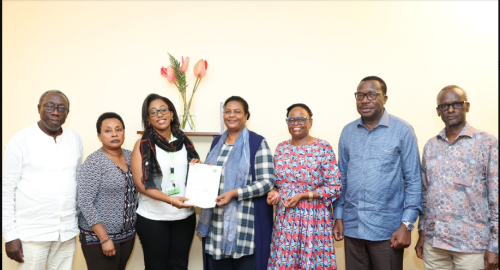
If elected, she would join the 18-member ICC bench in The Hague, which handles cases involving genocide, crimes against humanity and war crimes.
Author
Latest News




Advertisement
More on News