Advertisement
Ruto rules out backtracking on digital procurement system push
Thursday 11th September, 2025 09:17 PM|

President William Ruto has ruled out reversing Kenya’s transition to a digital procurement system, insisting that the reform will bring transparency and accountability in the use of public funds.
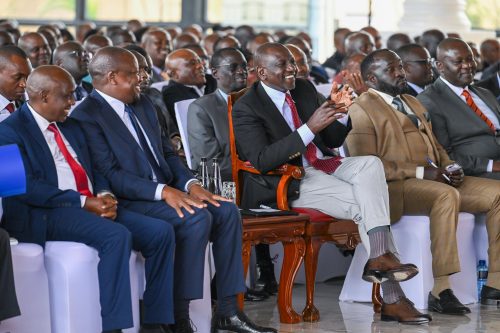
The Head of State made the declaration on September 11, 2025, during a State House meeting with Gusii leaders from Kisii and Nyamira counties, attended by ODM leader Raila Odinga, Kisii Governor Simba Arati, Cabinet Secretary Julius Ogamba, and Solicitor General Shadrack Mose.
“For the avoidance of doubt, we are not going back on e-procurement, because we want transparency, we want citizens to get value for what they pay as tax, that is how we will eliminate corruption, and that is how we are going to save public money, and we have said clearly any public official who does not want to participate in e-procurement should quit,” Ruto declared.
Push for transparency
Ruto underlined the financial losses the country has suffered under manual procurement, saying up to 40 per cent of public money disappears through irregular dealings.
You Might Also Like



“We lose up to 40 per cent of public money to procurement, and that is the reason we are saying we are going to go e-procurement so that everything will be laid bare,” he said. “If one is selling to the government, this should not be in the dark; everyone must be able to see; let it be made public.”
He warned officials resisting the change, declaring, “For the avoidance of doubt, we are not going back on e-procurement, because we want transparency; we want citizens to get value for what they pay in tax.
“That is how we will eliminate corruption, and that is how we are going to save public money. And we have said clearly, “Any public official who does not want to participate in e-procurement should quit.”
Court suspension and opposition
The Electronic Government Procurement (e-GP) system, launched in April 2025, digitises the entire chain from planning to payments, integrating with iTax and IFMIS. Treasury CS John Mbadi recently reported that all state and county entities are registered, alongside 87 percent of corporations, with extensive training carried out for officers.
Despite the progress, the system has faced criticism. Council of Governors Chairperson Ahmed Abdullahi has described it as rushed, citing technical hitches, poor training, and exclusion of rural suppliers.
“We are frozen; we cannot procure,” he argued, referencing challenges in pilot counties such as Busia, Elgeyo-Marakwet, and Makueni.
On September 8, the High Court suspended mandatory implementation until October 15, fuelling an ongoing debate over inclusivity.
Author
Latest News





Advertisement
More on News