Advertisement
Ruto positions agriculture as a source of Africa’s next billionaires
Saturday 11th April, 2026 03:37 PM|

President Ruto has highlighted agriculture as the primary engine for wealth creation, suggesting that the next generation of African billionaires will emerge from the farm.
Speaking at the Mashariki Cooperation Conference in Diani, Kwale County, on Friday, April 10, 2026, Ruto challenged Africans and, in extension, Kenyans to take farming seriously.
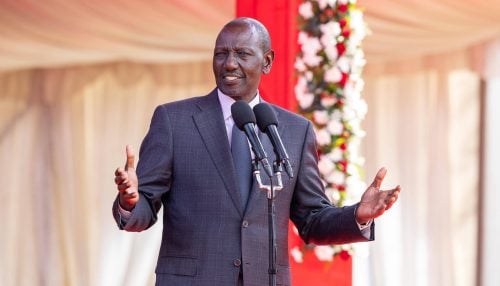
“I was told by the former president of the African Development Bank that the future billionaires will be farmers. That is why I’m trying farming myself,” Ruto stated.
Africa’s unique demographic
President Ruto said the vision is anchored in Africa’s unique demographic and natural advantages. By 2050, Africa is projected to house a quarter of the global population, providing the world with its largest workforce.
You Might Also Like


Ruto said this demographic surge, combined with the African Continental Free Trade Area (AfCFTA), is set to create the largest single market in the world.
“We have resources, and we have assets. We have two-thirds of the world’s remaining arable land,” Ruto said.

Ruto further asserted that because of the African Continental Free Trade Area agreement, the continent will have the largest single market in the world. The president noted that while the continent is rich in mineral and natural resources, these assets present both an opportunity and a risk.
Unity of leaders
To navigate this, he called for thought leaders and intelligence leaders to organise the continent’s resources effectively to ensure this potential is realised.
“Aside from that, we have huge mineral and natural resources on our continent. It is both an opportunity and a risk because of what I have said about our continent,” Ruto said.
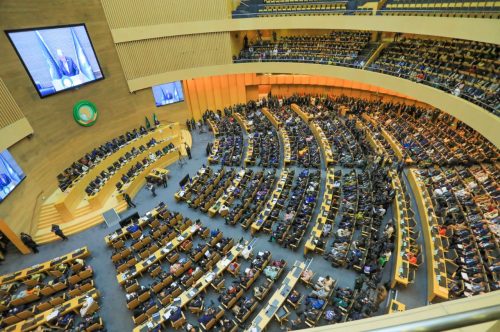
“There is a need for thought leaders. There is a need for intelligence leaders to think about how we are going to organise ourselves,” Ruto asserted.
Food security in Africa remains challenging, with severe, localised crises driven by drought, climate change, and instability, particularly in East Africa.
Africa’s population growth
Noting the complex impact of global and regional shocks, ranging from public health challenges and pandemics to the ongoing crisis in Ukraine and other geopolitical uncertainties, Sacko said Africa has to strengthen its food production and processing systems. She added that these challenges have been further exacerbated by rising inflation, making food security an even more critical issue.
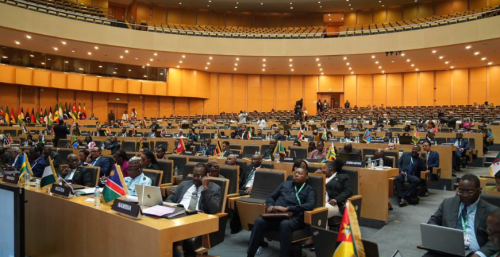
She said that the 10-year Comprehensive Africa Agriculture Development Program strategy and action plan for 2026-2035, adopted earlier this year at the AU Extraordinary Summit in Kampala, Uganda’s capital, serves as a blueprint for advancing agricultural development and food systems across the continent.
“Our first strategic pillar is intensifying sustainable food production because we need to produce more. By 2050, Africa’s population is projected to reach 2.5 billion, so how are we going to feed this growing population? That is why we must intensify sustainable food production,” Sacko told reporters.
Author
Emmanuel Rono
Rono is a dynamic digital journalist with a proven track record in newsroom leadership and content creation. Currently a Digital Writer for People Daily Digital, Emmanuel’s career is rooted in a lifelong passion for storytelling.
View all posts by Emmanuel RonoLatest News






Advertisement
More on News