Advertisement
Ruto orders installation of road surveillance cameras within 30 days
Monday 02nd March, 2026 02:56 PM|

President William Ruto has ordered the National Transport and Safety Authority (NTSA) and the Ministry of Roads and Transport to roll out road surveillance cameras in six major urban areas within thirty days in a renewed bid to curb traffic offences and rising road fatalities.
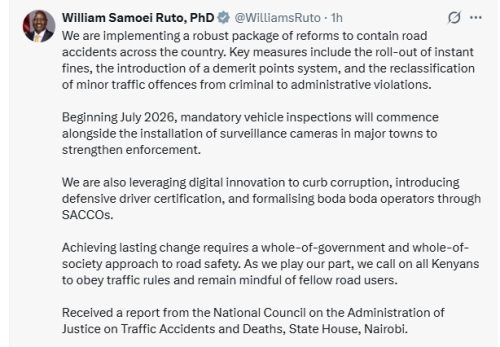
In a post on his official X account on Monday, March 2 2026, Ruto affirmed a robust package of reforms to contain road accidents across the country.
On his part, Ruto maintained that among the key reforms are the roll-out of instant fines, the introduction of a demerit points system, and the reclassification of minor traffic offences from criminal to administrative violations.
“We are implementing a robust package of reforms to contain road accidents across the country. Key measures include the roll-out of instant fines, the introduction of a demerit points system, and the reclassification of minor traffic offences from criminal to administrative violations,” Ruto said.
You Might Also Like
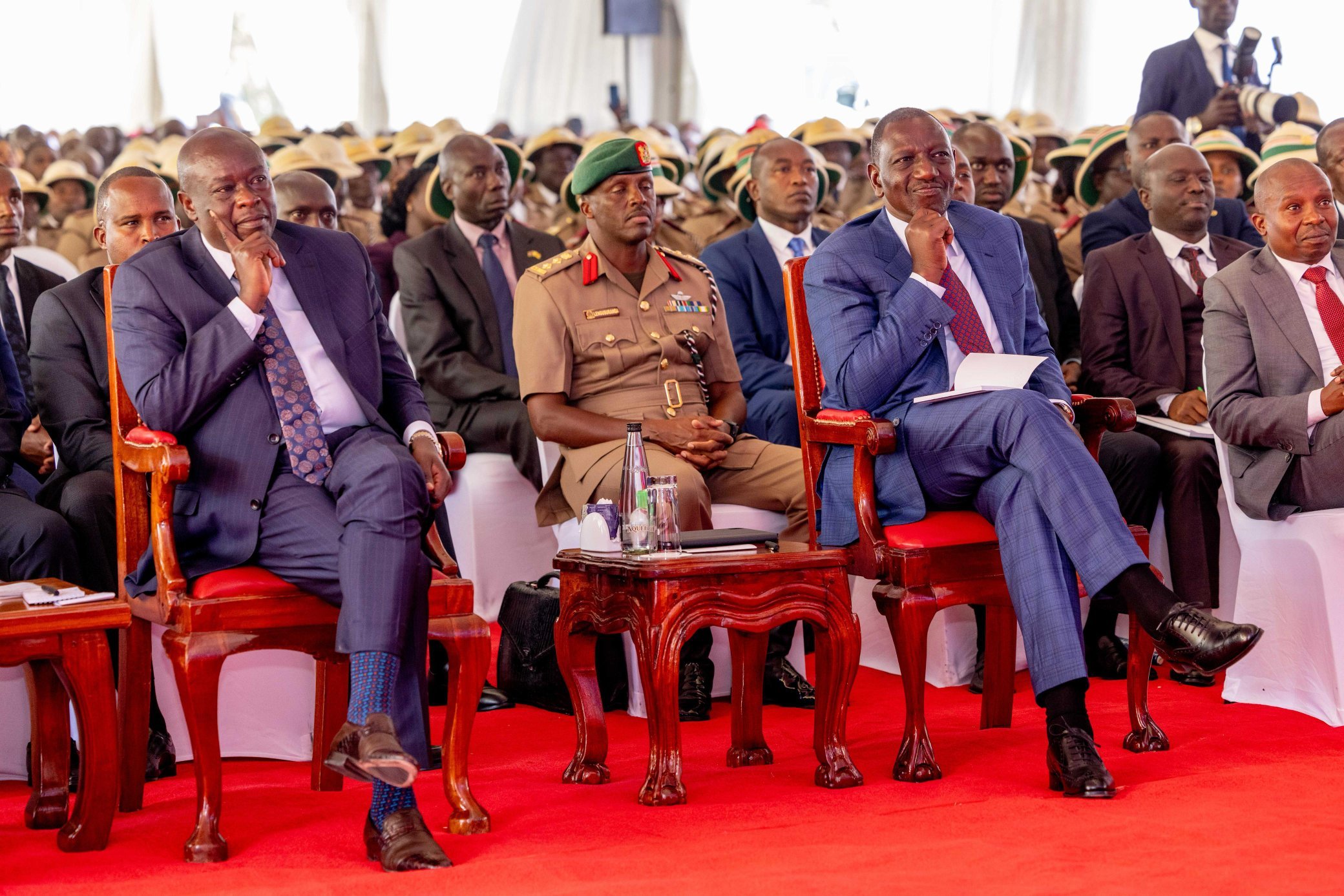
Ruto has further announced that, starting in July 2026, mandatory vehicle inspections will commence alongside the installation of surveillance cameras in major towns to strengthen enforcement.
In addition, the government will leverage digital innovation to curb corruption, introducing defensive driver certification and formalising boda boda operators through SACCOs.
“Achieving lasting change requires a whole-of-government and whole-of-society approach to road safety. As we play our part, we call on all Kenyans to obey traffic rules and remain mindful of fellow road users,” Ruto said.
Government proposal
At the same time, Ruto emphasised that road safety reforms must go beyond technology and enforcement, calling for a coordinated national effort to address systemic weaknesses, stressing the need for dedicated financing mechanisms, including the operationalisation of the national road safety fund.
“Indispensable road safety must be pursued through a whole-of-government and a whole-of-society approach. Rising fatalities, systemic corruption, infrastructure gaps and weak digital integration make it clear that road safety reform must now move from pilot phase to full national transformation,” he said.
Referring to the Chief Justice Martha Koome’s report, the President supported moving some traffic offences away from the courts into administrative processes to improve efficiency and reduce corruption.
“From weak enforcement to bribery to court attendance and backlog in our courts, I agree with the report and with the Chief Justice that some of these traffic offences need to be moved to the realm of administrative interventions,” the President stated.
Author
Latest News




Advertisement
More on News