Advertisement
Ruto defends Laikipia Ebola facility amid growing criticism
Monday 01st June, 2026 10:51 PM|

President William Ruto has defended the government’s plan to establish an Ebola preparedness facility at Laikipia Air Base, saying the project is necessary to strengthen Kenya’s ability to respond to future disease outbreaks.
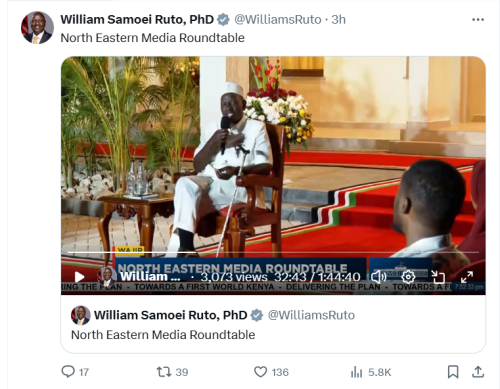
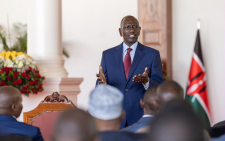
Speaking during a roundtable interview with North Eastern journalists at the Wajir State Lodge on Monday, June 1, 2026, the president dismissed criticism surrounding the facility and urged leaders to avoid politicising public health matters.
“I am wondering why anybody would want to politicise and mobilise negative politics around a matter as serious as a pandemic,” he said.
Ruto maintained that the government was acting responsibly in preparing for potential health emergencies.
You Might Also Like
“We are a responsible government. We know what we are doing. People should relax. Politicians should avoid reckless, unnecessary talk that doesn’t mean anything,” he insisted.
Preparedness and disease response
The president said the proposed facility forms part of Kenya’s broader strategy to strengthen preparedness against infectious diseases through partnerships with international allies, including the United States.
He noted that Kenya has previously worked with the US government in addressing major health challenges such as HIV/AIDS, COVID-19 and Ebola. According to Ruto, the country already operates more than 20 specialised facilities across various regions to support disease surveillance and response efforts.
Ruto cited facilities located at Kenyatta National Hospital, Moi Teaching and Referral Hospital, the Police Hospital, Thika Hospital and Alupe Hospital as examples of existing centres that support the management of infectious diseases.
He explained that the planned Laikipia facility would focus on screening, isolation and treatment in the event of an Ebola outbreak.
“These facilities are meant to make sure there is proper screening and, if there is any positive identification of people who have Ebola, they are immediately isolated and treated so that we avoid any spread of the disease,” the president explained.
Ruto questioned those opposing the government’s preparedness efforts, arguing that readiness remains a key responsibility of any administration.
“I want to ask those questioning our preparedness: what are they telling us? Are they saying we should not prepare? Are they telling us we should not be ready?”
US partnership and healthcare investment
The Head of State also highlighted Kenya’s long-standing health partnership with the United States, saying the collaboration has played a significant role in strengthening the country’s healthcare infrastructure.
According to Ruto, the US has provided close to Ksh200 billion in grants over the years to support healthcare programmes and disease response initiatives.
He added that the proposed facility would enhance Kenya’s capacity to manage future health emergencies, particularly given the country’s close links with the Democratic Republic of Congo, which has experienced repeated Ebola outbreaks.
“The same way I am committed to ensuring that every citizen, regardless of their financial or social status, has access to healthcare is the same commitment that drives our preparedness for pandemics, including Ebola,” Ruto stated.
Ruto further noted that the project aligns with the government’s commitment to universal healthcare and national security.
Opposition and court intervention
Despite the government’s assurances, the project has attracted criticism from political leaders, civil society groups and residents of Laikipia County.
On May 28, 2026, the High Court issued a conservatory order temporarily stopping the establishment of the facility and the admission of Ebola-exposed individuals following a petition filed by the Katiba Institute.
The petition raised concerns over public participation, parliamentary oversight and transparency regarding the project’s health and security implications.
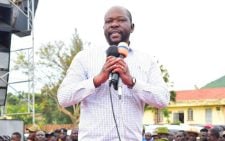
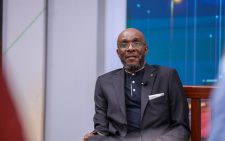
Nairobi Senator Edwin Sifuna criticised the government’s approach, while Laikipia leaders, including MPs Mwangi Kiunjuri, Sarah Korere, Jane Kagiri and Wachira Karani, called for greater transparency on the project and its potential impact on local communities.
Author
Latest News

Advertisement
More on News