Advertisement
Rights group demands probe into Ramula killings amid tensions over gold mining project
Thursday 09th April, 2026 11:35 PM|

Rights groups on Thursday, April 9, 2026, have called for an independent investigation into the deaths of two residents in Ramula, Siaya County, amid escalating tensions over a gold mining project operated by Shanta Gold Limited.
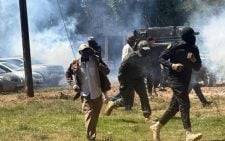
The killings occurred on Monday, April 6, 2026, when community protests against alleged forced evictions linked to the company’s open-pit mining plans turned violent.
Residents in the Gem-Ramula area staged demonstrations over grievances including lack of community consent, opaque land acquisition processes, and fears of displacement affecting over 1,200 homesteads.
Eyewitnesses reported that a large group of youths marched toward the Ramula Police Post, leading to clashes in which police reportedly used live ammunition, resulting in the deaths of Henry Otieno and Jack Omenda.
You Might Also Like


At least five homes were reportedly torched during the unrest, while heavy police deployment, including GSU officers, followed in the area.
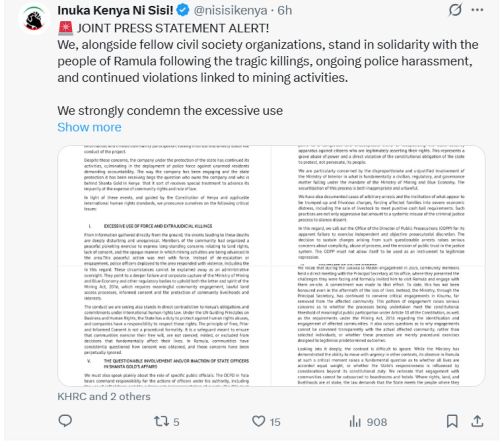
A joint press statement from Inuka Kenya Ni Sisi! and allied civil society organisations condemned the “cold-blooded killing” of community members during what was described as a peaceful picket.
“We are deeply saddened and outraged by the cold-blooded killing of two community members in Ramula,” the statement read.
State harassment and impunity
The statement highlighted patterns of harassment, including arrests by the Directorate of Criminal Investigations (DCI), arbitrary detentions, and allegedly frivolous charges forcing families into economic hardship.
One reported case involved a woman arrested with her three sons, after which one son reportedly died by suicide due to cumulative pressure.
Civil society criticised the Ministry of Interior’s involvement, arguing that the securitisation of the protests was inappropriate.
Concerns were also raised about alleged contempt of court, as a Siaya Environment and Land Court order restraining Shanta Gold from proceeding with resettlement and compensation appeared ignored.
The groups faulted the Environmental and Social Impact Assessment (ESIA) for lacking a comprehensive Resettlement Action Plan and accused regulators of ignoring stakeholder objections.
They emphasised that the principle of Free, Prior, and Informed Consent (FPIC) was not observed, fueling community mistrust.
Specific officials, including OCPD Yala Charles Wafula and the Principal Secretary for Mining, were called out for misrepresentation and dismissive stances toward unresolved human rights issues, while county leadership was criticised for silence or alignment with corporate interests.
Suspension of mining activities
Civil society demanded the immediate suspension of all Shanta Gold mining operations in Ramula and the wider Nyanza region until full legal compliance, including genuine community consultations.
Independent investigations by the Independent Policing Oversight Authority (IPOA) and Kenya National Commission on Human Rights (KNCHR) were called for, alongside prosecution of officers who used lethal force.
They urged implicated officials to step aside to allow impartial probes, and demanded transparency from the Ministry of Mining and intervention by the National Land Commission to protect community rights.
Rights groups warned that Shanta Gold could face legal, reputational, and commercial risks, with accountability measures pursued through domestic, regional, and international mechanisms.
The crisis highlights broader tensions in Kenya’s extractive sector, where economic promises often collide with community fears over land, livelihoods, and environmental impacts.
The Civil society stressed that “what is at stake is not merely a mining project, but the integrity of constitutional governance, institutional credibility, and the fundamental value placed on human life.”
Author
Latest News





Advertisement
More on News