Advertisement
Khalwale: I will make Kakamega second-largest gold mining town after Johannesburg
Monday 13th July, 2026 12:06 PM|

Kakamega Senator Boni Khalwale has pledged to transform Kakamega into a major gold-mining city, comparable to Johannesburg in South Africa, should he be elected governor in the 2027 general election.
The outspoken senator made the declaration through his social media pages on Monday, July 13, 2026, expressing confidence that his administration would unlock the county’s vast gold mining potential and position Kakamega as a leading mining hub in the region.
“If elected governor, I will make Kakamega the first gold mining city after Johannesburg in South Africa.”
Kakamega gold mining
This comes days after he maintained that no gold mining activities will be allowed to commence in Ikolomani until a win-win agreement is reached between investors and the local community.
You Might Also Like


“No mining activity should commence until we achieve a genuine win-win solution that protects our people while allowing responsible investment. I remain steadfast in defending the land, the livelihoods, and the future of the people of Kakamega. We welcome investment, but it must be just, inclusive, and beneficial to both our communities and the investors.”
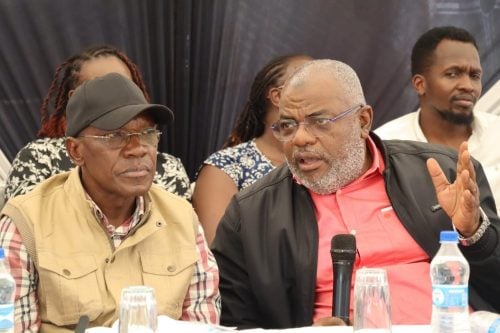
The session was chaired by Mombasa Senator Mohamed Faki, who doubles as the chairman of the Senate standing committee.
“My message was unequivocal: our people will not be displaced to create room for investors without a fair, transparent, and mutually beneficial agreement. The rights, livelihoods, and dignity of our communities are non-negotiable. Development must never come at the expense of the very people who have lived on and depended on this land for generations.”
Shanta gold mines

The outspoken senator stated that he had presented the position of the people of Ikolomani, Shinyalu, and Lurambi before the Senate committee, insisting that residents should not be displaced from their ancestral land to pave the way for investors without a fair, transparent, and mutually beneficial agreement.
He maintained that the rights, livelihoods and dignity of the affected communities were non-negotiable and that development should never come at the expense of people who have lived on and depended on the land for generations.
Author
Latest News







Advertisement
More on News