Advertisement
Residents cry out over filthy Awendo town
Friday 06th January, 2023 08:30 AM|
For over 10 years, water and sanitation have been a big headache in the fast-growing Awendo town in Migori County.
The town that emerged as a result of industrialisation has been choking with filth, especially in residential estates.
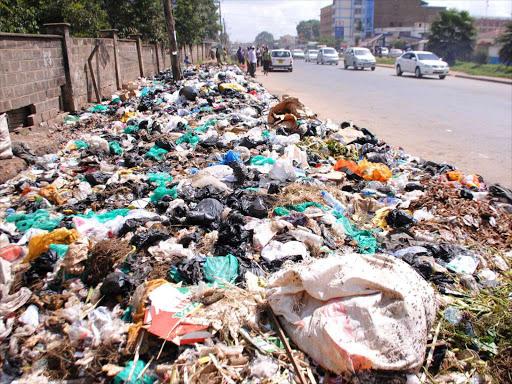
A walk in the town’s Jiw Dendi and Athiko estates reveal a public health hazard in waiting.
Litter is an eyesore and pigs and cows roam in the residential areas that double up as homesteads for some natives.
The streets are characterised by unsightly makeshift structures and hawkers vending all kinds of foodstuffs– from roasted maize to fried fish and vegetables.
A pungent choking smell invades one’s nostrils while walking in the estates, due to poor garbage disposal or dumping of waste.
The drainage system along the busy estates is full of raw sewage from residential and commercial plots in the area.
Pieces of plastic pipes used to dispatch the sewer waste into the open drainage system are strewn all over.
The illegal disposal method is carried out at dawn – when there is minimal human traffic.
For first-time visitors, it can be difficult to tell estates whether you are in a village or in an urban town of the 21st century.
Sony Sugar offshoot
Yet this is the pale shadow of the sugar belt town that emerged as a result of the establishment of the Sony Sugar factory in the late 1970s.
Today, Awendo town that would be boasting of thriving commercial enterprises and a booming local economy is disturbingly dirty. It’s choking with filth all over the estate, which is densely populated with most of the residents decrying an acute supply of clean water.
Awendo residents James Owiro, Garrison Ouma, George Omollo, Walter Ochieng, Mary Atieno and Alice Onanoh want water supplies boosted.
“We rely on water vendors who sell to us contaminated water drawn from the wells or roadside running water,’’ claims Ouma
Ochieng also claims the vendors at times draw water from River Sare and supply it to the local hotels and residents.
“We have been treating many cases of dysentery and other water-borne related diseases, almost every day or weekly,’’ he claims
This is due to over-reliance on water from untreated sources. Poor planning has also led to inaccessible roads to the residential estates. Some residential houses were constructed on water tables, sewer lines or road reserves.
They stink when sewers burst or water flows within the compound and at times even flows into the doorsteps of some houses. Select access roads are also blocked with garbage and urban waste and or clogged drainages due to poor drainage systems. Acting town manager David Odhiambo says they are working on a strategy to improve the town’s aesthetic value.
“We are aware of the challenges we face and we are working with development partners to sanitise the town,’’ he says.
Sanitation of town
County Health Minister Julius Awuor says they have given the sanitation of the town a priority.
“In the next one to two years, we will have improved the town’s aesthetic value by far,’’ says Awuor.
He disclosed that they had issues of payment after casuals cash was delayed. But they are in the process of hiring new casuals.
“Once we get sufficient funds, we will hire the casuals who will help in in cleaning the town’’ Awuor says
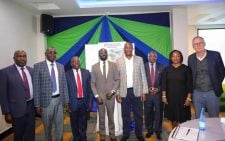
The People Daily established that the United States Agency for International Development (USAID) is keen to help sort the mess. Already, USAID has granted a Community Based Organization Sh19 million to boost sanitation.
The beneficiary organization is -Blue Cross Nyatike Community Development programme. The organization has signed a formal contract agreement with the donor.
USAID Chief of Party, Dr Paul Orengo, said the grant is part of the $24 million USAID Western Kenya Sanitation Project (WKSP).
The funding is to facilitate, develop and implement approaches that will address the systems-level barriers and provide incentives.
“It will strengthen markets for sanitation and hygiene products and services in the select town in 8 counties in Nyanza,’’ Orengo says
Using new market-driven approaches, USAID’s WKSP aims to catalyze and transform the accessibility and delivery of sanitation. The project will be implemented in the counties of Migori, Kisumu, Siaya, Busia, Bungoma, Kakamega, Homabay, and Kisii.
Over the years, the counties have been facing the massive challenge of providing access to basic sanitation, which remained at 30 percent low and which this project intends to scale up to 80 percent.
Orengo explains that having adequate menstrual hygiene management (MHM), where 65 percent of women and girls cannot afford sanitary pads, means that more interventions are key.
“Our target is that within the next one to two years, issues of MHM within our project turf, is improved efficiency for the common good of the society,’’ says Orengo.
Author
Kepher Otieno
View all posts by Kepher OtienoLatest News




Advertisement
More on News