Red Cross leads evacuations as River Nyando breaks its banks
By Faith Lagat, March 23, 2026The Kenya Red Cross Society has taken the lead in responding to the escalating flooding crisis in West Kenya, where the River Nyando has burst its banks, submerging communities and critical infrastructure.
As heavy rainfall continues to batter the region, with peaks expected on March 23–24, 2026, the humanitarian organisation is spearheading urgent rescue and evacuation operations to safeguard lives amid rapidly rising waters.
Red Cross teams, often operating in chest-deep floodwaters, have rescued two families trapped by the deluge and evacuated more than 200 people along with over 200 livestock to safer ground.
“Sustained rainfall continues across West Kenya, with peak expected between 23rd and 24th March. Rivers are full and rising, with River Nyando already overflowing, keeping the situation critical. Impacts: Schools closed, roads flooded and impassable, businesses disrupted and high risk of displacement in low-lying areas,” Red Cross stated.

Efforts are ongoing, with a major operation currently underway to relocate over 900 students from Ahero Girls National School, as floodwaters threaten the campus and surrounding access routes. Volunteers continue to prioritise the most vulnerable, using boats to ferry residents, children, and animals to safety.
“Response: Kenya Red Cross and partners have rescued 2 families and evacuated over 200 people and 200+ livestock to safer ground. Planned: Evacuation of 900+ students from Ahero Girls National School currently underway,” Red Cross added.
Roads submerged
The flooding stems from River Nyando overflowing at the Ahero Bridge, leaving large sections of the Kisumu–Awasi–Kericho highway impassable.
Water continues to rise, turning roads into rivers and isolating communities. Schools across affected zones have shut down, businesses remain disrupted, and thousands living in riparian areas face imminent displacement.
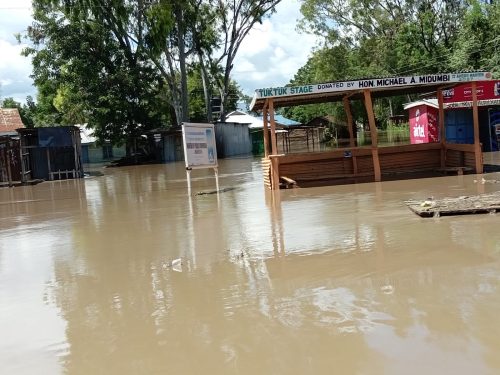
The Ahero region, a key area for irrigated agriculture, has once again been hit by seasonal rains, highlighting longstanding infrastructure weaknesses.
Residents in low-lying areas reported being stranded in their homes as floodwaters reached rooftops, while livestock owners struggled to move animals to higher ground.
Authorities urge caution
The government has reinforced the urgency with an official public alert issued on March 23, 2026. Government Spokesperson Isaac Mwaura confirmed the overflow, warning that rising water levels pose severe risks to motorists and residents.
“Drivers are urged to exercise extreme caution, avoid flooded road sections, especially at night when visibility is low, and currents can sweep vehicles away and use alternative routes such as the Timboroa–Lesos–Kapsabet–Chavakali path for travel to and from Kisumu,” he said.
The Nyanza Regional Traffic Command is actively redirecting traffic and monitoring the situation. Emergency response teams from the Red Cross and government agencies remain on high alert, providing ongoing updates and support.
Authorities continue to stress public vigilance: stay informed, heed advisories, and prioritise safety above all.