Public universities face Ksh28B funding gap as MPs question govt priorities
By Aloys Michael, July 15, 2026Public universities are facing a funding shortfall of nearly Ksh28 billion under the government’s new university funding model, Education Cabinet Secretary Julius Ogamba has told Members of Parliament, warning that the funding gap continues to strain higher education institutions despite ongoing government support.
Appearing on Wednesday, July 15, 2026, before the National Assembly’s Public Investments Committee on Governance and Education, Ogamba said the government has already disbursed Ksh5.2 billion for Technical and Vocational Education and Training (TVET) student funding. However, he acknowledged that the overall financing gap affecting public universities remains unresolved.
The funding crisis has renewed debate over the sustainability of Kenya’s higher education financing, with lawmakers questioning the government’s budget priorities and demanding greater accountability in the management of public universities.
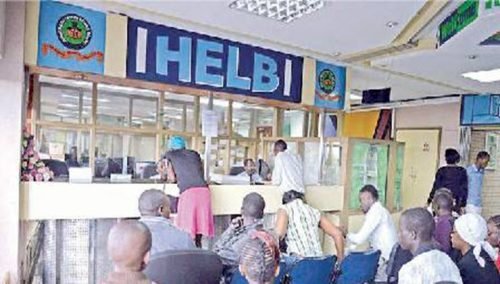
Kenya introduced the new university funding model to allocate scholarships and student loans based on learners’ financial need rather than applying a uniform funding system. Under the model, students are placed in different funding bands that determine the level of government scholarships and Higher Education Loans Board (HELB) support they receive.
While the system aims to make university funding more equitable, it has faced criticism over affordability, delayed disbursements and implementation challenges.
During the committee session, MPs questioned how historical funding deficits have been managed over the years. One legislator cited a Ksh2.5 billion funding deficit in the 2019/2020 financial year, noting that additional allocations made in subsequent years had not eliminated the accumulated shortfalls.
The lawmakers also raised concerns that many students remain unaware they qualify for government scholarships and financial aid for TVET programmes. According to committee members, the lack of awareness has discouraged some eligible learners from enrolling because they fear they cannot afford tuition fees.
Kaspul MP Boyd Were, a member of the committee, said Parliament’s review of universities had revealed mixed results in financial management.
“We have been able to examine quite a number of institutions. Most principals and many vice-chancellors are doing well, but we have a few vice-chancellors against whom this committee will make very serious recommendations because we have seen theft and plunder of public resources,” Were said.
He added that some university administrators had failed to satisfactorily explain how public funds were spent, underscoring the need for stronger financial oversight and accountability across public institutions.
Responding to the concerns, Ogamba said the Ministry of Education is pursuing additional funding from the National Treasury while encouraging universities and TVET institutions to diversify their revenue streams through commercial ventures.
“We are working towards increasing enrolment and have requested for more resources, but we are also undertaking commercialisation initiatives to support our institutions,” the Cabinet Secretary said.
He cited several institutions that have embraced income-generating projects, including automotive garages, bakeries, dairy farming, packaging and value-addition enterprises. Ogamba highlighted Chuka University as one of the institutions expanding into edible oil production as part of efforts to reduce reliance on government funding.
“The exchequer can no longer support these institutions 100 per cent,” Ogamba said, adding that universities must increasingly leverage innovation, research and commercial enterprises to strengthen their financial sustainability.
The committee’s deliberations come as Kenya’s higher education sector grapples with rising student enrolment, increasing operational costs and growing demand for scholarships and HELB loans.
Parliament is expected to continue scrutinising university finances as it considers reforms aimed at improving accountability and ensuring sustainable funding for public universities under the new funding model.