Advertisement
Poisons board, industry players seek solutions on drug approval and safety
Tuesday 12th August, 2025 09:53 PM|

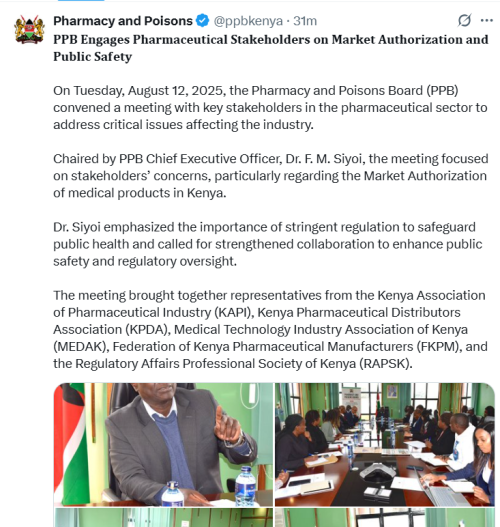
The Pharmacy and Poisons Board (PPB) convened a high-level meeting with key players in Kenya’s pharmaceutical sector to address pressing challenges in the approval and safety of medical products.
The session, chaired by PPB Chief Executive Officer Siyoi, focused on market authorisation processes, public safety, and strengthening regulatory oversight.
The meeting brought together representatives from the Kenya Association of Pharmaceutical Industry (KAPI), Kenya Pharmaceutical Distributors Association (KPDA), Medical Technology Industry Association of Kenya (MEDAK), Federation of Kenya Pharmaceutical Manufacturers (FKPM), and the Regulatory Affairs Professional Society of Kenya (RAPSK).
This united front comes amid mounting concerns over the proliferation of substandard and falsified medicines. Recent studies estimate that up to 30 per cent of drugs in low-income countries may be counterfeit, threatening patient safety and eroding public trust. Kenya has also faced high-profile scandals involving fake medicines, underscoring the urgency of reforms.
Regulation and collaboration
You Might Also Like



Opening the discussions, Siyoi stressed the need for stringent regulation to protect public health.
“The safety of our citizens depends on the integrity of the medicines they rely on,” he said, urging closer collaboration between regulators and industry.
The PPB’s move reflects a balancing act—ensuring affordable access to medicines while maintaining rigorous safety standards. This mirrors global trends, with a 2021 Lancet study showing that strong pharmacovigilance systems can cut adverse drug reactions by up to 25 percent.
The board aims to streamline market authorisation procedures to ensure only safe and effective products reach the public.
Shaping future policies
Industry stakeholders expressed optimism about the talks, calling for a regulatory framework that supports sector growth while safeguarding patients. Representatives from KAPI and KPDA emphasised the importance of harmonised regulations, better infrastructure, and coordinated pharmacovigilance systems to address persistent gaps in the supply chain.
The inclusion of manufacturers, distributors, and regulatory professionals in the dialogue points to a comprehensive approach in tackling the challenges. For Kenya, which continues to strengthen its health systems, the meeting’s resolutions could have lasting implications for drug safety and industry standards.
PPB has pledged to maintain transparency throughout the process and keep the public informed on the outcomes. With consensus building across the sector, the collaborative momentum from this meeting could set the stage for more robust regulations and improvedpublic health outcomes in the country.
Author
Latest News








Advertisement
More on News