Advertisement
Otiende Amollo: Courts cannot halt parliament’s law-making role
Friday 22nd August, 2025 03:26 PM|

The delicate balance of power between Parliament and the Judiciary came under sharp focus on Friday, August 22, 2025, during a historic retreat bringing together leaders from the two arms of government.
The meeting, held at the Serena Hotel in Mombasa, sought to mend strained ties and establish a framework for collaboration amid heightened scrutiny of governance and oversight.
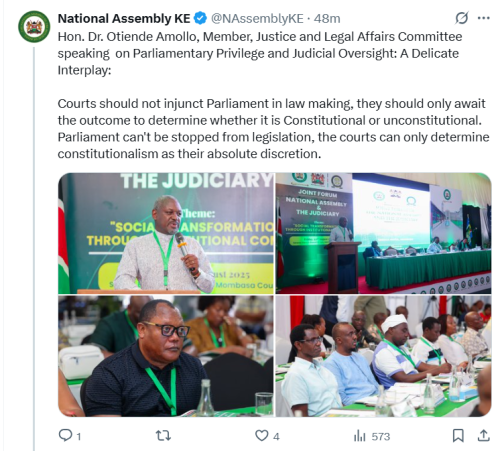
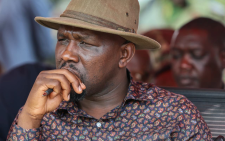
Otiende Amollo, a member of the Justice and Legal Affairs Committee, led the debate with a strong defence of Parliament’s legislative autonomy. He warned against what he termed judicial interference with the law-making process, noting that courts should not block Parliament from its constitutional role.
“Courts should not injunct Parliament in law-making; they should only await the outcome to determine whether it is constitutional or unconstitutional. Parliament cannot be stopped from legislation; the courts can only determine constitutionalism as their absolute discretion,” Amollo said in a National Assembly X post, dated August 22, 2025.
Call for mutual respect
You Might Also Like

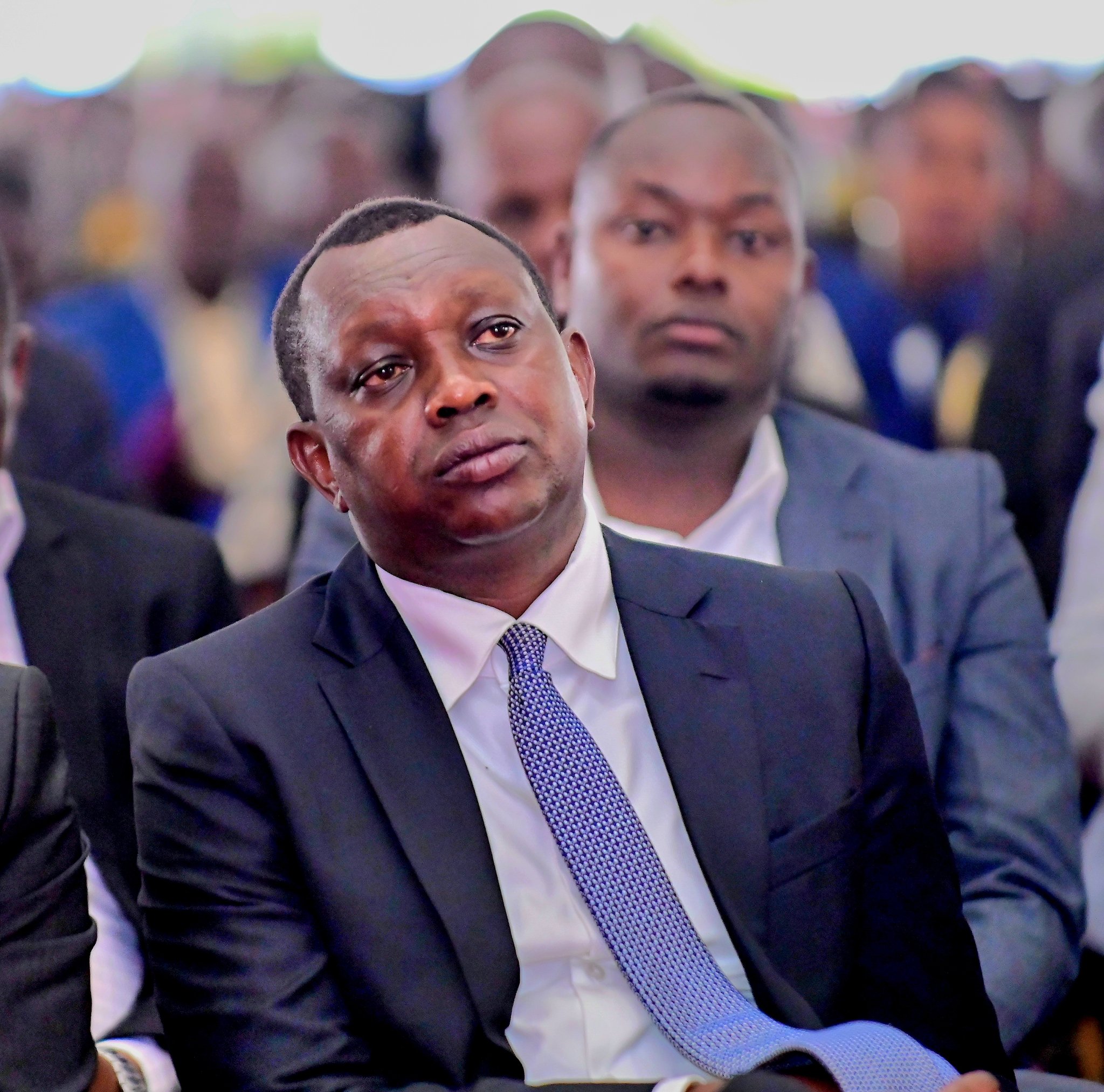
In his presentation on “Parliamentary Privilege and Judicial Oversight: A Delicate Interplay,” Amollo stressed that while separation of powers is fundamental, it should not be applied rigidly. He urged for a framework anchored on mutual respect between the two institutions.
“Separation of powers is a good concept but must not be applied with rigidity. Parliament must respect the courts where their jurisdiction falls, but Parliament must also respect court orders,” he added.
His remarks echoed concerns raised in legal circles about the scope of parliamentary privilege, a subject of international debate. A 2022 Oxford Journal of Legal Studies analysis highlighted how unchecked privileges could obstruct judicial review, a debate now mirrored in Kenya’s governance model.
Wetang’ula faults conservatory orders
National Assembly Speaker Moses Wetang’ula echoed Amollo’s sentiments, raising alarm over conservatory orders frequently issued by courts against parliamentary processes. He argued that the orders have disrupted critical committee work and undermined the legislative process.
“Conservatory orders frequently issued by judges to the National Assembly have jeopardized the legislative process. Matters before committees, not the House, have been halted because of such orders. This is a matter that needs to be addressed by the Judiciary,” Wetang’ula stated.
He described the forum as a turning point in relations between the Legislature and Judiciary, saying it was “key to strengthening relationships between the two arms of government for the good of the citizens of this country.”
Redefining separation of powers
Wetang’ula also reflected on the constitutional design, observing that the three arms of government were never meant to operate in isolation. He noted areas of convergence, such as subsidiary legislation by the Executive and practice directions from the Judiciary, as examples of interconnected governance.
“When the drafters of our Constitution divided sovereign power among the three arms of government, they also beautifully knitted together the doctrine of separation of powers,” he remarked.
As the retreat continues, stakeholders expressed optimism that the dialogue will ease mistrust and foster collaboration. The outcomes are expected to shape future engagements between the Legislature and Judiciary, with far-reaching implications for Kenya’s governance.
Author
Latest News






Advertisement
More on News