Advertisement
One in 5 Africans lives in poverty as investors eye opportunity – Report
Saturday 20th June, 2026 11:49 PM|

As Africa grapples with persistent hunger, poverty and food insecurity, a growing number of global investors are being encouraged to view the continent’s rural development challenges not merely as humanitarian crises but as investment opportunities capable of generating both financial returns and social impact.
This is according to the latest International Fund for Agricultural Development’s (IFAD) 2025 Impact Report, which argues that investing in smallholder farmers, rural enterprises and agricultural value chains can unlock significant economic potential while helping millions escape poverty.
“We are still far off track to achieve SDG 2 (zero hunger); approximately one out of every five people in Africa live in poverty, while an estimated 80 per cent of the world’s poor reside in rural areas,” the report states.
Yet rather than presenting poverty solely as a development challenge, IFAD is increasingly making a business case to global capital markets.
You Might Also Like
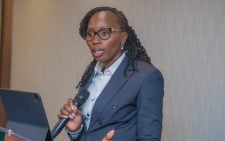


The Rome-based United Nations agency says its innovative financing model is attracting institutional investors seeking measurable social and environmental returns alongside financial stability.
According to the report, IFAD has raised nearly Ksh129 billion through sustainability bonds since 2022, drawing investors from Sweden, Japan, Morocco and other markets.

The agency says those funds are helping finance agricultural and rural development projects across Africa, Asia and Latin America.
“Our AA+ credit rating, reaffirmed by both Fitch and S&P, with a positive outlook from S&P, reflects not just financial discipline, but the proven track record of an institution that converts every US dollar of donor contributions into US$6 of on-the-ground investment,” IFAD said.
That claim is becoming increasingly important as traditional aid budgets face pressure from rising global debt, geopolitical tensions and competing domestic priorities in donor countries.
Instead of relying exclusively on government contributions, development institutions are increasingly turning to capital markets, pension funds and private investors to mobilise resources for poverty reduction.
The shift reflects a broader transformation in development finance, where aid is being blended with commercial capital to finance projects that can generate sustainable economic returns.
Global markets
IFAD‘s latest figures show it currently targets more than 4.2 million people through private-sector investments while leveraging six dollars in additional financing for every dollar invested.
The organisation plans to increase direct private-sector financing to more than Ksh12.9 billion between 2025 and 2027, a fourfold increase from the Ksh3.23 billion seed funding deployed in earlier financing cycles.
Supporters argue that such investments can help bridge Africa’s enormous agricultural financing gap.
Across the continent, smallholder farmers produce the majority of food consumed locally but often lack access to credit, modern technologies, irrigation systems and reliable markets.
Projects financed through IFAD’s sustainability bonds are designed to address those bottlenecks by improving market access, supporting climate-resilient farming practices, expanding rural financial services and strengthening agricultural value chains.
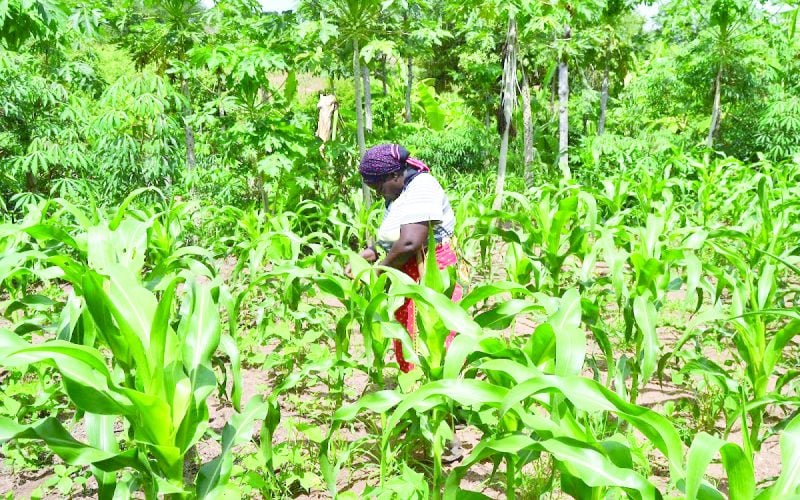
In Benin, for example, IFAD-backed programmes are helping market gardeners improve access to production inputs and climate-smart technologies while strengthening rural infrastructure. In Tanzania, Rwanda, Madagascar and the Democratic Republic of Congo (DRC), similar investments aim to boost agricultural productivity and rural incomes.
Development economists say the model represents an important evolution in efforts to combat hunger.
Rather than viewing poverty reduction as a cost, investors are increasingly examining how sustainable agriculture, rural entrepreneurship and food systems development can create long-term economic value.
However, experts caution that financial returns must not overshadow development outcomes.
The report shows that many projects remain in early implementation stages, with actual beneficiary numbers still trailing long-term targets.
Even so, the institution remains optimistic.
“As IFAD13 gets firmly underway, with 94 member states having pledged a record US$1.4 billion in replenishment contributions, and our ambition set at reaching 100 million rural people by 2027, IFAD’s sustainable bond programme will continue to grow in scale and ambition,” the report says.
For Africa, where hunger and poverty remain deeply intertwined, the emerging question is no longer whether development needs investment. It is whether investors can profit while helping solve one of the continent’s most pressing challenges.
Author
Latest News






Advertisement
More on News