Advertisement
NTSA reveals why Kenya’s matatu industry remains difficult to regulate
Tuesday 16th June, 2026 07:09 AM|

The Director General of the National Transport and Safety Authority (NTSA), Nashon Kondiwa, has shed light on what he believes is the biggest obstacle to regulating Kenya’s matatu industry, arguing that public debates often focus on symptoms rather than the underlying structural challenges facing the sector.
Speaking during a televised interview on a local TV station on the night of Monday, June 15, 2026, Kondiwa said issues such as graffiti, flashy vehicle modifications and what is commonly referred to as the “nyoka nyoka” culture in the matatu industry are merely manifestations of a deeper problem involving ownership structures, financing and accountability.
Graffiti is a symptom, not the problem
According to the NTSA boss, public discussions about graffiti on public service vehicles often miss the larger issues affecting the transport sector.
“Graffiti, the nyoka nyoka, and the craziness we have in public transport are symptoms of the model we are operating,” Kondiwa said.
You Might Also Like
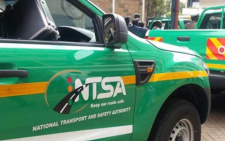


He argued that if matatu operators were better organised and operated within more formal structures, many of the concerns currently associated with the sector would naturally diminish.
“If you want to fight graffiti, get these operators to be organised into some formality, and then we will not even be discussing graffiti,” he stated.
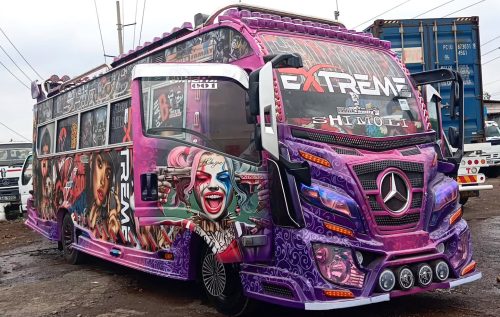
Kondiwa noted that although legal battles over graffiti and vehicle artwork have previously reached the courts, he did not consider the issue a priority because it does not address the root causes of the industry’s challenges.
“For me, discussing graffiti is discussing the symptoms of a problem,” he added.
Lack of transparency concerns NTSA
The NTSA Director General identified the industry’s ownership and investment structure as one of the authority’s biggest regulatory challenges.
Unlike other sectors where regulators maintain detailed records of investors and operators, Kondiwa said the matatu industry remains largely opaque.
“There is no industry where the regulator does not know the investors in the sector,” he said.

Drawing comparisons with the telecommunications industry, where he previously worked, Kondiwa explained that regulators are typically aware of the individuals and entities behind major investments.
“In the matatu industry, I don’t know. That is the first problem. I don’t know who the investors are; I don’t know where the money comes from. I don’t know whose interests they are running,” he said.
According to him, most operators are only known through registration as transport Saccos or companies, making it difficult to establish the actual investors behind the businesses.
Questions over profitability
Kondiwa also raised concerns about the financial sustainability of the public transport sector, saying regulators have limited visibility into whether operators are making profits or suffering losses.
He attributed part of the uncertainty to the high rate of road accidents affecting the industry.
“Secondly, we don’t even know if the sector is making money or not,” he said.
“A good operator today will tomorrow not have a bus as a result of the alarming rate of accidents.”
/X
The remarks highlight the financial risks facing transport operators, many of whom lose vehicles through accidents, theft or operational challenges.
Kondiwa’s comments come days after NTSA revoked the Public Transport Operator (PTO) licence of Nicco Movers 1 Sacco with immediate effect following the death of 19-year-old KMTC student Eugene Mutuku.
The decision was announced on June 12, 2026, through an official public notice issued after the incident that occurred along Thika Road. The authority directed law enforcement officers to impound any vehicles operating under the Sacco despite the revocation.
NTSA stated that the action was taken as part of an ongoing investigation into the circumstances surrounding the incident and Sacco’s compliance with safety regulations.
According to NTSA, a detailed assessment of Nicco Movers 1 Sacco revealed serious operational weaknesses, including a lack of effective control over its fleet and inadequate safety measures.
The authority noted that vehicles under the Sacco were deemed unsafe and posed a risk to passengers and other road users. It further indicated that there were no sufficient efforts by the Sacco management to address major safety concerns before the incident.
Author
Mustafa Juma
View all posts by Mustafa JumaLatest News






Advertisement
More on News