Advertisement
No money for free education, CSs tell MPs in funding shocker
Friday 25th July, 2025 06:40 AM|

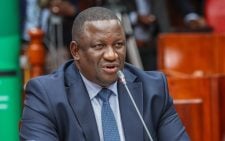
National Treasury Cabinet Secretary John Mbadi and his Ministry of Education counterpart Migos Ogamba yesterday shocked lawmakers after they admitted that the country can no longer continue to offer Free Primary and Day Secondary Education due to inadequate resources.
The duo further dashed the hope of millions of learners after they admitted that moving forward the government will not be in a position to pay for the examination fees amounting to about Sh5.9 billion.
While appearing before MPs who sit in the Education committee to shed light on the status of funding of the sector, the two also spelt doom for universities after they announced that the government will be implementing certain measures such as staff layoffs, closure of satellite campuses and outsourcing of non-core services to rescue the institutions which are on the verge of collapse.
He said: “The National Treasury also continues to provide allocation to the Universities on the Differentiated Unit Cost (DUC) capitation. Further still, the Ministry of Education in collaboration with the universities, is expected to develop a comprehensive reform strategy that will ensure financial sustainability within public universities.”
You Might Also Like
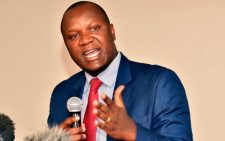
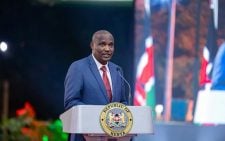
With regards to school capitation, Mbadi revealed that the government has for the last seven years been sending Sh16,900 as capitation to secondary schools up from the Sh22,244 required per learner.
He explained that although the National Treasury had disbursed all the capitation to school for term one and two, he admitted schools have never received the entire capitation required to manage them.
“The truth of the matter is we don’t have the capacity to finance Free Primary Education and Free Day Secondary education. Let us not live a lie, the budget we approve cannot provide the Sh22,244 required per learner. This is not possible,” said Mbadi, adding; “The thing is we have been underfunding the education sector. The government is failing to do this because of other competing needs such as the debt repayments which we have been making as they are too high compared to before.”
Constrained environment
In particular, he explained that out of the Sh15,042 required per learner for junior school, the government has been disbursing Sh10,000, out of the Sh22,244 required per learner for secondary schools they have been disbursing about Sh16,900. Only the Sh1,420 required for primary schools was disbursed in full.
He explained that the 80 per cent budget the ministry has been sending to schools is inadequate to finance all the learners owing to the fact that the enrolment has been increasing while the capitation has remained the same.
He explained that the Government has been operating in a constrained fiscal environment worsened by expenditure pressures for critical interventions in security and emergency interventions
He told MPs the only way they can increase the capitation is by allowing the Government to manage about 40 per cent of the allocation that goes to the National Government Constituency Development Fund (NG-CDF) sent to schools as bursaries.
“However, due to constrained fiscal space and other emerging priorities within the education sector, updating these rates might be untenable. The Government will however consider reviewing these rates should revenue performance improve,” said Mbadi. “The entire budget is disbursed but the number of learners is high. As to what we need to do to fund education, please give me this money that is all over the place so that we can consolidate, for example, the NGCDF.”
On examination fees, he said although the government will this financial year settle the fees, he was categorical that it is not tenable for the ministry to continue paying for all the learners.
He said Treasury had submitted a proposal to the Cabinet to ensure only needy learners will benefit from the waivers.
Ogamba said the inconsistencies in disbursement of capitation to schools made the Government move from National Education Management Information System (Nemis) to Kenya Education Management Information System (Kemis).
The MPs accused the CSs of running ministries full of corrupt individuals and cartels who have been disbursing funds to nonexistent schools.
They named the principal secretaries in the respective ministries as running down the education sector due to skewed distribution of resources.
The MPs demanded that schools be allowed to charge extra fees as they are on the verge of closing down, adding that it is wrong for the government to hang on a policy it is not implementing since for the last ten years no school has received all the capitation.
Non-existent schools
Luanda MP Dick Maungu cited two non-existent schools that received Sh50 million each from the Sh1.3 billion infrastructure fund after officials from the Ministry of Education included institutions in a list that had initially been approved by the National Treasury. He named Kamuret and Bomet secondary schools as being nonexistent while Olbutyo Girls and Olbutyo Boys received Sh20 million because of favoritism.
Teso South MP Mary Emase told the two CSs to re-write the education policy to lower the capitation from Sh22,000 to Sh16,900.
Kibra MP Peter Orero told the duo to allow teachers to start charging extra fees as it is regrettable that schools have no money.
Kitutu Masaba MP Clive Gisairo accused the two ministries of killing the education sector by disbursing funds to non-existent schools.
Author
Mercy Mwai
View all posts by Mercy MwaiLatest News


Advertisement
More on News