Advertisement
NHIF Law will have extra benefits for expectant mothers
Friday 01st October, 2021 12:58 AM|
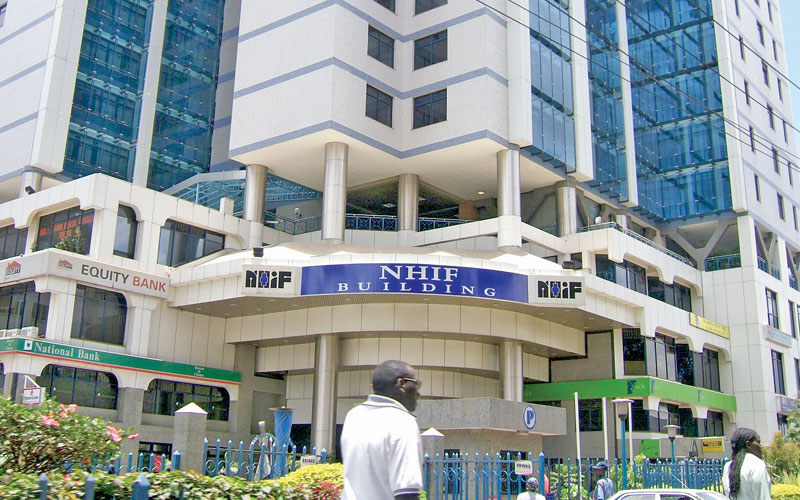
All expectant mothers in the country will access maternal care services even if not registered under the National Hospital Insurance Fund (NHIF) cover scheme if the NHIF Amendment Bill, 2021 becomes law.
Even as the Bill makes it mandatory for Kenyans who have attained the age of 18 to be enrolled in the NHIF scheme, some of its sections propose that the government supports those who cannot pay.
Section 15 of the 2021 Bill further stipulates that the National government shall be liable as a contributor to the Fund on behalf of the indigent and vulnerable person identified by a relevant government body.
The Fund’s Chief Executive Officer, Dr. Peter Kamunyo said an NHIF Act will ensure that every Kenyan will enjoy benefits that come with a harmonised SUPA Cover. Supa Cover costs Sh500 per month for the principal members and beneficiaries.
It entails among other benefits, Outpatient Services which include; Consultation, Laboratory, investigations, daycare procedures, drugs and dispensation, health education, wellness and counselling, physiotherapy services, and immunization.
“For instance in maternal care, expectant mothers – even if not registered as members with the NHIF – will access Antenatal and Prenatal care and deliveries, both normal and caesarean section,” he pointed out even as latest data by the NHIF shows that over 5 million expectant have benefitted from the Free Maternity Services, known as Linda Mama since 2016.
Every year, an estimated one million expectant mothers register for the program annually, and an average of 627,000 deliveries are paid for every year by the government.
The Act, he noted, will also enable all Kenyan women of reproductive health age access reproductive health services such as family planning.
“All pregnant women who are Kenyan Citizens are eligible to enrol for Linda Mama at no cost,” he points out.
On Wednesday evening, the National Assembly voted to pass the Bill, which is now before the Senate for debate.
Kamunyo says the enactment of the Bill into law will see more Kenyans covered, and will increase the number of women on supervised deliveries.
“Where a nurse, skilled birth attendant or doctor is involved, there will also be a significant reduction in; or no maternal and child deaths, even fewer delivery and postpartum complications,” he pointed out yesterday.
Data from the Fund indicate that the number of expectant mothers having delivered in government-run health facilities since 2016 when Free Maternity was co-opted into NHIF has been increasing.
For instance, 26 percent and 11 percent of the deliveries – all of them supervised – took place in low-cost private and faith-based health facilities, respectively, Kamunyo told People Daily.
Earlier this year, President Uhuru Kenyatta made a passionate appeal for Parliament to prioritize the Bill which is expected to provide the much needed support by the government towards achieving Universal Health Coverage (UHC).
The proposed law has also attracted a number of amendments, key among being the provisional clauses outlining the manner in which health facilities are accredited or removed from the Fund’s accreditation roll.
The provision for the Fund’s beneficiaries to select only one facility, from which they can benefit from the Fund, has also raised issues. A section of Kenyans is arguing that it would be hard to determine where one will get sick or whether the accredited facility they choose will have adequate facilities to cater for their illness.
However, being a social protection principle of UHC, Kamunyo said all expectant mothers fall in the category of vulnerable citizens, and will benefit.
Kenya recorded a decline of 18 percent from 490 deaths in 1990 to 400 deaths per 100,000 live births in 2013. Delivering at home is associated with higher risk of maternal deaths, therefore reducing the number of home deliveries is important to improve maternal health.
The annual budget allocation for Linda Mama by the National Treasury is Sh4.098Billion per year, which guarantees access to the Linda Mama Package. This, the NHIF says includes antenatal, skilled delivery and post-natal care and complications arising from pregnancy in over 6,000 NHIF declared healthcare facilities; either public, low cost private and faith-based hospitals across the country.
The maternal mortality rate as per World Bank data stood at 342/100,000 live births in 2017. Further, 62 percent of births in Kenya are delivered under the supervision of a skilled birth attendant, which is still below the international target of 90 percent.
Traditional birth attendants continue to assist with 28 percent of births, relatives, and friends with 21 percent, and in 7 percent of births, mothers receive no assistance at all.
Kamunyo however, notes that to achieve the goal of bringing every Kenyan on board NHIF, there is need for targeted interventions, including community mobilization and health education.
“Male partner involvement to help generate local demand for, and uptake of, supervised delivery services is also key,” he argued that would be essential.
Other opinions point to the need for Improvement in the quality of services in health facilities, including ensuring respect and dignity for service users.
The NHIF amendment Bill was tabled by majority leader Amos Kimunya and passed by the national assembly on Wednesday.
It makes it mandatory for all Kenyans to enrol in the scheme. This will see Kenyans above the age of 18 pay Sh500 monthly as contribution to the fund.
Author
George Kebaso
View all posts by George KebasoLatest News






Advertisement
More on News