Advertisement
Ndindi Nyoro blasts govt plan to slash day school funding
Sunday 16th November, 2025 04:56 PM|

Kiharu Member of Parliament Ndindi Nyoro, has criticised the government for a move he says will increase fees for day secondary schools.
Speaking during a church service at Full Gospel Church in Murang’a on Sunday, November 16, 2025, Ndindi said the Ministry of Education had sent a circular to school principals referring to a 2015 Gazette notice. The circular proposes cutting capitation per student from Ksh22,000 to Ksh12,000 per year.
“I have been receiving communication from principals on something very appalling. As a leader, we are not going to allow it to happen,” said Ndindi.
“That the Ministry of Education, the Government of Kenya, has sent a circular to our principals purportedly referring to a Gazette Notice of 2015, wanting to reduce capitation to our day schools, day secondary schools, from 22,000 to 12,000 shillings.”
You Might Also Like

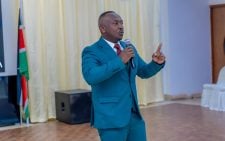
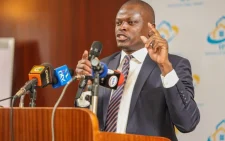
“I want to assure you, as a member of parliament, I will do everything possible within my powers to make the government recede that decision. Because education plays a very critical role in development of any country.”
He added that the proposed cut would force parents to pay an extra Ksh9,300 on top of school levies for meals.
“In a country like Kenya, ambayo mapato iko chini, I know fast ahead because of Kiharu Masomo Bora, that even some parents cannot even afford to pay the 1,000 shillings we charge for school fees. Now the government has written to our principals in day schools that now the parents will be paying 9,300 shillings on top of what they have been paying for food.”
“And therefore they are taking the fee for day schools from what was around 12,000 across the country per year, that the learners will be made to pay over 20,000 shillings per year in our day schools.”
Also watch: Leaders demand urgent action on education funding to safeguard Kenya’s future.
Ndindi warned that the government appeared to be deliberately undermining free basic education.
“And I have seen there is a penchant, there is a concerted effort, almost deliberate, of taking away the free basic education in Kenya,” he said.
“We keep seeing conflicting positions. The government says this, this other one says this, this other one says this. Now the culmination is setting a circular to day schools’ principals to add school fees from January.”
He urged leaders to prioritise education over politics.
“I want to request our leaders, all the money we are using to manage politics in Kenya is more than enough to set to our day schools, to make even day schools free in Kenya. And we have to get our priorities right.”
“There is no way you’ll come, you’ll do baraza sponsored by government in the same budget, then you come to tell us that there is no money for our secondary schools.”
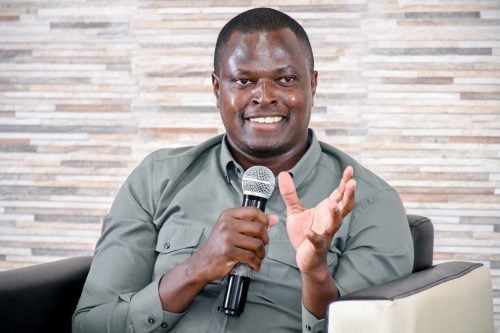
Kenya’s education capitation
Capitation refers to the government grant given to each learner to cover tuition fees under the Free Day Secondary Education (FDSE) programme. The programme began in 2008 with Ksh10,625 per learner.
This was increased to Ksh12,870 in 2015 and Ksh22,244 in 2018. Public schools do not charge tuition fees under this programme, although boarding fees are allowed.
The Ministry of Education releases capitation in three instalments: 50 per cent in the first term, 30 per cent in the second, and 20 per cent in the third. Schools register learners with the National Education Management Information System (NEMIS) to access the funds.
Problems with capitation funding have been rising since 2019. Former Kenya Secondary Schools Heads Association Chairperson Indimuli Kahi then said that quarterly disbursement instead of termly payments caused deficits for schools.
In 2020/21, each learner faced a deficit of Ksh5,000, totalling Ksh16 billion nationwide. By 2022/23, the deficit per learner was Ksh4,905, reaching Ksh18 billion across the country.
In 2023, the Education CS warned that if the government did not provide a supplementary budget of Ksh22 billion, capitation could fall by Ksh6,952 per learner. Learners received Ksh16,428, lower than the required Ksh22,244.
School managers in January 2025, also raised concerns about delayed capitation, with debts accumulating to Ksh64 billion in recent years. In July 2025, National Treasury CS John Mbadi admitted that funding for Free Primary and Day Secondary Education was unsustainable due to competing demands and rising student numbers.
He said the government could not fully pay examination fees for all learners this year, focusing instead on the neediest. Mbadi revealed that the government has for the last seven years been sending Ksh16,900 as capitation to secondary schools up from the Ksh22,244 required per learner.
Ndindi has repeatedly called for the government to clarify its position. During a prize-giving day at Kiaguthu Boys High School in July 2025, he said officials’ contradictory statements were confusing parents and students.
“Instead of slashing capitation, the government should increase it to match the cost of living. Free education is a right,” he said.
Author
Kenneth Mwenda
Kenneth Mwenda is a business, sports, and politics digital writer with over seven years of experience in journalism, covering breaking news, feature stories, and in-depth analysis across a range of beats.
For inquiries, he can be reached at [email protected]
View all posts by Kenneth MwendaLatest News

Advertisement
More on News