Advertisement
Nairobi tops list of extrajudicial executions in Kenya, report reveals
Thursday 26th March, 2026 08:19 AM|

Nairobi has once again emerged as the most dangerous county in Kenya for claimed police killings, with new data revealing a troubling surge in deaths during protests and crowd-control operations.
According to the Missing Voices Coalition’s 2025 annual report, Unbowed for Justice, the capital recorded the highest number of extrajudicial executions for the fourth consecutive year amid deep concerns about police accountability and the safety of civilians.
The report documents 125 police killings and six enforced disappearances across Kenya in 2025, noting that although overall incidents dropped slightly from 2024, violence linked to demonstrations sharply increased.
“Missing Voices recorded 125 cases of police killings and 6 cases of enforced disappearances from a total of 95 incidents in 2025,” the report released on Wednesday, March 25, 2026, states.
Protest crackdowns turn deadly
You Might Also Like

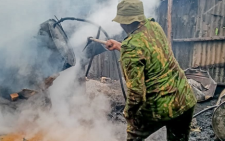

June and July, months marked by nationwide Gen-Z and Saba Saba protests, were the deadliest period of the year.
The report found that 68 killings occurred during these two months alone, accounting for more than half of all deaths.
“The pattern where police killings spiked during periods of protest continued in 2025,” the report reads.
Anti-protest and crowd-control operations overtook traditional anti-crime operations as the leading context for killings, a significant shift from previous years.
Security forces are said to have relied heavily on firearms. Shootings were the dominant cause of death, accounting for 114 cases.
The victims were overwhelmingly male and young. Nine out of ten people killed were men, and the age group most affected was 19 to 35 years.
“In all the years, the age group of 19–35 has suffered the highest number of casualties,” the report says.
Human rights advocates warn that this profiling makes young urban men particularly vulnerable during police operations.
Nairobi remains the epicentre
Despite fluctuations in national figures, Nairobi continues to dominate the statistics.
“Since 2022, Nairobi has continuously ranked number one in the number of extrajudicial executions,” the report states.
Within the capital, the report stated that certain police units and stations were reported to have been linked to incidents. Pangani Police Station was singled out as having the highest number of executions, alongside Central Police Station, Kasarani, Villa, and the Nairobi County Police Command.
Anti-riot police, often deployed during demonstrations, were responsible for the largest share of killings nationwide.
Behind the statistics are shattered families and livelihoods.
Marion Charo, whose husband Issa Mburu was shot while returning home during Saba Saba protests, described the crushing impact of his death.
“At the time of my husband’s death, I was seven months pregnant. My husband was the family’s sole provider,” she said.
Another victim, 22-year-old hawker Boniface Kariuki, was shot while selling masks during protests. His mother recalled the moment she saw images of her son online.
“Why would anybody attack my Boni? He kept to himself and focused solely on his job,” she said.
Impunity and delayed justice
The report identifies systemic barriers that allow such killings to continue with little accountability.
Oversight bodies such as the Independent Policing Oversight Authority (IPOA) face severe underfunding, staff shortages, and case backlogs. Witnesses are often afraid to testify, while investigations can drag on for years.
The coalition also notes that Kenya lacks a specific law criminalising enforced disappearances, making it harder for families to seek justice.
Witnesses and relatives frequently abandon cases due to delays and fear.
“Some cases take almost a decade” to reach court, the report warns.
Human rights groups say the findings should alarm policymakers, especially as Kenya moves toward the 2027 general election cycle.
The report says that without urgent reforms, including better oversight, legal protections, and police accountability, protest-related killings could escalate further.
For families like Charo’s, justice remains elusive.
“I am currently facing financial difficulties, providing for my three children,” she said.
Author
Latest News





Advertisement
More on News