Advertisement
Nairobi leads counties in teargas use against Gen Z, opposition protests – study
Saturday 23rd May, 2026 12:10 AM|

Nairobi County recorded the highest number of teargas deployment incidents during protests in Kenya, the latest data shows.
According to the Kenya Freedom Index report released on Friday, May 22, 2026, for the period 2020-2025, by Amnesty International Kenya and Odipo Dev, the trend is attributed to unequal policing practices across counties, revealing that demonstrators in some parts of the country are significantly more likely to face forceful crowd-control measures than in others.
According to the findings, Nairobi registered 82 teargas canister incidents across 284 protests, the highest tally nationally. Mombasa and Kisumu followed with 14 incidents each, despite hosting far fewer demonstrations at 44 and 36 protests, respectively.
Nakuru recorded 11 teargas incidents during 50 protests, while Uasin-Gishu and Kiambu counties each hosted 38 protests but registered markedly different levels of force. Uasin-Gishu recorded six teargas incidents compared to Kiambu’s four.
You Might Also Like



The report notes these disparities as evidence of inconsistent policing standards and decision-making across counties.
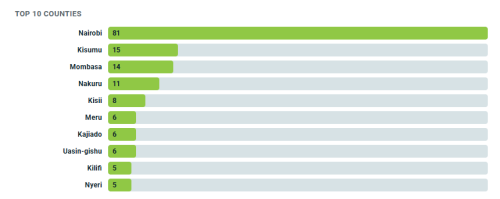
“The most important comparison is between counties with similar protest volumes but sharply different teargas rates,” the report stated.
It added: “Uasin-Gishu and Kiambu hosted the same number of protests, yet Uasin-Gishu recorded 50 per cent more teargas incidents.”
Kisii County, which hosted 30 protests, recorded eight teargas deployment incidents.
Researchers behind the index argued that the figures reveal more than just statistics on crowd control. Instead, they point to broader structural differences in policing culture and accountability mechanisms within county security operations.
“They reflect policing decisions, command cultures, and local accountability structures that vary county by county,” the report noted.
“The right to protest in Kenya does not carry the same risk everywhere. Where you live determines how likely you are to be met with gas.”

The Gen Z demos
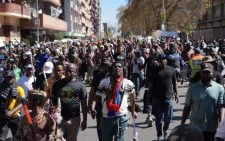
The findings come amid growing scrutiny over the policing of Gen Z-led demonstrations and opposition rallies that have intensified in recent years, particularly around governance concerns, economic hardship, corruption claims, and demands for political accountability.
The report found that the deployment of weapons and crowd-control measures was heavily concentrated around governance-related protests, Gen Z demonstrations, and opposition rallies led by politicians.
“The data on weapons deployment is not evenly distributed across protest types,” the study observed.
“It targeted Governance protests, Gen Z-led actions, and opposition demonstrations led by politicians that attract the heaviest weaponised responses.”
In contrast, labour-related protests and community grievances appeared to receive comparatively less aggressive policing in several counties, although the report cautioned that this pattern was not consistent nationwide.
“That unevenness is itself a finding. The right to protest should not vary by what you are protesting about. Sadly, the data shows that in Kenya, it does,” the index stated.
Human rights defenders say the findings raise serious concerns about constitutional freedoms and equal protection under the law.

Kenya’s Constitution guarantees citizens the right to assemble, demonstrate, and picket peacefully, but activists have repeatedly accused authorities of using excessive force to disperse crowds, particularly during politically sensitive demonstrations.
The study is expected to reignite debate around police accountability and the handling of public protests, especially after several high-profile Gen Z demonstrations in 2024 and 2025 drew international attention over accusations of brutality and unlawful use of force.
The index says the county-by-county disparities highlighted in the report could intensify calls for reforms within the National Police Service, including standardised crowd-control protocols and greater oversight of officers commanding demonstrations.
Author
Latest News








Advertisement
More on News