Advertisement
Mudavadi: If you were to ask me, I would push and privatise even more
Tuesday 09th December, 2025 06:28 PM|

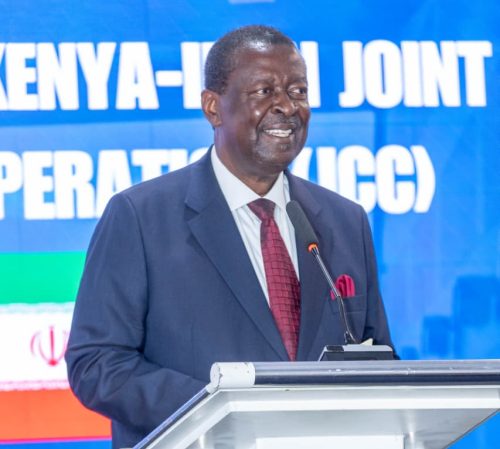
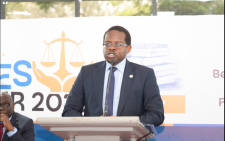
Prime Cabinet Secretary Musalia Mudavadi has made a strong case for privatisation, urging Kenyans to embrace the private sector as a driver of national growth. Mudavadi was speaking during the launch of the Kenya Diaspora Investment Strategy 2025–2030 in Nairobi on Tuesday, December 9, 2025.
Mudavadi highlighted Safaricom as a prime example of how privatisation transformed a struggling monopoly into a regional giant. He recalled that the country once had KPTC, a state-run telecommunications monopoly that was losing money and draining public resources.
The decision to privatise, he said, brought competition to the sector through companies like Safaricom and Airtel.
“It is from that brave move that Kenyans made to embrace the private sector that made Safaricom the giant that it is today,” Mudavadi said.
You Might Also Like


He noted that Safaricom has now become the largest private sector investor in Ethiopia, an achievement that would have been impossible under government management alone. He reminded Kenyans that the government only owns about 33 per cent of Safaricom and that the planned privatisation involves only a portion of this stake.
This, he said, allows the government to raise funds for other productive uses while transferring ownership to ordinary Kenyans and investors through the stock market.
Mudavadi stressed that reducing government shareholding does not mean a loss of control or a mistake. He explained that once a government’s stake falls to 33 per cent or below, the entity is considered private, with the government acting as an investor rather than a manager.
“Safaricom is not a parastatal. Safaricom is a private company,” he said, noting that such points are often overlooked in public debates about privatisation.
KCB shows privatisation benefits
He also cited the Kenya Commercial Bank (KCB) as another example. KCB was once 100 per cent government-owned, complete with blue number plates for its directors, a mark of its parastatal status.
After the government reduced its shareholding to about 33 per cent, KCB became a private company listed on the stock exchange. Today, it is one of the largest banks in the region, and the government continues to earn dividends.
Mudavadi used these examples to caution against conspiracy theories surrounding privatisation. He urged Kenyans to recognise the benefits of private sector participation, including increased efficiency, investment, and regional expansion.
“There is too much conspiracy theory every time privatization is discussed,” he said. “If you were to ask me, I would push and privatise even more.”
“So this message is absolutely important, both to the diaspora and to the people here, because, as I said, we’ve been sending the wrong signals. We politicians stand out there and say, ah, you’re selling the silverware. What is the worth of a rose on a heap of garbage?”
This message comes amid ongoing government plans to privatise 11 state-owned enterprises, including the Kenyatta International Convention Centre, Kenya Pipeline Company, New Kenya Cooperative Creameries, and National Oil Corporation of Kenya, among others.
Author
Kenneth Mwenda
Kenneth Mwenda is a business, sports, and politics digital writer with over seven years of experience in journalism, covering breaking news, feature stories, and in-depth analysis across a range of beats.
For inquiries, he can be reached at [email protected]
View all posts by Kenneth MwendaLatest News



Advertisement
More on News
