Advertisement
Infotrak survey reveals Kenyans value promise delivery above other leadership traits
Wednesday 01st July, 2026 01:44 PM|
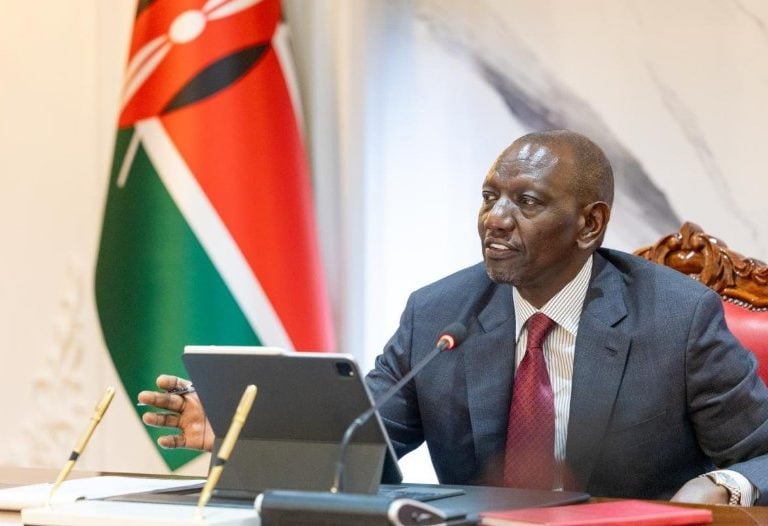
Kenyans consider the fulfilment of campaign promises as the most important measure of leadership performance, according to a new Infotrak survey.
The survey released on Wednesday, July 1, 2026, found that 41 per cent of respondents rate elected leaders primarily on whether they deliver the commitments they made before and after elections, making promise delivery the highest-ranked leadership trait.
Infotrak said citizens evaluate leaders by comparing their public commitments with the results they can see in their communities.
“Citizens remember what leaders said they would do. A promise may be made during a campaign, repeated at a public meeting, announced through media or reinforced through community expectations. When citizens later assess performance, they compare public commitments with visible outcomes. They do not expect every promise to be fulfilled immediately, but they expect seriousness, follow-through and evidence of effort,” reads the report.
You Might Also Like



Transparency and accountability ranked as the second most important factor, with 35 per cent of respondents saying they use it to assess elected leaders. Development projects followed at 30 per cent, reflecting the importance citizens place on visible improvements in their communities.
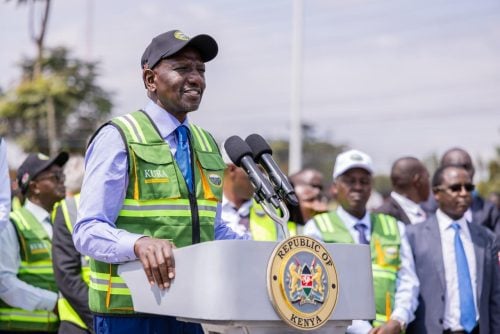
/X
“Citizens reward leaders they perceive as accountable. This includes how leaders explain decisions, communicate the use of public resources, respond to questions, and handle public scrutiny. Where citizens sense opacity, distance or defensiveness, confidence can weaken. Accountability is not only a technical issue. It is also a relationship issue,” reads the report.
The survey also showed that 28 per cent of respondents consider how leaders influence the allocation and use of public funds, including the National Government Constituencies Development Fund (NG-CDF) and county funds. Accessibility and responsiveness to constituents were cited by 13 per cent, while 11 per cent compared current leaders with their predecessors. Another seven per cent said their personal interactions with leaders influence their ratings.
Other considerations
Other considerations included participation in legislative debates, sponsorship of Bills and policies, engagement in public forums, media visibility and information obtained through news reports, political discussions and social media.
According to Infotrak, visible development remains central to how citizens evaluate leadership, particularly for Members of Parliament whose work is closely associated with constituency projects, bursaries, schools and local infrastructure.
“Development remains a powerful part of how citizens experience leadership. This is especially true for MPs, whose office is strongly associated with constituency-level projects, bursaries, schools and local infrastructure. Across offices, citizens ask whether public leadership is producing visible benefits. The keyword is visible: work that is not known, understood or felt may not be credited,” reads the report.
The survey further noted that perceptions of how public resources are managed also shape public opinion, even though the ratings are not intended to assess financial accountability.
“Citizens pay attention to how public resources appear to be influenced, allocated or protected. This does not mean the rating is an audit of public expenditure. It is not. But citizens form impressions about stewardship: whether resources seem to reach communities, whether benefits appear fairly distributed, and whether leaders are perceived as protecting public interest,” Infotrak said.
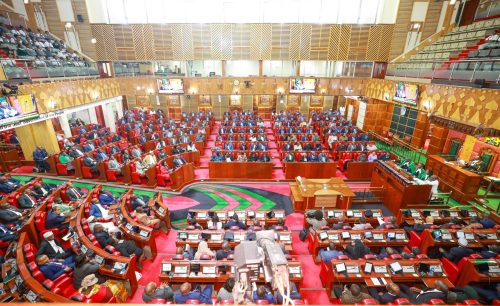
Accessibility was also identified as a key factor influencing leadership ratings, with respondents favouring leaders who communicate regularly and remain connected to their constituents.
“Citizens reward leaders who feel reachable. Accessibility does not mean a leader must personally solve every problem. It means citizens perceive that the leader listens, responds, communicates and maintains a relationship with the people they represent. A distant leader may be active institutionally but still poorly recognised by citizens,” reads the report.
The report added that media and social media visibility also contribute to public perceptions of elected leaders, noting that leadership efforts are less likely to be recognised if citizens do not encounter them through public meetings, community engagement or media platforms.
The survey was conducted between January and May 2026 across all 47 counties, 290 constituencies and 1,450 wards, involving 87,286 respondents. The first phase, conducted between January and March, sampled 36,200 participants, while a second phase added 51,086 respondents to ensure every constituency had at least 300 participants.
Data was collected through Computer-Assisted Telephone Interviews and analysed using SPSS. Respondents rated Members of Parliament, Senators and Women Representatives on a scale of one to 10, with the final score for each leader based on the average rating from respondents in their respective constituencies or counties.
Infotrak said the survey reflects citizens’ perceptions of leadership performance and should not be interpreted as a technical evaluation of elected leaders.
Author
Latest News




Advertisement
More on Inside Politics