Advertisement
How road construction works in Kenya – KeNHA
Wednesday 01st July, 2026 02:17 PM|
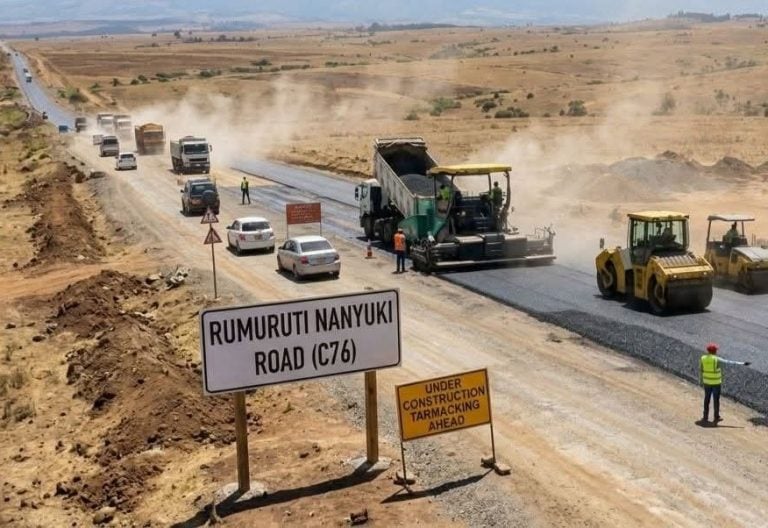
Members of the public often expect road construction to begin immediately after a contractor is awarded a tender.
However, according to the Kenya National Highways Authority (KeNHA), an essential preparatory stage known as mobilisation must first be completed before visible construction works can commence.
KeNHA Central Regional Director Engineer Maureen Wangui said mobilisation is a critical phase that enables contractors to assemble the resources required to deliver projects efficiently and to the required standards.
“At the end of the procurement process for the tender of a road, an award is given to the contractor. As members of the public, we expect to see immediate presence of the contractor on the ground, but there’s a behind-the-scenes work that goes on that maybe members of the public may not appreciate, and this is what we call mobilisation,” she says.
You Might Also Like


She explained that the process involves much more than simply moving equipment to the project site.
“It includes mobilisation of resources such as human resource, finances, and equipment. There is also the establishment of the contractor’s site, scouting of material sources. These are the materials that will be used for the road construction,” she adds.
According to Wangui, KeNHA typically allows contractors about three months to complete mobilisation before major construction activities begin.
Once the process is complete, construction equipment is deployed and earthworks commence.
“Then now we start seeing the presence of the contractor on the ground. We see the heavy equipment, we see the graders, we see the excavators, and we also start seeing excavation of the earthworks,” Wangui says.

She noted that road construction follows a carefully sequenced engineering process, with each layer forming the foundation for the next.
“Once this is completed, then now we start seeing the road taking shape. We start having the sub-base, we have the base, and then we see the black top, which is tarmac, or commonly referred to as lami. In engineering, we call it asphalt concrete and surface dressing,” she added.
Using the 25-kilometre Mutara-Rumuruti road project in Laikipia County as an example, Wangui said the road has been designed with a 50-millimetre asphalt concrete surface laid over 150 millimetres of cement-improved gravel forming the base layer and another 150-millimetre cement-improved sub-base resting on prepared earthworks. The road will feature a seven-metre-wide carriageway with 1.5-metre shoulders and a comprehensive drainage system comprising culverts and earth drains.
She emphasised that drainage is one of the most critical elements of road construction because it protects the pavement and enhances road safety.
“The whole purpose of having a comprehensive drainage system is to ensure that there is no surface runoff ponding on the road. So the drainage is very critical for a paved road because it ensures that there is no water ponding on the surface of the road. It is also for safety purposes and to ensure that we do not have the creation of potholes,” she says.
After paving is complete, the focus shifts to road safety through the installation of road markings, guardrails and road signs.
“Once the tarmac is completed, then we move to the next step of making the road safe for the users. This includes road marking, installation of guardrails, installation of the road furniture, which is the road signs, among other safety features,” Wangui adds.
Wangui added that contractors remain responsible for completed roads during a defects notification period, which serves as a warranty to ensure any faults identified after construction are rectified.
“Besides the construction period that the contractor is allowed, we move on to the defects notification period, which is a warranty period to observe any defects that may occur during road usage. During the defects notification period, the contractor is liable for any defects that may be observed during the defects notification period,” she explains.
“In that way, it ensures value for money, since the contractor will remedy any defects that may occur. The defects notification period for this section of road from Rumuruti to Mutara, which is 25 kilometers, is 24 months.”
She said understanding the mobilisation process helps explain why road projects require careful preparation before construction begins, ensuring quality infrastructure and value for public investment.
Author
Francis Muli
Francis Muli is an editor and passionate digital journalist with extensive experience in crafting compelling stories across various platforms. His major focus is in business, politics and current affairs. He has a keen eye for detail and a commitment to uncovering the truth. He has contributed to leading publications across the country. When not chasing stories, you can find Muli exploring new technologies, attending local events, or reading fiction. Connect with Francis Muli on X @FMuliKE and Facebook (Francis Muli) to follow his latest stories and insights.
View all posts by Francis MuliLatest News








Advertisement
More on News