Advertisement
Inside govt’s strategy to crack down on money laundering networks
Wednesday 01st July, 2026 03:05 PM|
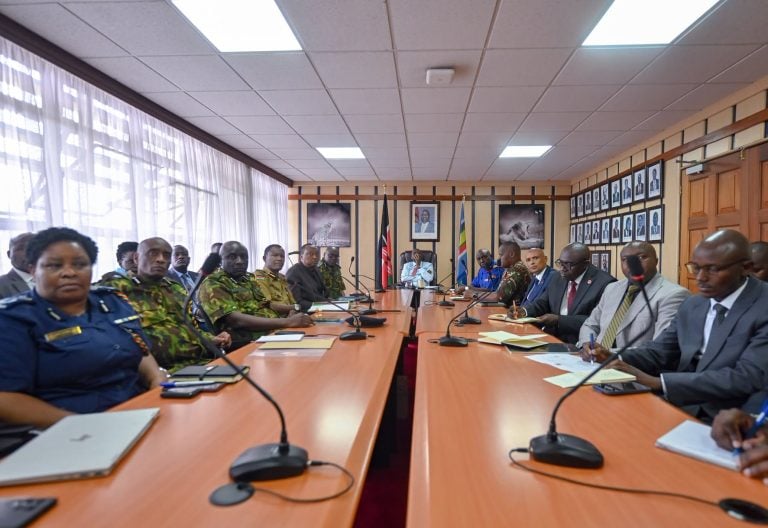
Kenya’s top security and anti-corruption agencies have agreed on a strengthened, coordinated approach aimed at dismantling money laundering cartels as the country works to exit the Financial Action Task Force (FATF) grey list.
The agreement was reached during a high-level meeting held in Nairobi on Wednesday, July 1, 2026, bringing together senior officials from key enforcement institutions. Those in attendance included Director of Public Prosecutions (DPP) Renson Ingonga, Director of Criminal Investigations Mohammed Amin, and Ethics and Anti-Corruption Commission CEO Abdi Mohamud.
The officials resolved to adopt a whole-of-government strategy focused on tightening intelligence sharing, improving joint investigations, and accelerating the prosecution of individuals linked to money laundering and related financial crimes.
The renewed approach specifically targets networks involved in fake gold schemes, fraudulent investment operations, and cross-border financial scams.
You Might Also Like


A central pillar of the plan is closing enforcement gaps that have previously allowed so-called wash-wash syndicates to exploit weaknesses in regulatory and investigative systems. Agencies are also committed to improving coordination and harmonising financial crime data in line with FATF Immediate Outcomes requirements, which are used to assess compliance with global anti-money laundering standards.
During the discussions, officials emphasised the importance of reliable and verifiable data in demonstrating Kenya’s progress toward meeting its international obligations. They also reviewed preparations for an upcoming face-to-face evaluation with the Africa Joint Group, which will assess the country’s implementation of remaining reforms under its FATF Action Plan.
Failure to meet the required benchmarks, officials warned, could delay Kenya’s removal from the grey list, a status that continues to affect investor confidence, banking credibility, and cross-border financial transactions. The agencies further pledged to strengthen asset recovery mechanisms to ensure proceeds of crime are traced, seized, and forfeited more efficiently.
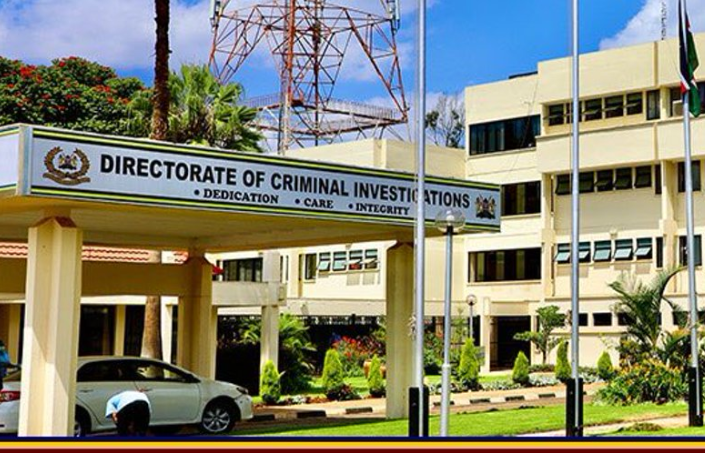
In parallel with the financial crime crackdown, broader security reforms were also highlighted.
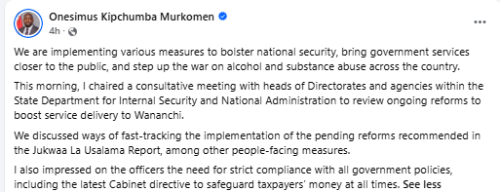
“We are implementing various measures to bolster national security, bring government services closer to the public, and step up the war on alcohol and substance abuse across the country.”
“This morning, I chaired a consultative meeting with heads of Directorates and agencies within the State Department for Internal Security and National Administration to review ongoing reforms to boost service delivery to Wananchi.
We discussed ways of fast-tracking the implementation of the pending reforms recommended in the Jukwaa La Usalama Report, among other people-facing measures.”
Officials expressed confidence that the renewed coordination framework will significantly disrupt financial crime networks and improve Kenya’s compliance with international anti-money laundering standards.
Author
Latest News





Advertisement
More on News