Advertisement
MOH: More than 1.3M people living with HIV are on treatment
Tuesday 19th August, 2025 02:41 PM|
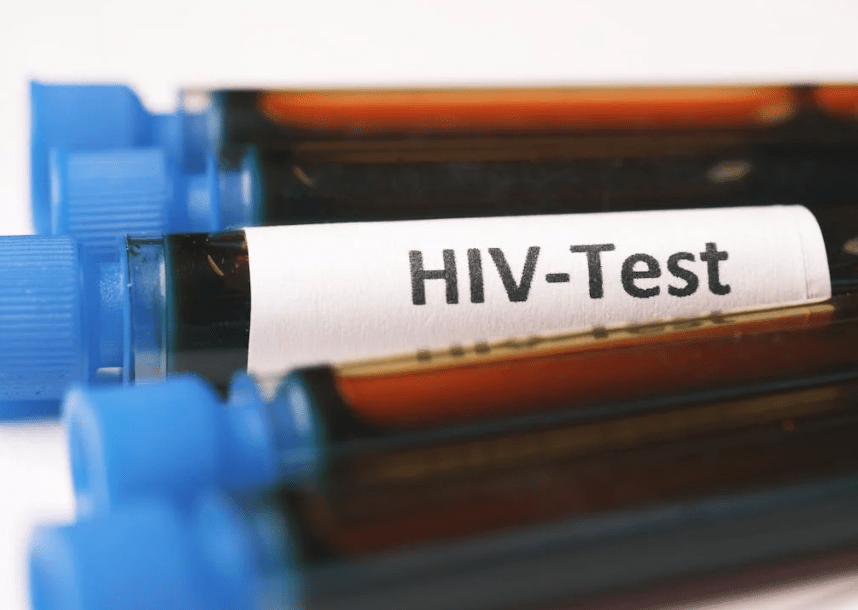
Kenya is marking a major milestone in the fight against infectious diseases, with the Ministry of Health (MOH) confirming that more than 1.36 million people living with HIV are now on lifesaving treatment.
The figure represents 98 per cent of those diagnosed, a landmark achievement that underlines the country’s commitment to combating HIV/AIDS and securing better health outcomes for its citizens.
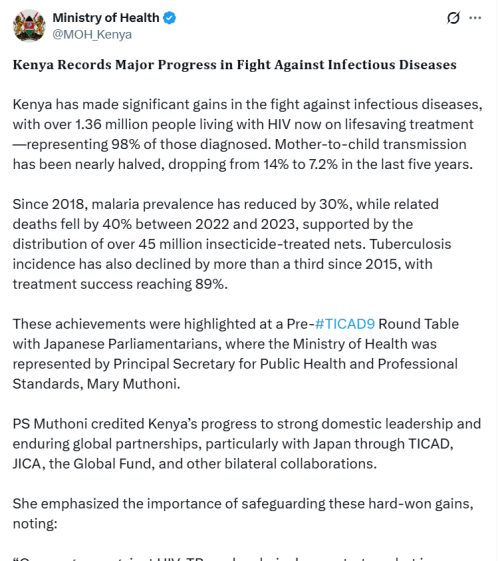
“Kenya has made significant gains in the fight against infectious diseases, with over 1.36 million people living with HIV now on lifesaving treatment—representing 98% of those diagnosed. Mother-to-child transmission has been nearly halved, dropping from 14% to 7.2% in the last five years,” read the statement by MOH on X, dated August 19, 2025.
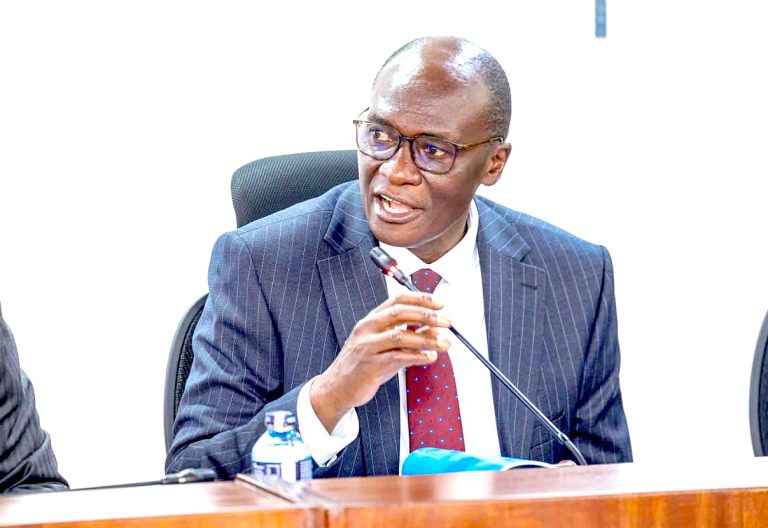
The announcement was made during a Pre-TICAD9 round table with Japanese parliamentarians, attended by Public Health Principal Secretary Mary Muthoni and Director General for Health Patrick Amoth.
Gains against HIV, malaria and TB
You Might Also Like

The ministry’s latest report details significant progress across multiple health fronts. Beyond the HIV treatment success, Kenya has cut mother-to-child transmission rates almost by half, dropping from 14 per cent to 7.2 per cent over the last five years.
This reduction reflects improved access to healthcare and preventive interventions, bringing the country closer to eliminating paediatric HIV.
On malaria, prevalence has decreased by 30 per cent since 2018, while malaria-related deaths fell by 40 per cent between 2022 and 2023. The government attributes this achievement to the distribution of over 45 million insecticide-treated nets and other preventive measures. Tuberculosis control has also shown encouraging results, with incidence rates falling by more than a third since 2015.
The country has recorded a treatment success rate of 89 per cent, underscoring the strength of ongoing national health strategies.
Partnerships driving progress
Principal Secretary Muthoni attributed the gains to a blend of strong domestic leadership and enduring global partnerships. She cited collaborations with Japan through the Tokyo International Conference on African Development (TICAD), the Japan International Cooperation Agency (JICA), the Global Fund, and other bilateral initiatives as central to Kenya’s success.
“Our progress against HIV, TB, and malaria demonstrates what is possible when global solidarity meets national leadership,” she said. Muthoni called for renewed commitment through co-investment, technology transfer, and sustained partnerships to safeguard progress and accelerate the march toward universal health coverage.
Health diplomacy
The round table discussions with Japanese lawmakers also showcased Kenya’s growing influence in global health diplomacy. Amoth’s participation, coupled with his role on the WHO Executive Board, signals a shift where local leadership increasingly informs international health policy.
The ministry’s findings echo recent global studies. A 2024 Lancet report credited insecticide-treated nets for malaria decline in sub-Saharan Africa, while a 2023 BMJ Global Health study highlighted the role of local governance in shaping health outcomes.
As Kenya celebrates this milestone, focus now turns to sustaining momentum, closing equity gaps in treatment access, and deepening international cooperation. Officials said these achievements not only reflect a national victory but also serve as a beacon of hope for global health initiatives.
Author
Latest News







Advertisement
More on News