Advertisement
Lake Turkana’s shrinking waters could trigger more earthquakes – experts warn
Monday 17th November, 2025 01:58 PM|
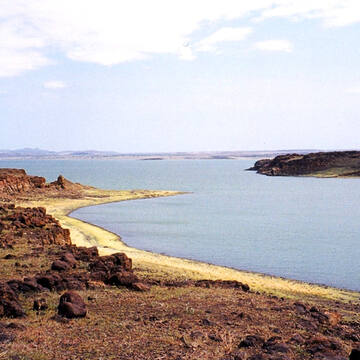
New research published in Scientific Reports (November 10, 2025) has revealed that the dramatic drop in Lake Turkana’s water levels over the past 6,000 years has accelerated earthquake activity in northern Kenya’s rift zone.
The study, led by James D. Muirhead of Syracuse University and the University of Auckland, provides the first hard evidence that climate-driven lake shrinkage can increase fault movement and seismic risk in the East African Rift System.
Fault activity intensifies as Lake levels fall
Scientists analysed 27 active faults beneath Lake Turkana using high-resolution seismic reflection data.
They compared fault slip rates during two periods: the wet late-African Humid Period (9,631–5,333 years ago) when the lake was 100–150 metres higher, and the drier post-Humid Period (5,333 years ago to present).
You Might Also Like



Results showed a clear acceleration: 74% of the faults recorded higher throw rates after the lake level fell, with an average increase of 0.17 ± 0.08 mm per year, while only 11% of faults slowed down.
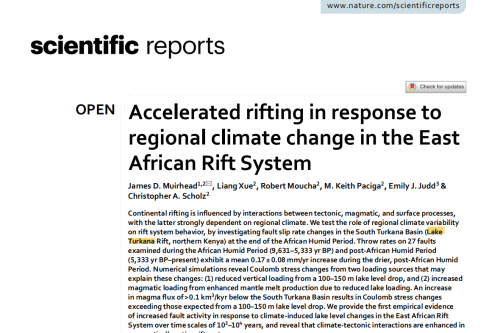
“The mechanism is straightforward. When the lake was full, billions of tonnes of water pressed down on the Earth’s crust, stabilising faults. As climate dried and the lake shrank by 100–150 metres, this weight was removed, effectively ‘unloading’ the crust. Reduced pressure allowed faults to slip more easily,” the study explains. Numerical modelling using PyLith software calculated that the 100–150 m lake drop alone generated Coulomb stress changes of 95–230 kPa on local faults – enough to promote normal faulting.
Magma and volcanic activity amplify stress
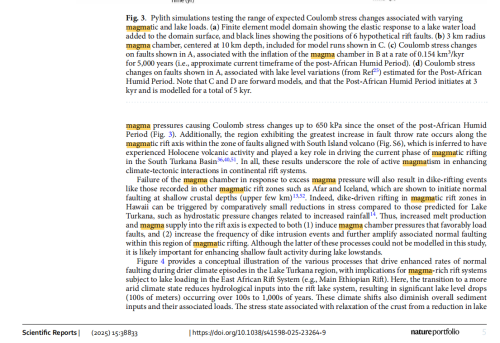
The study highlights an additional factor: magma dynamics. Lower water weight triggered decompression melting in the mantle beneath the rift, producing extra magma that inflated a mid-crustal chamber under South Island volcano.
Models estimate an increased magma flux of more than 0.1 km³ per thousand years, creating excess pressure that added up to 650 kPa of Coulomb stress – three times the effect of lake unloading alone. Faults near the volcanic axis showed the largest acceleration in slip rates.
Climate change could sustain elevated seismic risk
The South Turkana Basin currently accommodates 3.5–5.8 mm per year of east-west continental extension. The findings confirm that climate fluctuations can amplify this rifting process over thousands of years.
Researchers warn that ongoing climate change and human impacts on East Africa’s hydrology – including upstream damming and irrigation on the Omo River – could sustain or worsen low lake levels, maintaining elevated seismic hazard around Lake Turkana.
“Researchers conclude that magma-rich segments of the East African Rift are particularly sensitive to lake-level changes, with unloading effects magnified by enhanced volcanic activity. As Africa continues splitting apart, shrinking rift lakes may quietly drive more earthquakes beneath some of the continent’s most vulnerable communities,” the report concludes.
Author
Latest News








Advertisement
More on News