KWS rescues zebra trapped in Mara North Conservancy amid rising poaching threat
By Emmanuel Rono, May 19, 2026A young female zebra foal has been successfully rescued and treated after being found trapped in a wire snare in the Mara Rianta area within the Kenya Wildlife Service-managed ecosystem in Mara North Conservancy, in an incident that highlights the continuing threat of illegal wildlife traps in protected landscapes.
According to the Kenya Wildlife Service (KWS) Mara Vet Unit on Tuesday, May 19, 2026, the foal was discovered struggling to keep up with her herd after a single-strand wire snare tightened around the hock joint of her right hind limb.
The injury left her lame, exhausted, and at risk of being separated from the herd, an often fatal situation for vulnerable young animals in the wild.
According to KWS, the snare had tightened deep into the hock joint region of her right hind limb, leaving her lame and visibly exhausted.
How it was saved
Veterinary officers confirmed that while the snare had deeply embedded into the tissue, it had not severed critical tendons or major structures. This allowed the team to carefully remove the wire and prevent further complications.
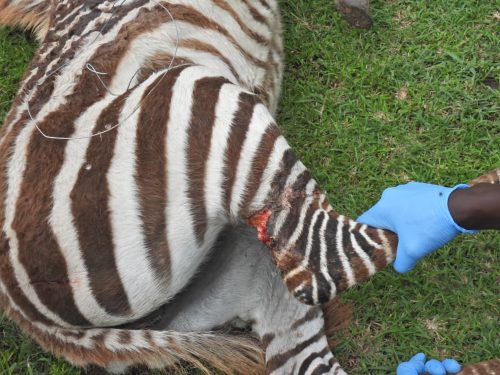
“Upon examination, the veterinary team confirmed that although the snare was deeply embedded, it had fortunately not severed the superficial digital flexor tendon or other critical structures. The wire was carefully removed, relieving the foal of the painful restraint that had threatened her mobility,” KWS said in a statement.
KWS added that the wound was cleaned, treated, and dressed with green clay to support healing. The foal was also given antibiotics and anti-inflammatory drugs to prevent infection and ease pain.
KWS advisory
KWS has described this situation as a reminder of the importance of rapid wildlife response operations. Officials said the foal now has a good prognosis following the intervention.
KWS has condemned the use of snares, describing them as silent but deadly traps that indiscriminately harm wildlife and disrupt ecosystems.
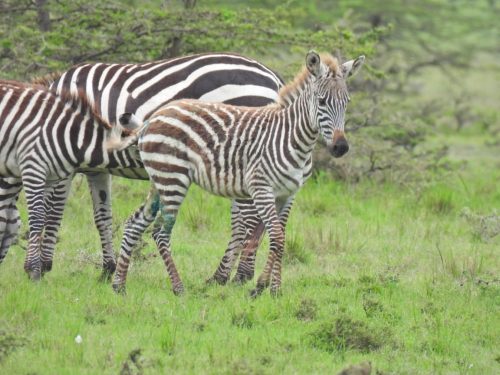
“Moments later, in a scene that reminded everyone why these interventions matter, the young foal slowly but steadily made her way back to her waiting herd. Thanks to the swift response, she now carries a good prognosis, and another life has been given a second chance,” KWS said in a statement.
“We urge the public, communities, and all stakeholders to remain vigilant and report any illegal or suspicious activities threatening wildlife via our 24/7 toll-free line 0800 507 000, WhatsApp 0726 610509, or to the nearest KWS station.”