KUPPET issues demands to govt over promotions and salaries
By Aloys Michael, February 22, 2026The Kenya Union of Post-Primary Education Teachers (KUPPET) have renewed their calls on the government to urgently resolve pending labour issues, especially the collective bargaining agreement (CBA), which they argue has stalled despite numerous promises of action.
The union’s officials cautioned that continued delays in honouring the agreement risk heightening unrest across the education sector, as educators grow increasingly dissatisfied with the slow pace of implementing the terms that were previously negotiated.
Speaking on Saturday, February 21, 2026, in Trans Nzoia County during the union elections, KUPPET National Vice Chair Julius Korir said the CBA issue must be resolved urgently and reduced to two key components as had earlier been promised by President William Ruto during a meeting at State House, Nairobi, in September 2025.
Korir accused the Teachers Service Commission (TSC) of slowing down progress on the agreement, noting that teachers expected tangible action following the State House engagement.
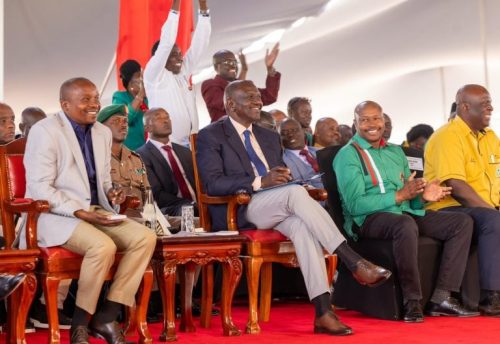
”Teachers want the CBA to be reduced to two, as the President assured us during the State House meeting. We also want JSS administration to have independence and autonomy, while addressing the challenges being experienced under the SHA medical scheme, where some teachers are reportedly being turned away from hospitals,” Korir said.
”The government must also address promotion stagnation and teacher employment. Many teachers have remained in the same job groups for years, and we are calling for the 20,000 intern teachers to be absorbed into permanent and pensionable employment.”
SHA jitters
The union further expressed concern over the recent transition of teachers to the Social Health Authority insurance scheme, saying the new system has posed challenges for educators seeking medical care.
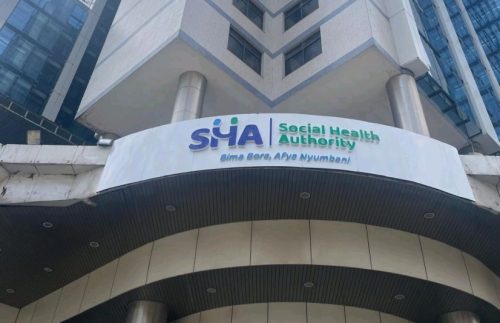
KUPPET claimed that some teachers were said to have turned away from some health facilities despite having previously accessed services under the old medical arrangement.
Korir expressed concern that the newly introduced medical scheme has unsettled many educators. He referenced an incident in Nairobi where teachers injured in a road accident were said to be turned away from hospitals that had previously accepted their former health insurance cover, highlighting confusion surrounding the transition.
The teachers also sought clearer guidelines on the governance of Junior Secondary School (JSS) programmes, advocating for greater autonomy and well-defined administrative structures. They maintained that the current lack of clarity has disrupted service delivery and hampered smooth operations in schools.
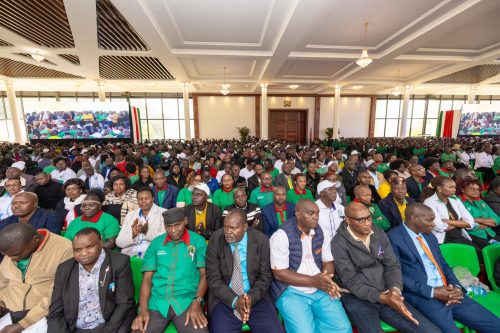
“The newly introduced medical scheme has unsettled many educators. We have seen cases in Nairobi where teachers injured in a road accident were allegedly turned away from hospitals that previously accepted their cover, which shows there is confusion in the transition,” Korir said.
“We are also demanding clear guidelines on the governance of Junior Secondary School programmes and full institutional autonomy to end the administrative ambiguity disrupting service delivery.”
Additionally, Korir lamented persistent frustrations over stalled career progression, noting that numerous teachers have remained in the same job groups for extended periods without meaningful opportunities for promotion.
The union further renewed its appeal for the absorption of roughly 20,000 teacher interns into permanent and pensionable terms, arguing that extended internship arrangements disadvantage young professionals joining the education sector and undermine their job security.