Advertisement
Koome calls for collaboration to make justice accessible to all
Friday 08th August, 2025 06:44 PM|
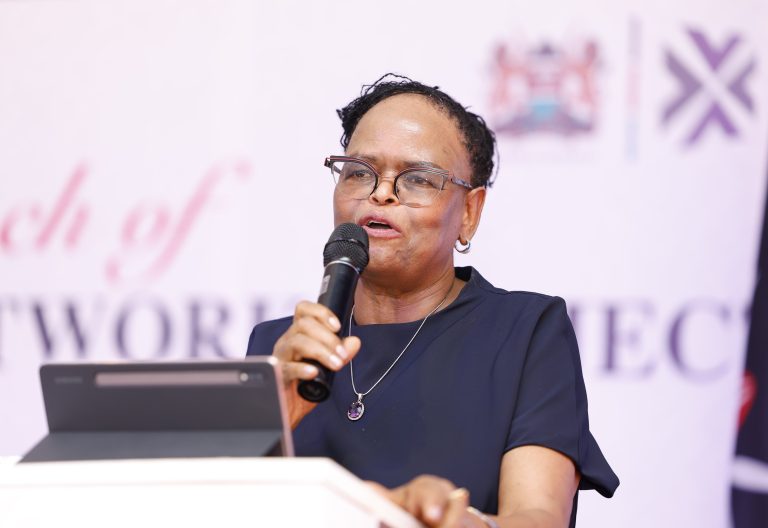
Chief Justice Martha Koome has renewed her call for stronger partnerships to ensure justice is available, affordable, and meaningful for all Kenyans, highlighting the crucial role of civil society in bridging gaps in the justice system.
Speaking on Friday, August 8, 2025, during a courtesy call with civil society leaders at her office, Koome reaffirmed the Judiciary’s commitment to its “Social Transformation Through Access to Justice” (STAJ) blueprint, in line with the 2010 Constitution.
She said the right to access justice can only be fully realised through joint efforts that make justice responsive and relevant to every citizen.
“Today, I had the honor of hosting civil society leaders who paid a courtesy call to my office. We had a fruitful discussion on strengthening the rule of law and advancing access to justice in our beloved country,” Koome said, adding that civil society organisations remain a critical partner in promoting and protecting this right.
Tackling barriers to justice
You Might Also Like



Koome stressed the need to dismantle systemic barriers that hinder Kenyans, especially marginalised groups, from seeking legal redress. She called for collaboration between the judiciary, civil society, government, and development partners to make justice delivery more inclusive.
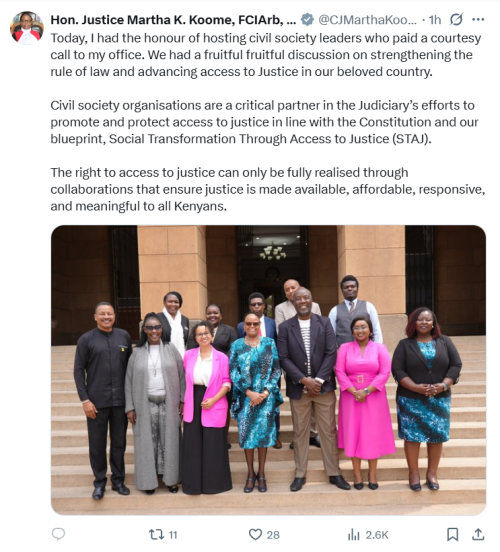
The meeting comes as the judiciary continues to expand legal aid services, reduce case backlogs, and embrace technology to ease access to courts. Koome’s approach aligns with her vision of a people-centred justice system, where fairness is matched by accessibility.
Climate justice and carbon rights
In a related address to Environment and Land Court (ELC) judges on August 5, 2025, Koome urged courts to adopt a proactive and inclusive approach to disputes linked to carbon offsetting projects. She raised concerns over the unequal power dynamics between multinational corporations and Indigenous or rural communities, warning that climate action must not become a vehicle for deepening inequalities.
“The Court must remain vigilant on land and carbon rights, fair benefit-sharing, impact monitoring, and protection of communities,” she said. Koome also called for closer supervision of judgements in such cases to ensure compliance and fairness.
Carbon offsetting schemes have drawn criticism for sidelining communities near conservation sites, many of whom lack resources to negotiate fair deals or challenge unfair terms. Koome’s stance places the judiciary at the forefront of equitable climate governance.
Embracing multiple avenues for justice
Koome further advocated for a multi-door approach to dispute resolution by integrating arbitration, mediation, and Alternative Justice Systems (AJS). She noted these mechanisms offer flexible, cost-effective solutions, particularly in climate-related and land disputes where communities often face geographical and financial barriers to formal courts.
Her remarks reflect a broader vision of a justice system that not only resolves disputes but also promotes social equity, safeguards rights, and supports sustainable development.
Author
Latest News








Advertisement
More on News