Advertisement
Moses Kuria details how sending Ruto home in 2027 will make him more lethal
Saturday 04th July, 2026 04:27 PM|

Former Trade Cabinet Secretary Moses Kuria has warned that attempts to limit President William Ruto to a single term could end up strengthening him politically and turning him into a far more powerful opposition figure in 2032.
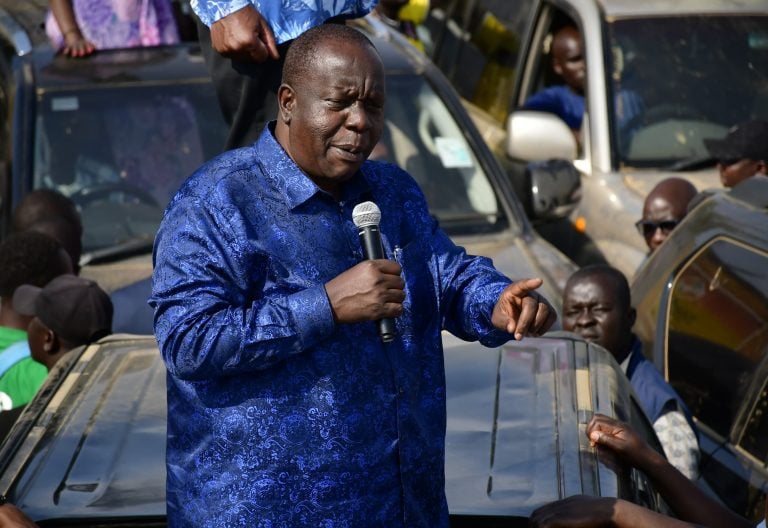
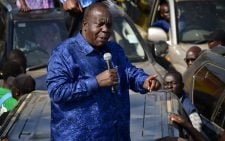
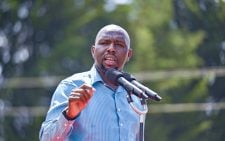
In a video he posted on his X account on Saturday, July 4, 2026, Moses Kuria addressed residents of Ol Kalou in Nyandarua County and framed the 2027 political debate as a matter of long-term strategy rather than personal loyalty or emotion.
“People, I’m not saying that William Ruto is a saint,” Kuria said. “But I’m just asking you three questions.”
He first questioned the experience of opposition figures being considered as alternatives to Ruto, including Wiper leader Kalonzo Musyoka and former Interior Cabinet Secretary Fred Matiang’i.
You Might Also Like

“Has Kalonzo ever been president of this country? Has Matiang’i ever been president?” he asked. “So who knows what they can become to our community? That’s why we say it is better the devil that you know.”
Moses Kuria used the comparison to argue that voters often face uncertainty when choosing new leadership. He urged residents to consider predictability and existing development ties rather than political promises.
But the strongest part of his message focused on what could happen after 2027 if Ruto serves only one term.
Scenario if Ruto is denied second term
“Let us assume now we make William Ruto a one-term president. You think he’ll go to Sugoi?” Kuria posed. “Will he also go and see 2032 he’ll be back? He’ll be back.”
He, Ruto, would not exit politics quietly and would likely return as a major force in the next election cycle.
“So if 2032 we take, we make him one term and he becomes the leader of the opposition, who will be more lethal as an opposition leader? Ruto will be more lethal,” Kuria said.
Kuria suggested that Ruto’s experience in power, national networks, and political structures would make him more effective outside government than many opposition leaders, including the late ODM leader Raila Odinga.
He warned that voters could unintentionally create a stronger challenger in 2032 by removing Ruto too early.
“See now 2032 also he’ll come back. He’ll be a candidate with kisirani. See you guys voted me out,” he said, describing a scenario where Ruto re-enters politics with stronger momentum.
Kuria repeatedly insisted that voters should treat the decision as a rational calculation rather than emotional politics.
“For me it’s a rational issue. It’s not a matter of mapenzi. It is rational decision-making that we have to make as a community,” he said. “Let us make decisions with our head, not with our hearts.”
He added:
“It’s not about William Ruto.”
Ol Kalou development pitch
Beyond the national argument, Moses Kuria tied his message to ongoing development projects in Ol Kalou, saying government investment in the area had reached nearly Ksh10 billion. He cited roads, water projects, land titling and education infrastructure as examples of visible progress.
He contrasted this with past administrations and suggested that continued alignment with the national government would secure further gains.
“If within two months we can give this kind of investment, then it is an indictment,” he said, referring to disputes over development claims in the region.
Moses Kuria also claimed that the current political direction shows how resources can be directed to communities that support government programmes. He said leaders should evaluate what benefits their constituencies receive before making electoral decisions.
“I studied statistics at the University of Nairobi,” he said. “And I am convinced that William Ruto will be elected president, even without a single Mt Kenya vote.”
The remarks come as Kenya Kwanza leaders intensify early campaign messaging ahead of the 2027 General Election. National Assembly Speaker Moses Wetang’ula has dismissed one-term calls, while Deputy President Kithure Kindiki has argued that the Constitution is designed to allow presidents two terms to complete development programmes.
In Eldoret recently, Kenya Kwanza leaders also defended Ruto’s record and said opposition campaigns would fade once official campaigns begin.
Kuria’s intervention adds a different angle to that broader narrative. Instead of focusing only on re-election, he framed the debate around what happens after Ruto leaves office.
His central warning remains that political timing could reshape future power dynamics.
“If 2032 he becomes opposition leader, he will be more lethal,” he said.
Author
Kenneth Mwenda
Kenneth Mwenda is a business, sports, and politics digital writer with over seven years of experience in journalism, covering breaking news, feature stories, and in-depth analysis across a range of beats.
For inquiries, he can be reached at [email protected]
View all posts by Kenneth MwendaLatest News

Advertisement
More on Inside Politics