Advertisement
New development planned in Kilimani as measures proposed to curb dust, noise and traffic
Saturday 04th July, 2026 03:53 PM|
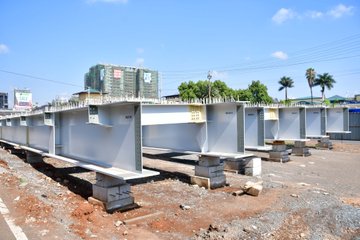
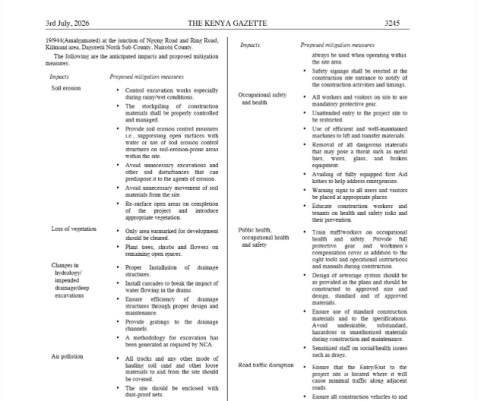
A proposed development at the junction of Ngong Road and Ring Road in Nairobi’s Kilimani area will be required to implement stringent environmental safeguards to minimise dust, noise, air pollution and other construction-related impacts, according to a notice published in the Kenya Gazette.
The project, which is planned on the amalgamated land parcel I.R. 19/944 in Dagoretti North Sub-County, has undergone an Environmental Impact Assessment (EIA) that outlines the potential environmental effects of the development and the mitigation measures to be adopted before and during construction.
The assessment identifies noise pollution, soil erosion, vegetation loss, changes to drainage systems and air pollution as some of the key environmental concerns associated with the proposed project.
Construction restricted to daytime hours
To minimise disruption to neighbouring residents and businesses, construction activities will only be undertaken between 8.00 a.m. and 5.00 p.m., with the developer required to comply with the Environmental Management and Coordination Act (EMCA) Noise Pollution and Excessive Vibration Regulations, 2009.
You Might Also Like



“Construction work shall be confined to between 8.00 a.m. and 5.00 p.m., while regular monitoring of noise levels will be undertaken during the construction phase,” the notice published on Friday, July 3, 2026, states.
/X
Dust, erosion and drainage control
To reduce dust emissions, all trucks transporting soil, sand and other loose materials will be covered, while the site will be enclosed using dust-proof nets. The developer will also be required to sprinkle water on exposed surfaces, regulate the speed of construction vehicles and use clean fuels for machinery operating on site.
In addition, barriers such as walls and protective netting will be erected around the construction site to limit dust from spreading to neighbouring properties.
The EIA also proposes measures to control soil erosion, including careful excavation during rainy seasons, proper management of construction materials and rehabilitation of disturbed areas through landscaping and vegetation once the project is completed.
To address drainage concerns arising from deep excavations, the developer will install drainage structures, cascades and protective gratings, while excavation works will be undertaken in accordance with a methodology approved by the National Construction Authority (NCA).
Vegetation to be preserved
The environmental report further directs that only the section earmarked for development should be cleared, with the remaining open spaces to be landscaped through the planting of trees, shrubs and flowers to compensate for vegetation loss.
Members of the public have also been advised to minimise visits to the construction site during the construction phase to reduce exposure to dust and other potential hazards.
The proposed development comes barely a week after President William Ruto commissioned the Ksh3.8 billion Ngong Road–Naivasha Road Flyover, one of Nairobi’s flagship infrastructure projects aimed at easing congestion along the busy transport corridor.
“We are investing in productivity and competitiveness for our capital city. This Kenya shilling 3.8 billion project removes one of the most persistent traffic bottlenecks by separating traffic, improving safety for motorists, pedestrians and cyclists alike,” the President said.
The publication of the notice in the Kenya Gazette forms part of the statutory environmental approval process, giving the public an opportunity to review the proposed project and its environmental management plan before implementation.
Author
Latest News








Advertisement
More on News