Advertisement
Kenya urged to address waste water management challenge
Thursday 20th January, 2022 12:07 AM|
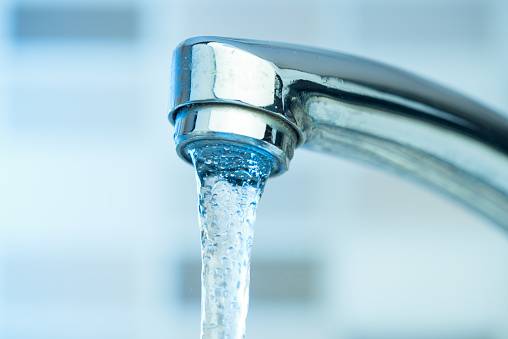
Increasing urban population and expansion of urban cities have overstretched the capacity of a trunk sewer line –in what experts now say pose a huge health risk to Kenyans, with blinkered waste management policies and practice to blame.
The Kenya Bureau of Statistics, 2019, projects that there is an increased production of wastewater from industrial, commercial, residential as well as the clinical and domestic waste generation which surpasses ecological footprint.
The sewer lines are becoming more and more costly to construct as the land on which they pass through becomes expensive to acquire for what many see as low-value land use.
Instead, such land is converted into built properties which end up producing more wastewater which ends up in our rivers untreated leading into the sorry state of our rivers as evident in the view presented by the infamous Nairobi River.
The future of wastewater treatment involves embracing On-site wastewater treatment and recycling while at the same time handling surface water pollution, according to Daniel Wanjuki, the Lead Expert and CEO of Eco save Africa
“We need to optimize on Decentralized Wastewater Treatment Systems (DeWWATS ) footprint while at the same time significantly reducing resident time for efficient treatment by using Ecotreat Waste Digesters,” noted Wanjiku.
As the technical lead for innovation at ECO save Africa, he has spent much of his career looking at extending the traditional technique of wastewater management. Over the years, the company has harnessed technology to devise ways to eliminate the offending smell from wastewater treatment sites.
This makes it possible for roads or even playgrounds to accommodate such novel wastewater treatment systems safely.
With the rising human population, the planet’s capacity to support this population is shrinking. The effect of poor wastewater on the environment cannot be overlooked.
As one of the mitigating measures for climate change, the 26th Conference of Parties pointed out the need to curtail methane emission from human-based activities by the year 2030. This is in recognition that carbon sequestration is not complete without addressing the tragedy of methane gas in wastewater management.
Ecosave Africa Ltd has fashioned a waste management procedure that helps manage the environment more efficiently.
Their Ecotreat Waste Digester technology eliminates methane gas during the decomposition of waste. This is a big bonus to the fight against climate change. Ecotreat waste digester is fashioned to be used as a topical additive to waste as bacteria therein carry out decomposition without the bad odor characteristic of such sites. What is even more astonishing is that the waste breakdown
According to Wanjuki, the country should work towards eliminating the use of chemicals in wastewater treatment and reduce the need to exhaust waste using trucks. This, he says ‘reduces the use of electricity to run motors that aerate wastewater as the process depends entirely on the ambient aerobic environment.”
Adding that, “We have to reduce pollution related water scarcity, where rivers flow but no one will dare use their toxic content. When this is done our environment will be cleaner from the source as it passes through our land and as it empties into the ocean or other water bodies.”
Wanjuki elaborates that the efficiency of the wastewater treatment process is both dependent on the design of the treatment plant as well as the “character” of the influent.
Author
Steve Umidha
View all posts by Steve UmidhaLatest News




Advertisement
More on News