Advertisement
Kenya records over 5K new cervical cancer cases, over 3K deaths annually
Saturday 17th January, 2026 06:56 AM|
Cervical cancer remains one of the most significant public health challenges facing Kenyan women, despite being largely preventable.
According to estimates from GLOBOCAN 2022, the country records approximately 5,845 new cervical cancer cases and 3,591 deaths every year.
The disease continues to rank among the leading causes of cancer-related deaths among women, highlighting persistent gaps in prevention, early detection, and treatment.
The urgency of the situation was echoed by the Pharmacy and Poisons Board, which used January’s Cervical Cancer Awareness Month to call for action.
You Might Also Like
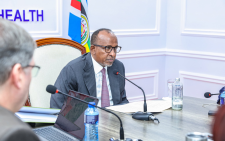
“Cervical cancer is preventable. Yet Kenya records 5,845 new cases and 3,591 deaths every year. This January, get screened and encourage another woman to do the same,” the board posted on X on January 16, 2026.
National plan targets elimination by 2030
In response, Kenya has launched the National Cervical Cancer Elimination Action Plan 2026–2030, marking a major step in the country’s fight against the disease. The plan was officially unveiled on Thursday, January 15, 2026, during a national symposium held under the theme “Accelerating Cervical Cancer Elimination: Strong Systems and Community Action for Every Girl and Every Woman.”
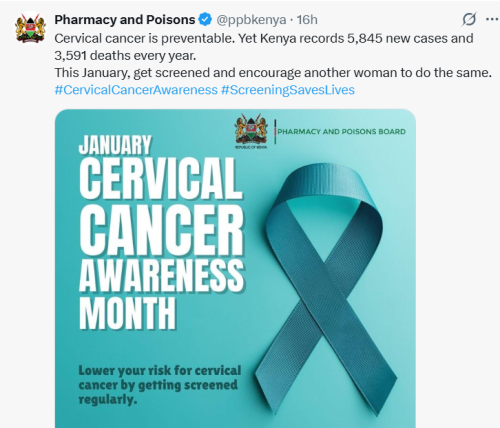
Health Cabinet Secretary Aden Duale presided over the launch, which brought together health professionals, policymakers, development partners, civil society organizations, and cervical cancer survivors.
The action plan provides a costed, results-oriented roadmap aligned with the World Health Organisation’s 90–70–90 targets aimed at eliminating cervical cancer as a public health threat.
“The Ministry of Health has today launched the National Cervical Cancer Elimination Plan (2026–2030), a bold, costed roadmap aligned to the World Health Organization- WHO 90–70–90 targets aimed at ending one of the country’s most preventable yet deadly cancers,” a statement from the launch reads.
Focus on vaccination, screening and treatment
The WHO targets seek to vaccinate 90 percent of girls against human papillomavirus (HPV) by age 15, screen 70 percent of women using high-precision tests, and ensure 90 percent of those diagnosed with cervical disease receive timely treatment and care. Cervical cancer is primarily caused by persistent infection with high-risk HPV types.
Health Principal Secretary for Public Health and Professional Standards Mary Muthoni said the plan prioritizes prevention, early detection, and access to care. “The plan prioritizes free HPV vaccination for girls aged 10–14 years, expanded HPV DNA–based screening for women, and guaranteed, timely treatment for all those diagnosed,” the statement reads.
Implementation will be anchored on strengthened primary healthcare services across all 47 counties, financial protection under the Social Health Authority, and collaboration between national and county governments, development partners, civil society, and communities.
Key reforms include transitioning to a single-dose HPV vaccination schedule, expanding HPV DNA testing, introducing self-sampling, and using digital health innovations to reach more women.
Author
Latest News








Advertisement
More on News