Advertisement
Kenya launches plan to wipe out cervical cancer with free HPV jabs and screening
Thursday 15th January, 2026 03:45 PM|

Kenya has unveiled a new national plan aimed at eliminating cervical cancer, one of the country’s most preventable yet deadly diseases affecting women.
The initiative was announced on Thursday, January 15, 2026, by the Ministry of Health and sets out clear actions to be taken between 2026 and 2030. The plan comes at a time when cervical cancer remains a major public health concern, particularly for women with limited access to early screening and treatment.
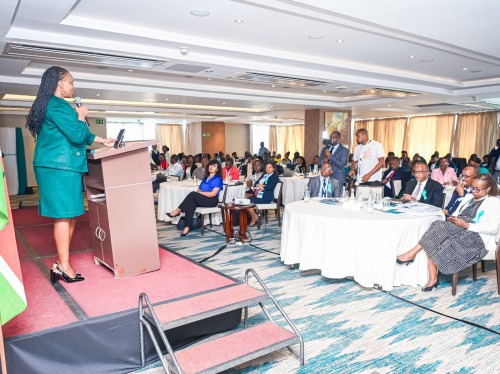
The National Cervical Cancer Elimination Plan lays out the government’s strategy, timelines and financing model, while aligning Kenya’s efforts with global health standards set by the World Health Organization. The plan focuses on prevention, early detection and treatment, with the goal of saving lives and reducing the burden on families and the health system.
Announcing the launch of the plan, Health Principal Secretary for Health and Professional Standards Mary Muthoni said the government had adopted a structured and globally aligned approach to tackle the disease.

You Might Also Like
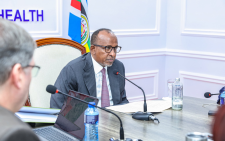

“The Ministry of Health has today launched the National Cervical Cancer Elimination Plan (2026–2030), a bold, costed roadmap aligned to the World Health Organization- WHO 90–70–90 targets aimed at ending one of the country’s most preventable yet deadly cancers,” the statement reads.
At the heart of the strategy is a strong focus on prevention and early care, especially for girls and women who are most at risk. The plan spells out specific services that will be offered free or expanded nationwide to ensure no woman is left behind because of cost or distance.
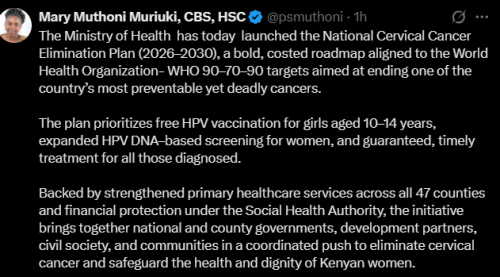
“The plan prioritizes free HPV vaccination for girls aged 10–14 years, expanded HPV DNA–based screening for women, and guaranteed, timely treatment for all those diagnosed,” the statement reads.
The government says the success of the plan will depend on cooperation across counties and strong support systems at the community level. Health facilities, local leaders, partners and families are expected to play a role in encouraging vaccination, screening and follow-up care.
Explaining how the plan will be implemented across the country, Muthoni said it would be supported by stronger primary healthcare and financial protection measures.

“Backed by strengthened primary healthcare services across all 47 counties and financial protection under the Social Health Authority, the initiative brings together national and county governments, development partners, civil society, and communities in a coordinated push to eliminate cervical cancer and safeguard the health and dignity of Kenyan women,” he wrote.
Cervical cancer is caused mainly by persistent infection with the human papillomavirus (HPV). Health officials say early vaccination, regular screening and timely treatment can prevent most cases.
Author
Latest News








Advertisement
More on News