Kenya moves to mitigate supply chain disruptions from Gulf conflict
By Faith Lagat, March 31, 2026President William Ruto has announced a series of proactive measures aimed at shielding Kenyans from potential supply shortages and economic shocks triggered by the ongoing conflict in the Middle East.
In a statement on Monday, March 30, 2026, and shared via the Government Spokesperson’s X account, President Ruto acknowledged the far-reaching effects of the conflict, which has disrupted global supply chains, particularly around the Strait of Hormuz, a critical route for a significant portion of the world’s oil supplies.
“The ongoing conflict in the Middle East is having a significant impact on the global economy. This disruption is already being felt across global supply chains and is placing pressure on economies worldwide,” the statement quoted the President as saying. “Africa, including Kenya, is not immune to these effects.”
Over the past month, the Government has remained vigilant, actively managing developments through continuous updates and assessments from key ministries and agencies.
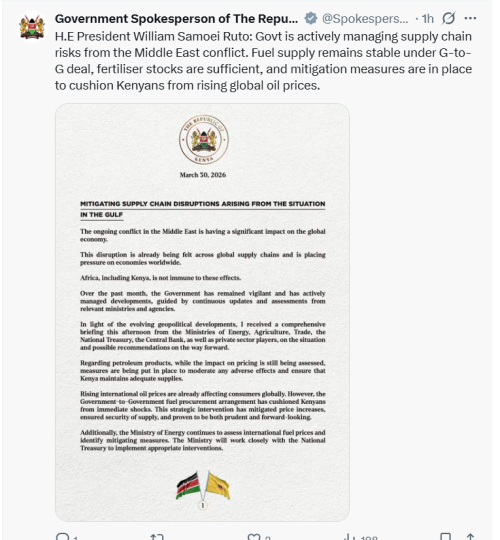
This comes as the President received a comprehensive briefing from the Ministries of Energy, Agriculture, Trade, the National Treasury, the Central Bank, and private sector players on the evolving geopolitical situation and recommended interventions.
Fuel security remains a priority
On petroleum products, while the full impact on pricing is still under assessment, the Government is implementing measures to moderate any adverse effects and guarantee adequate supplies. Rising international oil prices have already hit consumers globally, yet Kenya has been cushioned thanks to its strategic Government-to-Government (G-to-G) fuel procurement arrangement.
“This strategic intervention has mitigated price increases, ensured security of supply, and proven to be both prudent and forward-looking,” President Ruto stated. The arrangement has helped insulate Kenyans from immediate shocks despite volatility in global crude markets. The Ministry of Energy continues to closely monitor international fuel prices and will collaborate with the National Treasury to roll out appropriate interventions as needed.

Recent reports have noted temporary shortages at some independent fuel retailers due to heightened demand and logistical challenges linked to the conflict, but the Government has assured the public of sufficient stocks and urged against panic buying.
Agriculture and trade safeguarded
Earlier, he also addressed agriculture, assuring that no disruptions are expected in fertiliser supplies. Kenya holds sufficient stocks to support the current rainy season through to September 2026, safeguarding food production and farmer livelihoods during this critical period.
On trade, President Ruto highlighted Kenya’s strong export performance amid challenges. While some markets, particularly for key exports like tea, have faced headwinds due to the conflict, overall results remain encouraging through market diversification.
“The latest data indicates that we exported 81 per cent of tea offered for auction this month, compared to 75 per cent in March 2025,” the President noted.
Ports activity has also increased, with Mombasa and Lamu recording higher throughput, including over 4,000 high-value vehicles rerouted through Lamu. Meat exports, however, have encountered logistical and freight challenges, which the Ministries of Trade and Agriculture will address collaboratively.
President Ruto emphasised that the Government remains committed to monitoring the situation closely and taking decisive action to safeguard the economic well-being of all Kenyans. “We will also engage international logistics companies to leverage emerging opportunities and strengthen Kenya’s position in regional and global trade,” he added.