Advertisement
Judiciary pushes for faster, accountable justice delivery in registries
Friday 10th April, 2026 05:20 PM|

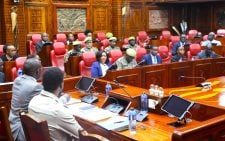
The Kenyan Judiciary has intensified efforts to improve efficiency, transparency, and accountability in court registries across the country. The push was highlighted during the closing session of the 2026 Annual Deputy Registrars’ Conference, where senior judicial officers called for practical reforms to strengthen justice delivery.
Principal Judge of the High Court Justice Eric Ogola, urged deputy registrars to embrace their leadership role in transforming service delivery within court registries.
“Let this moment mark a decisive shift from reflection to implementation, from intention to results, and from aspiration to transformation anchored on efficiency, accountability, and service delivery,” he said.
He further emphasised the need for registries to uphold constitutional standards in serving the public.
You Might Also Like



“Let us be faithful stewards. Every Kenyan who walks through our registries must encounter a system that is efficient, expeditious, and free from unnecessary bureaucracy and corruption. That is the justice our Constitution envisions.”
Focus on registry reforms
The conference, organised by the High Court, Environment and Land Court, and Employment and Labour Relations Court, brought together Deputy Registrars from all 47 counties. Discussions focused on strengthening registries as the first point of contact for court users under the Social Transformation through Access to Justice (STAJ) framework.
Justice Ogola said the role of registries is central to how the public experiences the justice system and urged officers to translate discussions into measurable action.
Environment and Lands Court Judge Justice Judy Omange also stressed the importance of communication and stakeholder engagement in improving service delivery.
“Every voice matters. When registries listen, communicate, and respond effectively, they strengthen trust and bring justice closer to the people,” she said.
Court challenges and budget gaps
The Judiciary’s reform agenda comes amid rising operational pressures, including case backlogs and funding constraints. During the 2026/27 budget hearings held in December 2025, Chief Registrar Winfridah Mokaya warned that Nairobi’s courts face heavy caseloads that risk overwhelming the system.
She noted that Nairobi handles nearly a quarter of the national caseload, driven by a large resident and commuter population, placing significant strain on court infrastructure and staffing.
The Judiciary has proposed a Ksh46 billion budget for the 2026/27 financial year, but has been allocated Ksh29 billion, leaving a shortfall of Ksh17 billion. The gap is expected to affect infrastructure development, automation, and backlog reduction programmes.
Judicial reforms and new appointments
To strengthen appellate capacity, President William Ruto, on January 28, 2026, swore in 15 judges to the Court of Appeal at State House, Nairobi. Nine of the appointees were elevated from the High Court.
The list includes Ahmed Issack Hassan, Katwa Kigen, Enock Chacha Mwita, Hedwig Ong’udi, Mathews Nduma Nderi, Linnet Mumo Ndolo, Lucy Mwihaki Njuguna, Rachel Chepkoech Ngetich, and Samson Odhiambo Okongo.
“These appointments will help reduce the backlog of appeal cases, shorten the time required to resolve cases, and strengthen public confidence in the administration of justice,” he said.
The Judiciary said the combined reforms, including registry improvements, infrastructure investment, and increased judicial capacity, are intended to enhance efficiency, accountability, and access to justice nationwide.
Author
Latest News







Advertisement
More on News