Advertisement
Ruto defends judiciary performance amid concerns over pending case backlogs
Friday 19th June, 2026 10:17 PM|
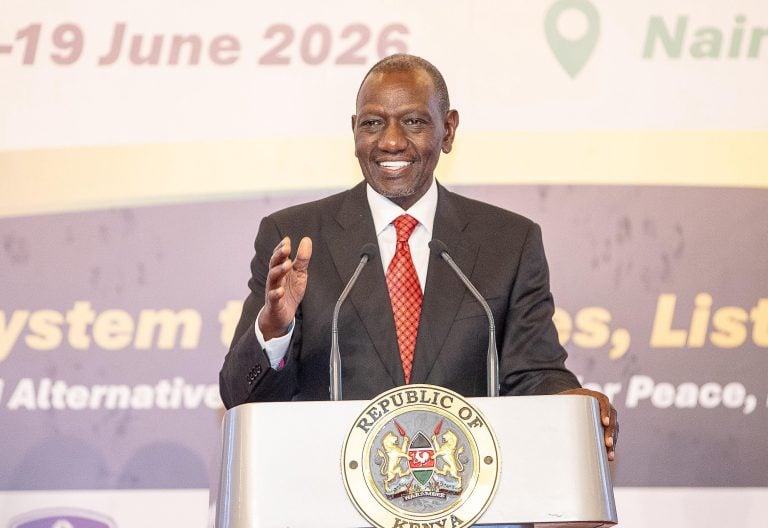
President William Ruto has defended the performance of Kenya’s Judiciary amid ongoing concerns over pending case backlogs, arguing that increased judicial appointments and sustained government support have significantly improved the administration of justice.
Speaking on Friday, June 19, 2026, during the National Productivity and Performance Conference at the Kenya School of Government (KSG) in Lower Kabete, Nairobi, Ruto said his administration has remained committed to strengthening an independent Judiciary while enhancing its capacity to handle cases more efficiently.
“We have worked together with the Kenyan Judiciary. I did make commitments to work with an independent judiciary,” the Head of State said.
The President noted that one of his first actions after assuming office was addressing delays in judicial appointments that had affected court operations.
You Might Also Like


“My first act as president was to appoint and swear in judges who had not been sworn in for some time,” he said.
Ruto said the government has also prioritised budgetary support for the Judiciary despite competing national demands.
“I also undertook that I was going to, to the extent possible with competing interests, support the judiciary with budget,” he said.
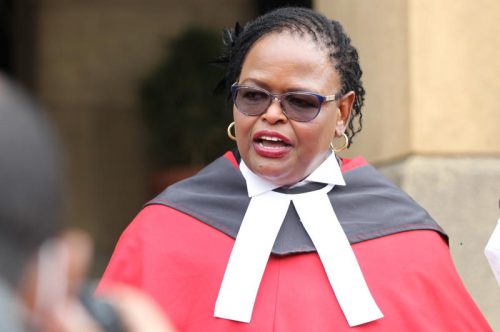
While acknowledging that the Judiciary’s funding needs remain substantial, the President said his administration has continued to provide support.
“I know I haven’t measured up to their full expectation, but we have kept pace,” Ruto said.
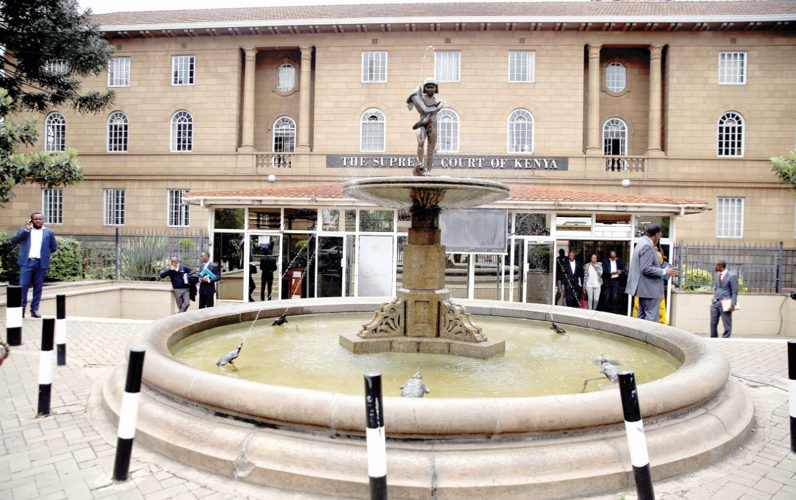
The Head of State highlighted the appointment of 92 judges over the past three years, describing it as a historic effort to strengthen Kenya’s justice system and reduce case backlogs.
“In fact, in the last three years, the judiciary has hired, and I have appointed, 92 judges, the highest in Kenya’s history by one president,” he said.
According to Ruto, the recruitment drive has begun yielding measurable improvements in court performance and case management.
“And we have done so because we believe that it is the right thing to do,” he said.
The President linked the increased judicial capacity to improved efficiency in handling cases and reducing delays in the courts.
“And as a result, we are beginning to see results,” he said.
Addressing concerns over pending cases, Ruto said the Judiciary had recorded significant progress in clearing its caseload.
“As I just said, for the first time, the judiciary reduced its caseload by almost a third,” he said.
He further noted that courts resolved more cases than were filed during the period under review.
“And have actually resolved more cases than were filed,” he said.
Ruto described the development as a clear indication that judicial reforms are delivering results.
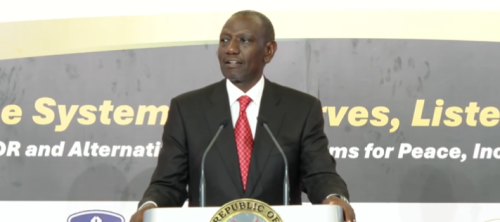
“So I think we are making progress,” he said.
The President’s remarks come amid broader efforts to reform Kenya’s justice sector, including the expansion of alternative dispute resolution mechanisms aimed at easing pressure on courts and reducing case backlogs.
Ruto has previously said court-annexed mediation has returned more than Ksh52 billion to the economy and helped restore over 8,000 family relationships since 2016.
He also noted that the Judiciary achieved a case clearance rate of 104 per cent last year, contributing to a nearly one-third reduction in pending cases.
The President reiterated the importance of continued investment in judicial systems, arguing that efficient and independent courts are essential for economic growth, stability and public confidence in the rule of law.
“Funding our judiciary is not an act of generosity. It is a strategic investment in stability and growth,” he said.
Ruto added that he would continue advocating for stronger and independent judicial institutions across Africa, including increased investment in court infrastructure, technology and judicial training.
Author
Latest News




Advertisement
More on Inside Politics