Advertisement
International Day for Remembrance of Slave Trade: UN urges reflection on slavery’s legacy
Saturday 23rd August, 2025 10:25 AM|

As the world observes the International Day for the Remembrance of the Slave Trade and its Abolition on Saturday, August 23, 2025, the United Nations has urged global reflection on the enduring impact of one of history’s darkest chapters.
The day traces its roots to the uprising in Saint Domingue – now Haiti – on the night of August 22-23, 1791. This revolt marked a critical moment in the fight against the transatlantic slave trade.
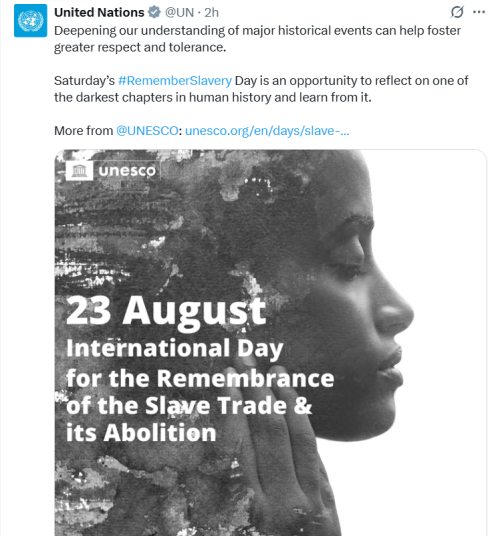
“Deepening our understanding of major historical events can help foster greater respect and tolerance. Saturday’s #RememberSlavery Day is an opportunity to reflect on one of the darkest chapters in human history and learn from it,” the UN posted on X dated August 23, 2025, highlighting the significance of the commemoration.
First observed in Haiti in 1998 and later on Gorée Island, Senegal, in 1999, the day aims to embed the tragedy of slavery into global memory. It encourages reflection on its causes, methods, and long-lasting consequences across Africa, Europe, the Americas, and the Caribbean, aligning with UNESCO’s “Routes of Enslaved Peoples” initiative.
Push for reparations
You Might Also Like



The UN’s message resonates amid ongoing debates on slavery’s legacy, particularly as African leaders gather in Addis Ababa for an African Union (AU) summit this weekend.
Discussions will focus on reparations for historical injustices stemming from the transatlantic slave trade, which saw at least 12.5 million Africans kidnapped and enslaved between the 15th and 19th centuries.
ECOSOCC, the AU’s economic, social, and cultural council, highlighted on X that “Reparations is the hot topic in Addis Ababa,” pointing to a unified vision that may include financial compensation, land restitution, and policy reforms addressing economic disparities rooted in colonialism.
Global backlash and calls for action
Despite growing advocacy, the call for reparations faces resistance from former colonial powers.
Leaders such as US President Donald Trump and parties in Britain and Portugal have largely dismissed the proposals. Yet, voices like Zimbabwean lawyer Alfred Mavedzenge argue, “It is increasingly becoming impossible to not acknowledge the damage caused by slavery and colonialism.”
Nairobi Woman Representative Esther Passaris echoed similar sentiments at the Pan-African Parliament in Midrand, South Africa, on July 25, 2025, stressing that justice and healing go beyond mere compensation.
Modern slavery continues to affect nearly 50 million people worldwide, reinforcing the urgency of the UN’s call. Institutions such as Lloyd’s Register have acknowledged their historical roles, pledging $1.23 million to a slavery archive. The international community faces a pivotal question: will #RememberSlavery Day spark meaningful action, or will it remain a symbolic observance?
Author
Latest News





Advertisement
More on News