How govt has allocated HELB for university students and scholarships in 2026/27 financial year
By Aloys Michael, May 7, 2026The government has unveiled a significant increase in funding for higher education in the 2026/27 financial year, allocating tens of billions of shillings to student loans and scholarships, even as it grapples with a widening budget deficit that continues to squeeze public spending.
According to estimates released by the National Treasury, education remains the largest funded sector in the national budget, receiving Ksh668.3 billion, as policymakers attempt to balance fiscal consolidation pressures with rising demand for learning access.
Key to the allocations is a major boost to student financing. The government has set aside Ksh56.7 billion for the Higher Education Loans Board (HELB) to support university and college students through loans.
This marks an increase of about Ksh15 billion compared to the Ksh41 billion allocated in the 2025/26 financial year, reflecting heightened demand for financial aid amid rising university costs.

In addition, Ksh30.9 billion has been allocated for university scholarships, while Technical and Vocational Education and Training (TVET) students will receive Ksh9.2 billion in scholarship support. The expansion is aimed at cushioning learners from the impact of cost-sharing reforms and household income pressures.
However, the increased education spending comes against the backdrop of a persistent budget deficit, forcing the government to juggle competing priorities such as debt servicing, infrastructure spending, and social protection programmes.
While education remains politically and socially sensitive, the rising cost of financing student support schemes is adding pressure to already stretched public finances.
Beyond student funding, the budget also includes Ksh6.6 billion for the Differentiated Unit Cost (DUC) to support ongoing university operations and Ksh6.68 billion to settle pending Collective Bargaining Agreement (CBA) arrears for university staff covering the 2021–2025 period.
An additional Ksh4.7 billion has been allocated for ongoing infrastructure projects in universities, alongside Ksh1.2 billion for research, science, technology, and innovation.
The education sector allocations are also complemented by capitation funding for basic education, including Ksh54.6 billion for Free Day Secondary Education, Ksh30.9 billion for Junior Secondary School, and Ksh7 billion for Free Primary Education.
Funding crisis
Meanwhile, towards the end of 2025, HELB intensified its loan recovery efforts by engaging private sector employers, a move that led to a noticeable increase in repayments among defaulters.
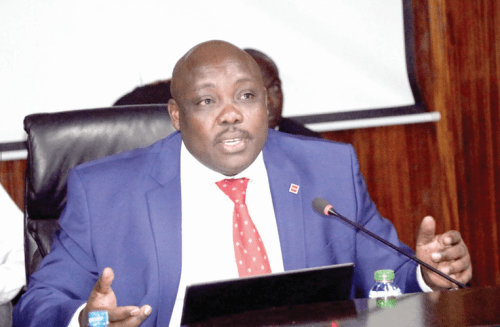
HELB Chief Executive Officer Geoffrey Monari identified private sector professionals, including accountants, doctors, lawyers and engineers, as the leading defaulters, triggering tougher recovery measures.
He observed that many graduates entering private practice tend to postpone loan repayment, contributing to a growing number of beneficiaries who fail to settle their obligations long after completing their studies.
HELB records show that only 11 per cent of accountants who benefited from the loans are currently repaying, translating to 2,420 active accounts out of 20,420, with nearly 18,000 remaining in default.
Doctors are among the most prominent defaulters, with only 18 per cent repaying their HELB loans. Of the 11,501 practising doctors, just 2,115 are currently making repayments, while 51,594 graduates who completed their studies more than two decades ago still owe a combined Ksh8 billion. Similar trends are evident among lawyers and engineers.
Of the more than 23,000 lawyers funded by HELB, only 2,644 have repaid their loans. In engineering, just 1,594 of the 24,803 beneficiaries have completed repayment, with only 894 actively servicing their loans, leaving the vast majority in default.