Advertisement
Homophobia: Africa political leaders moral blind spot
Monday 14th November, 2022 09:25 AM|
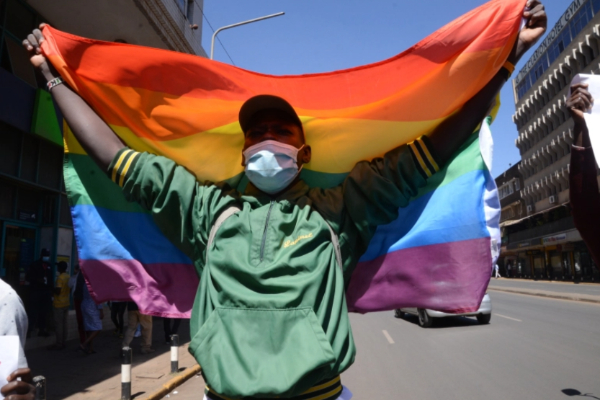
Sheila Adhiambo Lumumba, a 25-year-old non-binary lesbian, was found murdered in Karatina, Kenya. Lumumba had been missing for several days before their body was found.
An autopsy report revealed she was raped, strangled, stabbed several times in the neck and eyes and their legs had been broken.
Human rights groups lamented Lumumba’s untimely and violent passing. The hashtag #JusticeForSheila trended on Kenyan Twitter for several days after their passing. The Kenya Human Rights Commission called on authorities to investigate the gruesome murder and stressed that “too many queer Kenyans are getting killed with no accountability for perpetrators”.
Amnesty Kenya shared similar sentiments and asserted, “no one deserves such cruel treatment. Sheila didn’t have to experience all this pain”, and the National Gay and Lesbian Human Rights Commission described Lumumba’s death as “part of a pattern of attacks and violence against LGBTIQ+ persons in the country”.
And sadly, it is true that this gruesome murder was not an anomaly – members of the LGBTQ community are facing discrimination, hate and violence because of who they are and who they love across Africa.
In Kenya – much like the rest of Africa – gay sex is a criminal offence, and it is punishable by up to 14 years in jail. And it is not only discriminatory laws that are criminalising LGBTQ individuals and putting a target on their backs across the continent.
Political leaders are also adding fuel to the fires of homophobia and acting as willing vessels for conservative and religious paranoia.
Kenya’s former President Uhuru Kenyatta, for instance, dismissed LGBTQ rights as a “non-issue” in an interview with CNN in 2018 and declared Kenya does not consider “homosexuality a human right”. And Kenyatta is hardly the only politician in Kenya voicing anti-LGBTQ views.
Former PM Raila Odinga, for example, called for gay couples to be arrested in 2010. He also claimed it was “madness” for a man to fall in love with another man while there were “plenty of women”. In 2015, he said, “The Republic of Kenya is a republic that worships God. We have no room for gays and those others.” The institutionalised homophobia in Kenya is representative of a malaise that is devastating the entirety of Africa.
In Ghana, for example, security forces raided and shut down the office of an LGBTQ rights group in the capital, Accra, after politicians and religious leaders called for its closure in February 2021.
Meanwhile, clinics in several countries, from Uganda and Tanzania to Kenya, are offering highly discredited and known to be harmful “conversion therapy” services to LGBTQ individuals. An Open Democracy investigation conducted last year revealed that in Uganda such anti-gay “counselling” activities are being recommended to LGBTQ people by staff employed at public hospitals.
South Africa is an outlier on the continent as LGBTQ rights are enshrined in its constitution. Nevertheless, violence against queer people is still rife in the country. Between February 2021 and April 2022, for example, at least 20 LGBTQ individuals were murdered in ghastly circumstances because of their gender identity or sexual orientation.
Author
Story Agencies
View all posts by Story AgenciesLatest News



Advertisement
More on News