Advertisement
Grim study: A child dies hourly from pneumonia
Monday 14th November, 2022 02:50 AM|
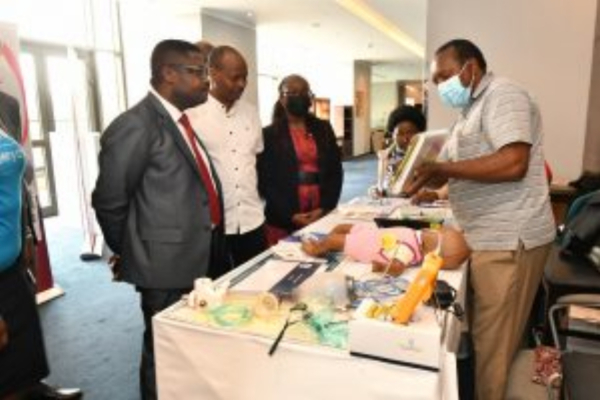
One child dies every hour in Kenya from pneumonia infection — an unfortunate situation as the disease is preventable.
During an event to mark World Pneumonia Day at the weekend, it was revealed that almost 9,000 children below five years die annually from this respiratory disease.
Most of these deaths, paediatric experts said, are from the poorest households, a shocking demonstration of health inequalities affecting the most deprived and marginalised of children.
Subsequently, Health Cabinet Secretary, Susan Wafula called for the scaling up of optimum treatments like oral antibiotics, injectable antibiotics and oxygen therapy in cases of severe pneumonia for all sick children in the country.
“This will prevent unnecessary deaths,” she said at a Nairobi hotel, further calling for increased use of health technologies, and innovations in diagnosis and management of sick children.
Early treatment
Through acting Director of Medical Services (DMS), Dr Andrew Mulwa, the CS said early care seeking for acute respiratory infection will ensure sick children get quick attention to regain their health; survive, thrive and attain their potential.
According to the World Health Organization, pneumonia is the biggest infectious killer of children worldwide, claiming the lives of over 700,000 children under five years annually. This means a child dies from pneumonia every 45 seconds.
Wafula noted that, while Kenya made significant progress in reducing under-five children’s deaths since 1990, it is estimated that in 2018 an estimated 60,000 children under five years died in Kenya.
“Unfortunately, this is due to poor care for acute respiratory infection, with most caregivers taking children to hospitals when it is too late to save them,” she noted.
Data in most of the health facilities, both public and private, show that care seeking for acute respiratory infection is still low at 67 per cent. The CS noted the government is keen to halve the child mortality rate through the Universal Health Coverage (UHC) by strengthening the primary health care system.
“Improving the coverage for child health services is a priority for the government as reflected in Vision 2030,” she said.
The Sustainable Development Goals target rate for under-five deaths is 25 per 1,000 live births by 2030.
She advocated the deployment of vaccines, noting that they are crucial preventative measures for children against pneumonia. In Kenya, the uptake of the recommended three doses of Pentavalent Vaccine among children is 90 per cent, while for pneumococcal vaccine is 85 per cent according to the Kenya Demographic Health Survey (KDHS) 2014.
Wafula revisited the declaration made by the government in 2020 to end pneumonia deaths in children under five, and called on more attention towards tackling the disease using all the available tools.
“The new pneumonia guidelines recommend treatment using high dose amoxicillin dispensable tablets as part of the integrated management of newborn and childhood illnesses,” she pointed out.
And reflecting on the renewed global momentum and support for countries to commit to invest in child health, the CS called for protective interventions such as exclusive breastfeeding, adequate complementary feeding and Vitamin A supplementation, which provides the foundation of keeping children healthy.
A number of speakers also advocated for preventative interventions such as immunisations, safe drinking water, sanitation and hygiene, and reduced household air pollution to prevent illness.
On her part, Save the Children Country Director Yvonne Arunga challenged policy makers to take targeted actions to help children not just to survive beyond five years, but to thrive and reach their full potential. “Solving child mortality may seem insurmountable. But Kenyan policy makers, working with partners like us, through the right policy and funding decisions, can easily trigger solutions”, she said.
“And so, for World Pneumonia Day 2022, we are asking the policy makers to take meaningful action on issues covering health, nutrition, child survival and more,” she said. “We would also like them to implement a strategy for strengthening health system services in the most affected counties,” she said.
Arunga said some of these interventions can be done by embracing a UHC that delivers effective and affordable health services to all in need; well trained and well supported health care workers at all levels, and by building equitable partnerships —with civil society organisations, local communities, children and their families — to deliver health and nutrition support.
She said that the organisation’s vision is to see more children survive, enjoy protection, develop and participate.
“However, we are losing too many babies at birth and in the initial years. The neonatal mortality rate in Kenya now stands at 22 deaths per 1000 live births, accounting for 42 per cent of under-five mortality and 59 per cent of all infant mortality,” she added.
On his part, Thomas Onyango, the country director of Living Goods, said improving coverage for child health services should be prioritised as defined in the government’s Health Sector Strategic and Investment Plan 2014-18.
Author
George.Kebaso
View all posts by George.KebasoLatest News






Advertisement
More on News