Advertisement
Green Belt Movement raises alarm over Uhuru Park encroachment plan
Tuesday 02nd June, 2026 07:17 PM|

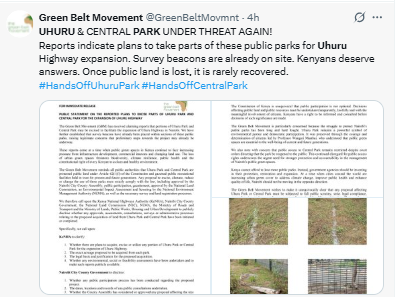
The Green Belt Movement has raised concern over reports that parts of Uhuru Park and Central Park could be taken for the expansion of Uhuru Highway in Nairobi, triggering a fresh public debate on the future of the city’s shrinking green spaces.
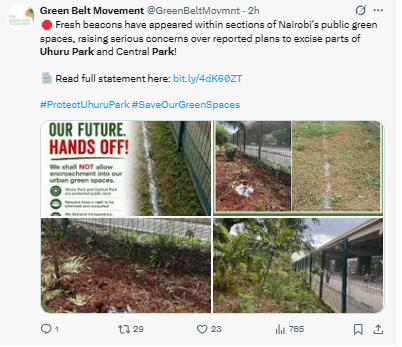
In a statement issued on Tuesday, June 2, 2026, the group said it had received reports that survey beacons had already been placed inside sections of the two parks, suggesting that early groundwork for the project may already be in motion. It warned that the move, if confirmed, would raise serious legal and environmental questions.
“The Green Belt Movement has received alarming reports that portions of Uhuru Park and Central Park may be excised to facilitate the expansion of Uhuru Highway in Nairobi,” the organisation said. “We have further established that survey beacons have already been placed within sections of these public parks.”
Green spaces under pressure
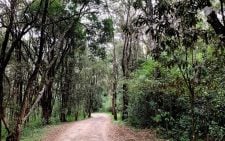
The group argues that Nairobi’s green spaces are already under pressure from infrastructure growth and commercial interests. It says continued loss of public parks would affect biodiversity, worsen climate risks in the city, and reduce access to clean recreational space for residents.
You Might Also Like
It also links the issue to constitutional rights. The organisation says Kenyans are entitled to a clean and healthy environment and that public land must be protected for current and future generations. It cites Article 62 of the Constitution, which classifies public recreational spaces as public land held in trust.
In its statement, the Green Belt Movement stresses that no part of the process can proceed without legal and public oversight. It says any change of use or reduction of the parks must go through public participation, environmental checks, and formal approvals.
It said: “Any proposal to excise, alienate, reduce or change the use of these parks must strictly comply with the law, including approval by the Nairobi City County Assembly, public participation, gazettement, approval by the National Land Commission, an Environmental Impact Assessment and licensing by the National Environment Management Authority.”
Institutions pressed for answers
The organisation has called on key institutions to clarify whether any approvals or formal processes have begun. It directed its questions to the Kenya National Highways Authority (Kenya National Highways Authority), the Nairobi City County Government, the National Land Commission (National Land Commission), and the National Environment Management Authority (National Environment Management Authority).
Among the questions raised, it wants clarity on whether any part of the parks will be acquired, how much land is involved, and whether environmental or feasibility studies have been done. It also wants details on whether public participation has taken place and whether any approvals have been issued.
The group has further questioned the continued restriction of access to Central Park despite court orders requiring it to be reopened. It says this reflects a wider problem in the management of public spaces in Nairobi.
The statement also draws attention to past environmental struggles in Kenya, referencing the role of Wangari Maathai in defending Nairobi’s parks. It describes Green Belt Movement as part of that legacy and says Uhuru Park remains a symbol of public resistance and environmental justice.
“Uhuru Park remains a powerful symbol of environmental justice and democratic participation,” the organisation said. “It was preserved through the courage and determination of citizens led by Professor Wangari Maathai.”
The group warns that Kenya risks repeating past mistakes if it continues to reduce public green space for road expansion without broad consultation. It argues that cities worldwide are increasing green cover to deal with climate change, and Nairobi should follow the same direction rather than reduce parks.
It adds that government agencies should focus on protecting and restoring existing parks instead of reducing them. It says urban planning should balance infrastructure development with environmental protection.
In its closing remarks, the organisation called for transparency and public involvement before any decisions are made. It urged citizens, civil society groups, and professionals to stay alert and demand accountability from state agencies.
“We therefore urge all Kenyans, civil society organisations, professional bodies, environmental defenders and concerned citizens to remain vigilant and demand transparency, accountability and adherence to the law,” the statement said.
Author
Kenneth Mwenda
Kenneth Mwenda is a business, sports, and politics digital writer with over seven years of experience in journalism, covering breaking news, feature stories, and in-depth analysis across a range of beats.
For inquiries, he can be reached at [email protected]
View all posts by Kenneth MwendaLatest News






Advertisement
More on News