Advertisement
Govt to pay legal and advisory fee of about Ksh3B in Safaricom sale
Wednesday 14th January, 2026 01:23 AM|

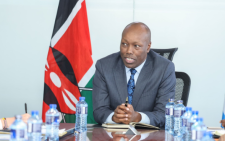
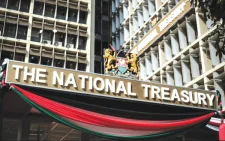
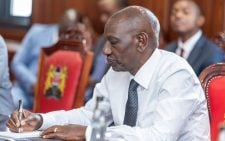
National Treasury Cabinet Secretary John Mbadi has confirmed that the government will pay about Ksh3 billion to legal and transaction advisors in the planned sale of a 15 per cent stake in Safaricom to Vodacom.
Speaking before a joint committee of the National Assembly on Tuesday, January 13, 2026, Mbadi said the fees are within the provisions of the law and will only be paid after the transaction is completed.
“You say that we’re paying lawyers and advisors 2.5 billion. It could be slightly more, because I’ve just given a breakdown of the percentages. If you take those percentages, you’ll see how much it is that we are paying. And it is within the provisions of the law,” Mbadi said.
“And I think you got it right, Chair. It’s about 3 billion that is paid to the transaction advisor.”
You Might Also Like
He added, “It will be paid next off the proceeds. So we haven’t made that payment yet. It depends on the conclusion of the transaction.”
Mbadi also highlighted the critical role of transaction advisors in ensuring the government receives maximum value from the deal.
“The charges are regulated by CMA regulations. Let’s look at it this way: we are selling six billion shares. If a transaction advisor even manages to negotiate an additional shilling per share, that’s six billion shillings for the government. If they negotiate an extra 5.5 shillings per share on the current price of 28.5 shillings, that would give us over 33 billion shillings. It clearly makes sense to have professional advisors,” he said.
On questions regarding brokerage fees, Mbadi said:
“We have not hidden anything. The brokerage fees are 1.36 percent, which is within the 1.8 percent range mentioned. In this transaction, the government advisor is KCB Capital, and the fee will come to around 500 million shillings.”
“Other transactional charges include a CMA levy of 0.012 percent, NSE levy of 0.012 percent, Central Depository Levy of 0.08 percent, guranteed fund of 0.01 percent, and CMA compensation fund of 0.01 percent. This was an arm’s-length transaction, even though the government has a stake in KCB.”
Responding to concerns about why a brokerage firm was needed despite the sale being directly negotiated with Vodafone, Mbadi said:
“To even arrive at that negotiated price, we needed professional transaction advisors. The valuation and calculations are highly technical. These are shares in a listed company—you cannot just decide on a price without a solid, evidence-based valuation. Otherwise, how would you justify 34 shillings per share? Without technical advisors, this could not have been achieved.”
The partial divestiture is part of the government’s plan to raise funds for development projects while reducing pressure on public borrowing and taxation. The Treasury intends to sell 6,009,814,200 Safaricom shares at Ksh34 per share. Total proceeds, including dividend monetisation, are projected at Ksh244.5 billion.
After the sale, the government will retain a 20 per cent stake, while Vodacom Group’s holding will rise to 55 per cent, consolidating shares previously held by the government and Vodafone.
Funds to drive development
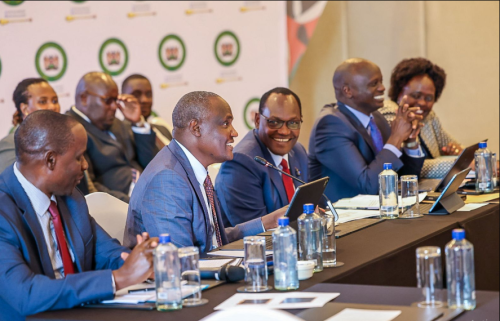
Mbadi said the funds will provide seed capital for the proposed National Infrastructure Fund and the Sovereign Wealth Fund. He noted that the sale reflects a shift towards alternative financing models at a time when fiscal space is shrinking and traditional sources of funding are constrained.
To protect public interest, the Treasury has included several safeguards. These include the government retaining two seats on Safaricom’s board, commitments to employment stability for a defined period, provisions on board leadership, and continued support for the Safaricom Foundation.
Mbadi also explained that the transaction follows the Privatisation Act, 2025, and Section 87A of the Public Finance Management Act, which requires parliamentary consideration within 28 sitting days. The deal is also subject to approvals from the Capital Markets Authority, the Central Bank of Kenya, and the Competition Authority of Kenya.
The Treasury Cabinet Secretary said the sale is part of broader reforms to separate the government’s role as policymaker and regulator from commercial activity. “Commercial activity should increasingly be led by the private sector,” he said.
Author
Kenneth Mwenda
Kenneth Mwenda is a business, sports, and politics digital writer with over seven years of experience in journalism, covering breaking news, feature stories, and in-depth analysis across a range of beats.
For inquiries, he can be reached at [email protected]
View all posts by Kenneth MwendaLatest News

Advertisement
More on News