Advertisement
Govt clarifies Ksh95 book allocation and Ksh93 operations funding per learner in primary schools
Wednesday 29th April, 2026 06:54 PM|

The government has moved to clarify how capitation funds are allocated to primary schools, following public debate on how little reaches learning materials and school operations per learner.
In a detailed statement shared on X on Wednesday, April 15, 2026, Principal Secretary, State Department for Basic Education Julius Bitok explained how the annual allocation is structured, how it is released in phases, and why the figures differ across expenditure categories commonly known as vote heads.
The clarification comes amid growing public concern from stakeholders who have questioned whether schools are receiving enough funding to effectively support learning, run basic operations, and provide essential materials for pupils across the country.
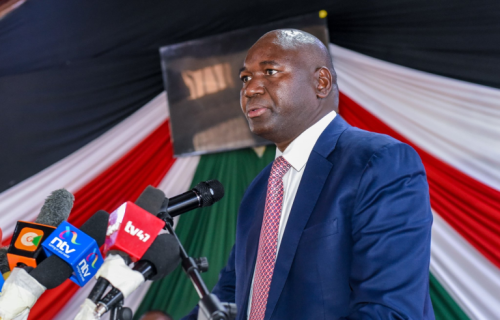
The PS outlined the approved annual capitation framework, explaining the ceiling amount and how funds are transmitted from the National Treasury to the Ministry of Education before being disbursed to schools. Bitok explained that the approved capitation for primary school is capped at Ksh1,400 per year, the funds that are usually released by the National Treasury to the Ministry of Education on a termly basis in the ratio of 50:30:20.
You Might Also Like

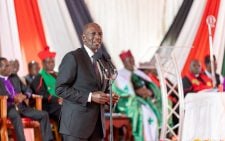
“The approved Capitation for primary school is capped at Ksh 1,400 per year. The funds are usually released by the National Treasury to the Ministry of Education on a termly basis in the ratio of 50:30:20,” Bitok wrote.
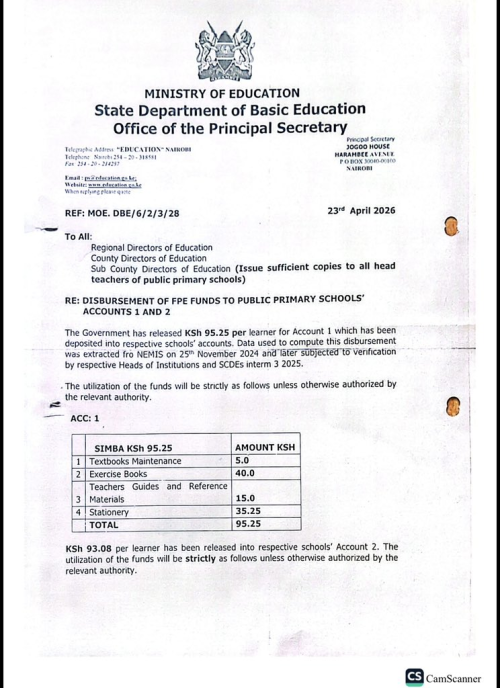
He further explained how the allocation is broken down at the learner level, emphasising that each pupil’s share is calculated based on specific cost components that guide how learning resources and school services are financed across the system.
“The capitation amount is arrived at based on clear expenditure lines (vote heads) that are determined by estimated costs incurred by EACH learner,” the statement reads.
Bitok went on to describe the process of disbursement once funds are received, noting that the Ministry issues detailed circulars that guide schools on how each tranche should be spent, depending on the amount released by Treasury for that particular term.
“Upon receipt of the money, and based on the exact amount received, MoE releases the funds with an accompanying circular detailing the expenditure breakdown (vote heads),” he wrote.
He also clarified that the figures being discussed are not arbitrary but are directly tied to this established funding practice, ensuring consistency in how capitation is communicated and implemented across schools nationwide.
“The figures in reference to the circular are based on this practice.”
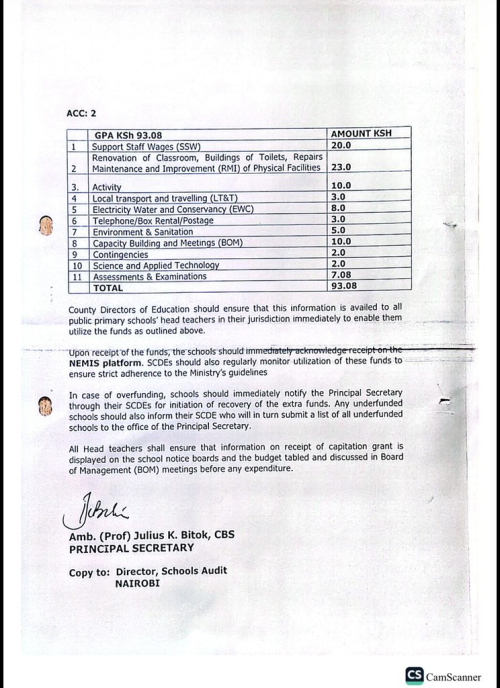
Bitok concluded by summarising how allocations are structured, stressing that capitation is distributed in phases and calculated strictly on a per-learner basis rather than per institution, which often leads to misunderstanding among the public.
In summary, MoE wishes to clarify the following:
- MoE determines how much money is allocated to each vote head based on the total amount of capitation received from the National Treasury
- Capitation funds are released on three phases corresponding to the school calendar terms
- The circular in reference is based on the 2nd term tranche as received from National Treasury.
- The amounts shown are per learner, not per school
-The Ksh95.25 PER LEARNER is for learning materials only (books, stationery, etc.)
-The Ksh93.08 PER LEARNER for school operations (staff, maintenance, utilities, exams)
Author
Latest News







Advertisement
More on News