Advertisement
EPRA announces deal to stabilise fuel supply amid uproar over G-to-G deal
Sunday 19th April, 2026 12:39 AM|

The Energy and Petroleum Regulatory Authority (EPRA) has moved to calm public concern about fuel supply stability by announcing a new international sourcing framework aimed at cushioning the country against global oil market shocks.
The announcement comes amid ongoing debate over the government-to-government (G-to-G) fuel importation arrangement and its structure.
In an interview on a local TV station on Saturday, April 18, 2026, EPRA Director of Petroleum, Edward Kinyua, confirmed that Kenya has signed a master framework agreement with international suppliers designed to ensure uninterrupted fuel deliveries even during geopolitical disruptions.
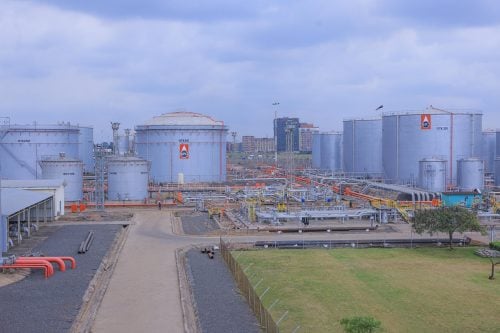
“We have just developed a strategic stocks regulation whereby we can be able to invite a big player in Kenya to store petroleum within our ports, and then we have the right, the first right of use for that product,” Kinyua revealed.
You Might Also Like
The EPRA director explained that the new supply model allows international oil marketers to diversify sourcing away from traditional Middle Eastern markets.

Instead, suppliers will now access fuel from Europe and the Far East, a shift intended to reduce Kenya’s exposure to supply chain shocks.
“What our suppliers have done, instead of sourcing from the Middle East, they will be sourcing from diversified markets, including Europe, including the Far East,” Kinyua noted.
“They are also loading more products from the Red Sea side instead of loading products on the Strait of Hormuz side in the Middle East. Now they are exploiting the Red Sea side.”
According to EPRA, the logistical realignment is expected to improve efficiency while reducing geopolitical risks associated with congestion and instability in key global shipping corridors.
Strategic fuel reforms amid global uncertainty
The announcement also comes at a time when Kenya’s fuel import framework is under intense scrutiny.
The government introduced the G-to-G model as an emergency intervention following a foreign exchange crisis in 2022, which made it difficult for oil marketers to access dollars for imports.
Kinyua explained that at the peak of the crisis, over 145 oil marketers were competing for limited foreign exchange to settle supplier payments within days of cargo arrival.
“The amount of money the private sector spends in terms of oil payment per month is to the tune of 500 million dollars,” he said, adding that the liquidity shortage had reached a critical point that required state intervention.

“If I’m placing a ship worth 100 million dollars into the water and I don’t know my counterpart, what happens if anything happens to that cargo?” Kinyua posed, explaining that international suppliers insisted on dealing with firms with which they already had established relationships.
“Kenya Pipeline is not a trader; their work is transportation of petroleum.”
Private firms and political scrutiny
The arrangement ultimately led to the inclusion of private importers such as Oryx Energies, Galana Energies Limited, Gulf Energy Limited, One Petroleum Limited, Asharami Synergy, and Be Energy.
However, the deal has sparked political criticism, with some leaders questioning pricing margins and transparency. Kiharu MP Ndindi Nyoro claimed that firms involved were benefiting from multi-layered margins within the supply chain, while former Attorney General Justin Muturi has also raised concerns over governance structures.
Despite the criticism, EPRA maintains that the framework was shaped by international supplier risk assessments and market realities rather than domestic political considerations.
Kinyua emphasised that the model has already attracted interest from other countries seeking to replicate Kenya’s approach to stabilising fuel imports under volatile global conditions.
Author
Latest News







Advertisement
More on News